

Key Takeaway
Most people adjust to porcelain veneers within a few days to two weeks. During this time, minor changes in speech, bite awareness, and tooth sensitivity are normal and temporary. High-quality porcelain veneers, when placed correctly, should ultimately feel indistinguishable from natural teeth. Choosing an experienced cosmetic dentist, following aftercare advice, and understanding what to expect can significantly shorten the adjustment period and improve long-term comfort.
Porcelain veneers are designed to feel natural, look lifelike, and integrate seamlessly into everyday function. However, even the most precisely crafted porcelain veneers still represent a change to your mouth. It is completely normal to experience an adjustment period while your teeth, bite, tongue, and muscles adapt.
💡At Whites Dental, our porcelain veneer specialists can help you to explain exactly how long it takes to get used to porcelain veneers, what sensations are normal, what factors influence adaptation time and how to make the transition smoother—specifically focusing on porcelain veneers only.
Why There Is An Adjustment Period With Porcelain Veneers
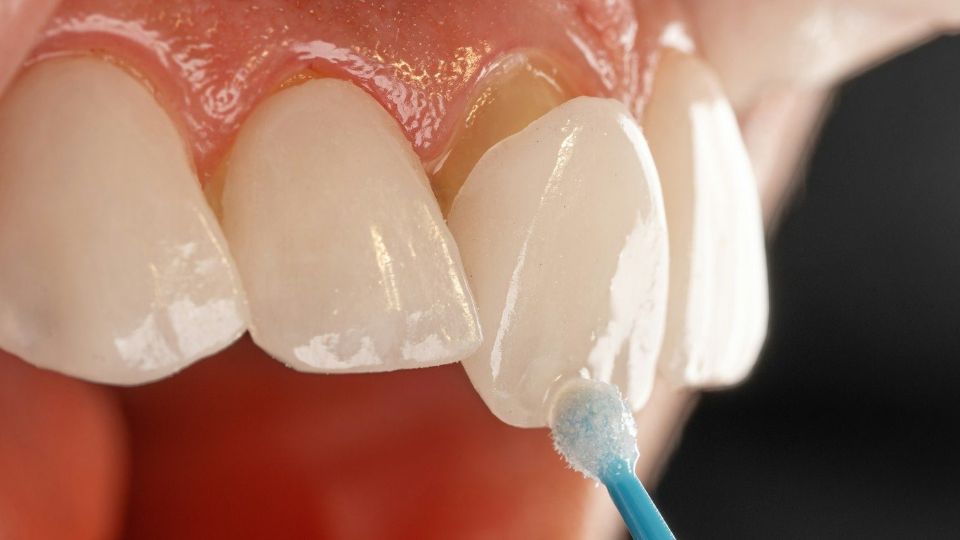
Porcelain veneers are bonded to the front surface of teeth, subtly changing their thickness, contour, and bite interaction. Even small changes can feel noticeable initially because your mouth is highly sensitive to change.
How The Mouth Detects Change
Your brain relies on constant sensory feedback from teeth, tongue, lips and jaw muscles. When veneers are placed, that feedback changes slightly. Common reasons adaptation is needed include:
- A new tooth surface texture
- Slight differences in tooth length or width
- Altered contact points between upper and lower teeth
- Increased awareness of tooth edges.
- Changes in how the tongue touches teeth.
These sensations fade as the brain recalibrates what “normal” feels like.
💡 Awareness does not mean something is wrong—your nervous system is simply adapting.
Typical Timeline For Getting Used To Porcelain Veneers
While everyone adapts at a different pace, most patients follow a predictable adjustment timeline.
First 24 To 72 Hours
This is when awareness is at its highest.
Common experiences include:
- Feeling that teeth are slightly “bigger”
- Increased bite awareness
- Mild pressure when biting.
- Slight speech changes.
- Sensitivity to hot or cold
These sensations are normal and expected.
💡 Avoid over-analysing how your teeth feel during the first few days—adaptation happens naturally.
Days 4 To 7
During the first week, comfort improves noticeably.
You may notice:
- Speech returning to normal
- Reduced bite awareness
- Less tongue irritation.
- Improved confidence when smiling.
- Decreasing sensitivity.
Most people stop thinking about their veneers altogether by the end of this stage.
💡 Reading aloud for a few minutes a day can speed up speech adaptation.
One To Two Weeks
By this stage, porcelain veneers typically feel fully natural. At this point:
- Chewing feels normal.
- Speech is fully adapted
- Teeth feel like part of your mouth
- Smile confidence increases.
- Sensory awareness fades completely.
If something still feels uncomfortable after two weeks, a minor adjustment may be needed.
💡 Porcelain veneers should feel invisible in daily life once fully adapted.
Speech Changes And Porcelain Veneers
Speech adaptation is one of the most common concerns after teeth veneer placement, especially when front teeth are involved.
Why Speech Feels Different At First
Certain sounds—particularly “s,” “f,” “v,” and “th”—rely on precise tongue-to-tooth contact. Porcelain veneers slightly change that contact point. Temporary speech changes may include:
- Mild lisping.
- Difficulty pronouncing certain consonants
- Increased tongue awareness
- Slower speech rhythm
These changes resolve as muscle memory adjusts.
💡 Practising normal conversation speeds adaptation faster than speaking cautiously.
Bite Awareness After Porcelain Veneers
Your bite is finely balanced, and dental veneers must be carefully designed to preserve it.
Why Your Bite Feels Different Initially
Even when veneers are placed perfectly, the brain notices subtle differences. You may feel:
- Teeth touching sooner than expected,
- Pressure in certain areas.
- Height awareness on biting down
- Slight jaw fatigue
This does not mean your bite is wrong—it means your neuromuscular system is adjusting.
💡If bite discomfort increases instead of improving, schedule a review promptly.
Tooth Sensitivity During The Adjustment Phase
Some patients experience mild sensitivity after porcelain veneers are placed.
Causes Of Temporary Sensitivity
Sensitivity may result from:
- Minimal enamel preparation.
- Temporary exposure of dentinal tubules.
- Adhesive bonding process
- Increased awareness rather than actual pain
This sensitivity typically fades within days.
Ways to manage sensitivity include:
- Using desensitising toothpaste
- Avoiding extreme temperatures initially
- Not clenching or grinding;
- Maintaining gentle brushing technique.
💡 Sensitivity should reduce steadily—not worsen—over time.
Eating And Chewing With New Porcelain Veneers
Eating is one of the quickest ways your mouth adapts to veneers.
What To Expect When Eating
Initially, you may feel cautious or unsure when biting into foods. Common experiences include:
- Hesitation with harder foods
- Awareness when biting with front teeth.
- Preference for softer foods initially.
- Gradual return to normal eating habits
High-quality porcelain veneers are strong and designed for everyday use once bonded.
💡 Ease back into normal eating rather than avoiding foods unnecessarily.
Tongue And Lip Adaptation To Porcelain Veneers
Your tongue and lips constantly interact with tooth surfaces.
Why Soft Tissues Need Time To Adjust
Porcelain veneers are extremely smooth but may feel different at first. Temporary sensations include:
- Tongue rubbing against new edges
- Lip awareness when smiling.
- Slight irritation along the tongue’s edge
- Increased saliva production.
These sensations resolve as tissues adapt.
💡 Smooth porcelain surfaces quickly become unnoticeable to soft tissues.
Psychological Adjustment To Porcelain Veneers
Adjustment is not just physical—it is also emotional.
Getting Used To Your New Smile
Seeing a transformed smile can feel unfamiliar at first. Patients often experience:
- Increased mirror checking
- Heightened self-awareness
- Surprise at their reflection.
- Gradual confidence boost.
This emotional adjustment is normal and usually positive.
💡 Confidence grows as your smile starts to feel like “you.”
Factors That Influence Adjustment Time
Not everyone adapts at the same speed. Several factors influence how long it takes to get used to even the best porcelain veneers. Key factors include:
- Number of veneers placed
- Changes in tooth length or shape
- Bite complexity
- Pre-existing sensitivity.
- Individual neuromuscular sensitivity.
- Dentist experience and planning accuracy
Custom-designed porcelain veneers placed conservatively tend to have the fastest adaptation time.
💡 Precision planning shortens adjustment significantly.
Temporary Veneers Versus Final Porcelain Veneers
Temporary veneers play an important role in adaptation.
Why Temporaries Help With Adjustment
Temporaries allow you to experience:
- New tooth shapes.
- Bite changes
- Speech differences
- Aesthetic preview
Final porcelain veneers often feel even more comfortable than temporaries.
💡 If temporaries feel comfortable, finals usually feel even better.
When Adjustment Is Not Normal
While most adaptation is straightforward, certain symptoms require review. Contact your dentist if you experience:
- Persistent pain beyond two weeks.
- Bite discomfort that worsens.
- Jaw pain or headaches
- Chipping or rough edges
- Speech issues that do not improve
Porcelain veneers can usually be adjusted quickly and comfortably.
💡 Early adjustments prevent long-term discomfort.
Long-Term Comfort With Porcelain Veneers
Once adapted, porcelain veneers should feel completely natural. Long-term benefits include:
- Stable bite comfort
- Natural chewing ability
- No speech interference.
- Smooth tooth surfaces.
- Improved confidence
Many patients report forgetting they even have veneers.
💡 Long-term comfort depends on both design quality and aftercare.
Caring For Porcelain Veneers During Adjustment
Good habits support faster adaptation. Helpful practices include:
- Gentle brushing twice daily
- Avoiding nail biting or pen chewing
- Wearing a night guard if recommended
- Avoiding excessive clenching
- Keeping review appointments
Proper care protects both comfort and longevity.
💡 Treat veneers like natural teeth—without testing their limits.
How Whites Dental In London Can Help
Adapting easily to porcelain veneers starts with expert planning through digital smile design precision placement and attentive aftercare from the dentist. Whites Dental In London focuses exclusively on high-quality porcelain veneers in London that prioritise comfort, function and natural aesthetics.
With two dental practices situated in Central London – Waterloo and Marble Arch – our specialist clinicians at Whites Dental provide veneer consultations, comprehensive analysis of your bite and smile design specific to your teeth – in order to help minimise adjustment time to your new veneers. Follow-up reviews ensure any minor refinements are addressed promptly, allowing patients to enjoy their new smile with confidence.
💡Choosing an experienced porcelain veneer clinic significantly reduces adaptation time.
Frequently Asked Questions About Getting Used To Porcelain Veneers
How long does it usually take to get used to porcelain veneers?
Most patients adapt within a few days to two weeks, depending on the extent of treatment.
Is it normal for porcelain veneers to feel strange at first?
Yes, temporary awareness is normal and fades as your mouth adjusts.
Will my speech permanently change with porcelain veneers?
No, speech changes are temporary and resolve as muscle memory adapts.
Do porcelain veneers affect chewing long term?
No, once adjusted, chewing should feel completely natural.
Should porcelain veneers feel bulky?
No, well-designed porcelain veneers should not feel bulky once adapted.
Can adjustments be made if veneers feel uncomfortable?
Yes, minor refinements can usually resolve discomfort quickly.
Is sensitivity normal after porcelain veneers?
Mild sensitivity can occur temporarily and usually resolves within days.
Will I always be aware of my veneers?
No, most patients forget they even have veneers once fully adapted.
💡 Questions and reassurance are part of a successful veneer journey.
Author

Dr Deepa Chopra
Principal Dentist & Clinic Founder
GDC registration number: 124489
Membership of the Faculty of Dental Surgery from the Royal College of Surgeons of Edinburgh
Membership of the British Dental Association
Restorative Dentistry from Tipton
Align Invisalign profile
LinkedIn profile
Areas of Expertise: 20+ Years Dentistry Experience. General Dentistry, Cosmetic Dentistry, Restorative Dentistry, Invisalign, Composite Bonding, Veneers, Root Canals, Crowns, Dentures, Gum Disease, Hygienist Services, Emergency Dental Services & Teeth Whitening.