

Key Takeaway
Most porcelain veneer procedures involve removing 0.3–0.7 mm of enamel from the front surface of the tooth. This careful reduction ensures a strong bond between the veneer and tooth, allows for a natural appearance and minimises risks such as sensitivity or veneer failure. Knowing what to expect helps patients make informed decisions about their cosmetic dentistry journey.
Why Enamel Removal Is Necessary For Porcelain Veneers
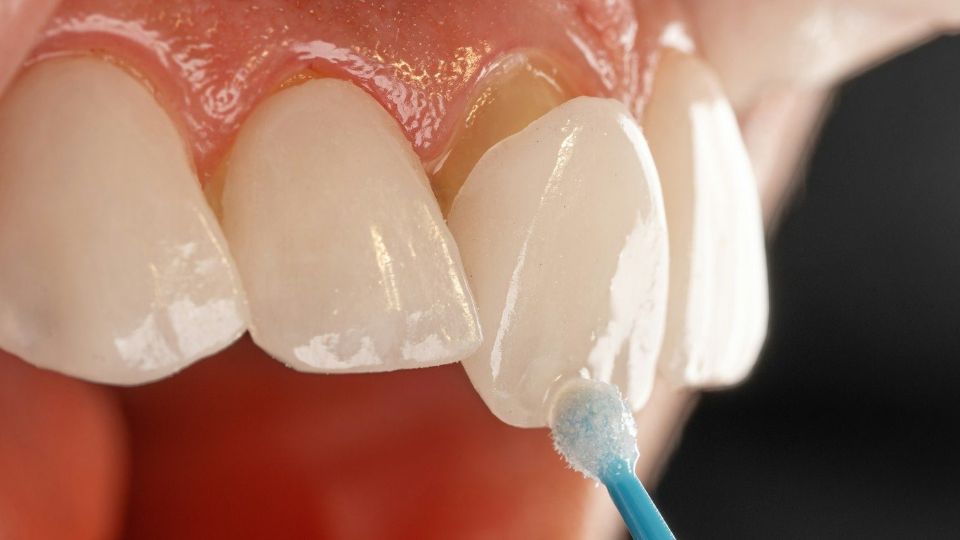
Porcelain veneers are very thin coverings or shells – made from porcelain material – that are placed on teeth to cover the front surface of teeth in order to improve their appearance. Enamel removal is essential for several reasons:
- Room for the veneer: Without reducing enamel, the veneer could appear bulky or misaligned with adjacent teeth.
- Aesthetic blending: Veneers must match the size, shape, and thickness of surrounding teeth to look natural.
- Strong bond: Porcelain adheres most effectively to enamel rather than dentine. Bonding to enamel provides a long-lasting and stable veneer placement.
Attempting to place porcelain veneers without enamel removal can result in unnatural tooth proportions, weak bonding and potential veneer failure.
💡 Only a skilled cosmetic dentist can balance minimal enamel reduction with optimal veneer aesthetics. Visit Whites Dental for a porcelain veneers consultation.
How Much Enamel Is Typically Removed
Enamel removal depends on the case complexity and cosmetic goals. General guidelines include:
- Minimal enamel reduction (0.3 mm): Used for minor cosmetic adjustments or very thin veneers. Ideal when teeth are already proportionate and aligned.
- Average enamel reduction (0.5 mm): Common for most porcelain veneer cases where moderate reshaping and whitening are desired.
- Extensive reduction (0.7 mm): Required when correcting severe discoloration, misalignment, or larger structural imperfections.
Some advanced “no-prep” veneers may require almost no enamel removal, but they are suitable only for select cases with minor aesthetic concerns. Most patients still need at least 0.3–0.5 mm to ensure proper veneer placement and bond strength.
💡 Your dentist will assess each tooth individually to determine the precise enamel reduction needed for the best outcome.
Factors That Affect Enamel Removal For Porcelain Veneers
The amount of enamel removed is not a one-size-fits-all measurement. Factors that influence reduction include:
- Tooth shape and size: Larger or longer teeth may require slightly more reduction to achieve proportional veneers.
- Tooth alignment: Crowded or overlapping teeth may need extra enamel reduction to accommodate veneers properly.
- Desired colour change: Darker teeth may require more enamel removal to mask the natural shade effectively.
- Bite and jaw function: Teeth involved in high bite pressure may require careful preparation to avoid excessive stress on veneers.
- Original enamel thickness: Patients with thinner enamel may need a more conservative approach to prevent sensitivity or damage.
💡 Individualised treatment planning ensures the least amount of enamel is removed while achieving the patient’s desired smile transformation.
Preparation Techniques That Minimise Enamel Loss
Modern dentistry emphasises conservative techniques to protect enamel while achieving the perfect veneer fit. Techniques include:
- Precision depth-cut burs: These tools allow dentists to remove enamel in exact millimetres, avoiding over-reduction.
- Digital or physical guides: Computer-aided design (CAD) and 3D printed templates ensure enamel is only reduced where necessary.
- Micro-prep veneers: These ultra-thin veneers require minimal enamel removal, often preserving over 90% of the natural tooth surface.
- Smoothing and polishing: Careful finishing prevents rough edges and unnecessary enamel loss.
These techniques are widely used in clinics like Whites Dental in London, ensuring your dental veneers look natural and maintain tooth strength.
💡 Conserving enamel is not just about aesthetics; it preserves the tooth’s natural protective layer, reducing long-term risks.
Risks Of Excessive Enamel Removal
Excessive enamel reduction can have negative consequences:
- Increased sensitivity: Thinner enamel exposes dentine, which contains nerve endings, causing discomfort.
- Weaker veneer bond: Porcelain bonds best to enamel; removing too much reduces adhesion strength.
- Higher risk of fracture: Thinner tooth structure may not support the veneer properly, increasing the chance of cracks or chips
- Future dental work: Over-reduction can necessitate crowns or other restorative procedures down the line.
💡 Experienced dentists plan minimal, strategic enamel removal to ensure durability and comfort.
How Enamel Thickness Impacts Porcelain Veneer Longevity
The long-term success of porcelain veneers is closely tied to enamel preservation:
- Porcelain veneers bonded to enamel: Can last 10–15 years or longer, with a low risk of chipping or discolouration.
- Porcelain veneers bonded to dentine: Less predictable outcomes, higher failure rates and potential for sensitivity or staining.
Preserving enamel ensures the veneer maintains its appearance and functionality over time.
💡 Teeth veneers placed on enamel are stronger, more durable and less likely to require replacement.
Pain And Discomfort During Porcelain Veneer Preparation
Since enamel has no nerve endings, enamel reduction itself is usually pain-free. Local anaesthesia may be used in cases where dentine is near or minor sensitivity is anticipated. Temporary veneers may be placed until permanent veneers are bonded, providing protection and comfort.
💡 Patients generally report minimal discomfort and modern techniques allow a smooth and painless experience.
Long-Term Care After Enamel Reduction
After enamel has been reduced for placing veneers on your teeth:
- Brush and floss regularly to maintain gum and tooth health.
- Avoid excessive biting forces or hard foods that can damage veneers
- Attend routine check-ups to monitor the veneers and underlying teeth.
- Use fluoride toothpaste to strengthen remaining enamel and prevent sensitivity.
💡Proper maintenance ensures your veneers last longer and protect the prepared teeth.
Can Enamel Grow Back After Veneer Preparation?
Enamel is non-regenerative. Once it is removed, it cannot grow back. Porcelain veneers act as a protective covering for the prepared tooth, preserving structure and appearance. While enamel cannot regenerate, proper care and high-quality veneers can maintain tooth health for decades.
💡Porcelain veneer treatment are designed to protect teeth after enamel reduction, but good oral hygiene is essential.
How Whites Dental In London Preserves Enamel While Placing Porcelain Veneers
At Whites Dental, we offer some of the best porcelain veneers in London. Enamel preservation is a key focus:
- Using advanced diagnostic tools and digital planning, enamel removal is minimised.
- Dentists tailor the preparation for each tooth, balancing aesthetics and function.
- Patients at Waterloo and Marble Arch locations benefit from micro-prep techniques and temporary veneers to ensure comfort.
- Emphasis is placed on long-lasting, natural-looking results with minimal impact on enamel.
💡 Expert veneer planning and conservative preparation maximise both smile aesthetics and tooth health.
FAQs About Enamel Removal For Porcelain Veneers
Is enamel removal painful?
No. Enamel has no nerves, so patients rarely experience pain.
Will my teeth become sensitive?
Minimal enamel removal generally does not cause sensitivity. Sensitivity is more likely if dentine is exposed.
Can porcelain veneers be replaced?
Yes, but enamel removed during the original preparation is permanent.
Does every tooth require the same enamel reduction?
No. Each tooth is evaluated individually based on shape, position, and aesthetic goals.
Are there “no-prep” veneers that don’t remove enamel?
Yes, but these are suitable only for minor corrections. Most cases require some enamel reduction.
💡 Always consult a cosmetic dentist to discuss enamel preservation options specific to your teeth.
Author

Dr Deepa Chopra
Principal Dentist & Clinic Founder
GDC registration number: 124489
Membership of the Faculty of Dental Surgery from the Royal College of Surgeons of Edinburgh
Membership of the British Dental Association
Restorative Dentistry from Tipton
Align Invisalign profile
LinkedIn profile
Areas of Expertise: 20+ Years Dentistry Experience. General Dentistry, Cosmetic Dentistry, Restorative Dentistry, Invisalign, Composite Bonding, Veneers, Root Canals, Crowns, Dentures, Gum Disease, Hygienist Services, Emergency Dental Services & Teeth Whitening.