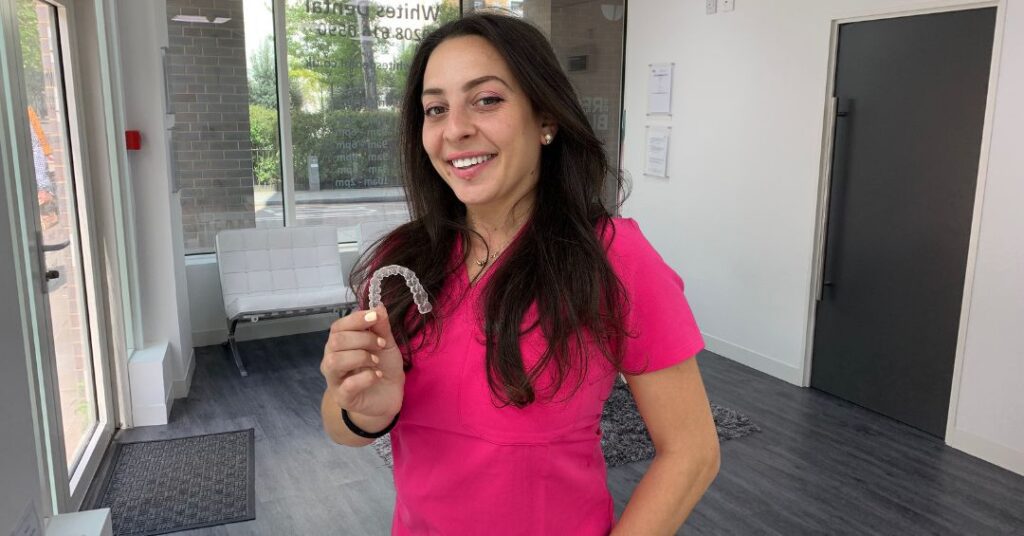


A gap between the teeth can look like a small cosmetic detail from a distance.
For some people, it is exactly that. For others, it becomes one of the first things they notice every time they smile in a photo, speak in meetings, or catch their reflection unexpectedly. The frustrating part is that gaps do not always feel dramatic enough to justify treatment, yet they can still affect confidence far more than people admit.
This is where orthodontic advice becomes useful.
An orthodontist does not just look at whether there is space between two teeth. They look at why the gap is there, whether there are other spacing issues elsewhere in the mouth, how the bite fits together, and what kind of treatment may close the space in a controlled, stable way.
In this guide, we explain whether an orthodontist can help with gaps between teeth, what causes spacing, what treatments may be used, and why diagnosis matters before deciding what to do next.
Quick Answer: Yes, an orthodontist can often help with gaps between teeth. Orthodontists assess why the spacing is there, whether it affects only appearance or also the bite, and whether treatment such as aligners or braces may help close the gaps in a stable way. If you are exploring orthodontist treatment, gap closure is one of the common reasons patients book an assessment.
🔑 Key Takeaways
- An orthodontist can often help close gaps between teeth using braces or clear aligners
- Gaps may be caused by natural spacing, tooth size differences, missing teeth, or bite patterns
- Some spacing problems are cosmetic, while others are part of a wider orthodontic issue
- Closing a visible gap is not just about moving one tooth — the whole bite and arch often need to be assessed
- Adults as well as teenagers can seek orthodontic treatment for spaced teeth
- A proper consultation helps show whether the goal should be gap closure alone or a broader correction plan
🧭 Jump to:
What Counts As A Gap Between Teeth?
A gap between teeth usually means there is visible space where the teeth do not sit closely together.
Some gaps are very small and only noticeable at close range. Others are more obvious, especially between the upper front teeth. In orthodontics, this kind of spacing is often looked at more broadly than patients expect. It is not only about one visible gap. It is also about whether there is excess space elsewhere in the arch and whether the spacing is affecting balance overall.
Common examples include:
- A central gap between the upper front teeth
- General spacing across several teeth
- Gaps that have appeared after tooth movement or relapse
- Spacing linked to missing or undersized teeth
Not Every Gap Means The Same Thing
Two patients may both say they have a gap, but the underlying issue may be very different.
For one patient, it may be a simple spacing concern. For another, it may be part of a wider orthodontic picture involving bite, tooth size, arch shape, or previous movement. That is why it helps to have the cause assessed before assuming the treatment is straightforward.
Can An Orthodontist Close Gaps Between Teeth?
Yes, in many cases this is exactly the kind of problem an orthodontist helps with.
Orthodontists are trained to move teeth in a controlled way, which includes bringing spaced teeth closer together when appropriate. The important point is that they do not just focus on closing the visible space. They also consider whether closing that gap will create a balanced and stable end result.
That may involve:
- Bringing front teeth together more evenly
- Redistributing space across the arch properly
- Assessing whether the bite still works once the gap is closed
- Making sure treatment does not simply shift the problem elsewhere
If you are considering orthodontic treatment in London, spacing is one of the most common concerns that can be assessed during a specialist consultation.
Why Gap Closure Should Be Planned Properly
A gap can look like one simple space between two teeth, but the movement needed to close it may involve more than those teeth alone.
An orthodontist may need to look at:
- How the upper and lower teeth meet
- Whether other teeth also need repositioning
- Whether the space is hiding a bite imbalance
- How to make the final result stable over time
Why Do Gaps Between Teeth Happen?
Gaps between teeth can happen for several reasons, which is why diagnosis matters so much.
Sometimes the teeth are simply smaller in proportion to the arch, leaving natural spacing. In other cases, spacing may relate to the way teeth erupted, missing teeth, habits, or changes over time.
| Possible Cause | What It Means | Why Orthodontic Assessment Matters |
|---|---|---|
| Natural spacing | There is more room in the arch than the teeth need | The orthodontist checks whether simple alignment may help |
| Tooth size differences | Some teeth may be smaller, leaving extra space | Treatment planning needs to consider how the final spacing will look |
| Missing teeth | A gap may be linked to a tooth that never developed or has been removed | The orthodontist assesses whether to close or manage the space strategically |
| Bite or eruption pattern | Spacing may be linked to the way teeth and jaws developed | The wider bite needs to be assessed, not just the visible gap |
Can A Gap Develop Later In Life?
Yes.
Some adults notice spacing that seems to have become more obvious over time. Others have had a visible gap for years but only now want to do something about it. Either way, the orthodontist needs to assess the current tooth positions and bite rather than relying only on how the spacing used to look.
Can An Orthodontist Help With A Gap Between The Front Teeth?
Yes, this is one of the most common spacing concerns people ask about.
A gap between the front teeth can draw attention because it sits in the middle of the smile. Patients often describe it as the first thing they notice in photos or conversation. Orthodontic treatment may help close that gap, but the plan still needs to consider the rest of the arch so the smile looks balanced rather than simply compressed at the front.
Patients with a front gap often also ask related questions such as whether treatment can help with crowding or bite issues elsewhere.
Front Gaps Can Be Cosmetic, Functional, Or Both
Some front gaps are mainly about appearance.
Others sit alongside:
- General spacing across the smile
- Uneven tooth contact
- Bite concerns that affect planning
- Previous movement after earlier treatment
Do You Need Braces If You Have A Gap Between Your Teeth?
Not always, but braces or clear aligners may be recommended if the gap is caused by tooth position, spacing across the arch, or the way the bite fits together.
If the gap is very small and the rest of the teeth are well aligned, treatment may be optional or cosmetic. If the gap is part of a wider spacing pattern, closing it properly may involve moving several teeth rather than just the two teeth beside the gap.
An orthodontist can assess whether braces, aligners, bonding, veneers, or no treatment would make most sense for your case.
How Does An Orthodontist Assess Tooth Gaps?
An orthodontist assesses tooth gaps by looking at more than the gap itself.
They will usually examine:
- Where the spacing is
- How many teeth are involved
- How the upper and lower teeth meet
- Whether there are signs the spacing is part of a wider issue
- Whether scans, photos, or X-rays are needed
This is why an assessment is far more useful than trying to judge the issue by mirror alone. A patient may focus on one visible space, while the orthodontist sees a broader pattern that affects treatment choice.
Why The Cause Of The Gap Changes The Plan
Before recommending treatment, the orthodontist needs to understand:
- Whether the spacing is isolated or part of wider spacing
- Whether the bite is stable
- Whether the gap can be closed predictably
- What kind of result is realistic
This is closely linked to the wider diagnostic process we covered in What Does An Orthodontist Check At Your First Appointment? and How An Orthodontist Creates A Personalised Treatment Plan.
Can Braces Or Aligners Help Close Gaps Between Teeth?
The right treatment depends on the case, but orthodontists commonly use systems that can move teeth into better alignment and close unwanted space.
That may include:
- Clear aligners
- Metal braces
- Ceramic braces
- Damon braces
At Whites Dental, patients exploring specialist orthodontist London care may be assessed for different treatment options depending on the amount of spacing, the bite, and the overall result being aimed for.
Why The Best Treatment Depends On More Than Appearance
Patients sometimes assume the most discreet option will always be the best option.
That is not automatically true.
The orthodontist still needs to consider:
- How the teeth need to move
- Whether the gap is simple or more complex
- How much control is needed during treatment
- How stable the final result is likely to be
Can Adults See An Orthodontist For Gaps Between Teeth?
Yes, absolutely.
Gaps between teeth are not only a teenage concern. Many adults look into treatment because they have lived with spacing for years, or because the spacing has become more noticeable over time. Adult patients often want a solution that improves the smile without feeling overly disruptive to work or day-to-day life.
Why Adults Often Put Off Gap Treatment
Adults often delay booking because:
- They think the gap is too minor to justify treatment
- They assume orthodontics is mainly for children
- They are unsure what treatment would involve
- They worry the issue is purely cosmetic and not worth assessing
In reality, a consultation can quickly show whether the spacing is simple, whether the bite also needs attention, and what options may be available.
Should An Orthodontist Explain Why The Gap Is There?
Yes.
A good orthodontist should not only say that a gap can be treated. They should explain why it is there, whether it is part of a wider spacing or bite pattern, and what the treatment is trying to achieve.
That explanation should include:
- What is causing the space
- Whether the issue is mainly cosmetic or also orthodontic
- How treatment may close the gap
- What a realistic end result looks like
If you are comparing providers for orthodontic treatment London, that clarity is one of the strongest trust signals to look for.
FAQs: Can An Orthodontist Help With Gaps Between Teeth?
Patients often know orthodontists straighten crooked teeth, but they are not always sure whether spacing and visible gaps fall into the same area. These are some of the most common questions.
Can An Orthodontist Help With Gaps Between Teeth?
Yes. Orthodontists commonly assess and treat gaps between teeth when spacing can be improved through planned tooth movement.
Can An Orthodontist Close A Gap Between Front Teeth?
Yes, in many cases they can. The exact approach depends on why the gap is there and whether the wider bite also needs to be considered.
Why Do Gaps Between Teeth Happen?
Gaps can happen because of natural spacing, tooth size differences, missing teeth, eruption patterns, or wider bite and alignment issues.
Do I Need Braces If I Have A Gap Between My Teeth?
Not always. Some gaps are cosmetic and may not need orthodontic treatment, but braces or aligners may help if the gap is caused by tooth position, spacing across the arch, or bite-related issues.
Are Gaps Between Teeth Only A Cosmetic Problem?
Not always. Some are mainly cosmetic, while others are part of a wider orthodontic issue involving spacing across the arch or how the teeth meet.
Can Adults Have Orthodontic Treatment For Gaps?
Yes. Adults commonly seek orthodontic treatment for visible spacing, including gaps that have bothered them for years.
Can Aligners Or Braces Help Close Gaps?
Depending on the case, yes. Orthodontists may use clear aligners or fixed braces to help close unwanted space in a controlled way.
Does Closing A Gap Mean Only Moving Two Teeth?
Not necessarily. Sometimes the orthodontist needs to assess and move other teeth as part of creating a balanced final result.
Should The Orthodontist Explain What Caused My Gap?
Yes. A good orthodontist should explain why the spacing is there, what it means for treatment, and what result may be realistic.
Looking For A Specialist Orthodontist In London?
If you are concerned about a visible gap, spacing across the teeth, or a front gap that affects your confidence when you smile, the best next step is a proper orthodontic assessment.
At Whites Dental, patients can explore specialist orthodontist in London treatment options for adults, teenagers, and children, including Invisalign, metal braces, ceramic braces, and Damon braces.
Whether the issue is one obvious gap or wider spacing that needs a more careful plan, an orthodontic consultation can help show what is causing it and what treatment may help.
- ✅ Specialist-led orthodontic assessments
- ✅ Invisalign and fixed brace options
- ✅ Adult and child suitability
- ✅ Central London clinic locations
Author

Dr Deepa Chopra
Principal Dentist & Clinic Founder
GDC registration number: 124489
Membership of the Faculty of Dental Surgery from the Royal College of Surgeons of Edinburgh
Membership of the British Dental Association
Restorative Dentistry from Tipton
Align Invisalign profile
LinkedIn profile
Areas of Expertise: 20+ Years Dentistry Experience. General Dentistry, Cosmetic Dentistry, Restorative Dentistry, Invisalign, Composite Bonding, Veneers, Root Canals, Crowns, Dentures, Gum Disease, Hygienist Services, Emergency Dental Services & Teeth Whitening.