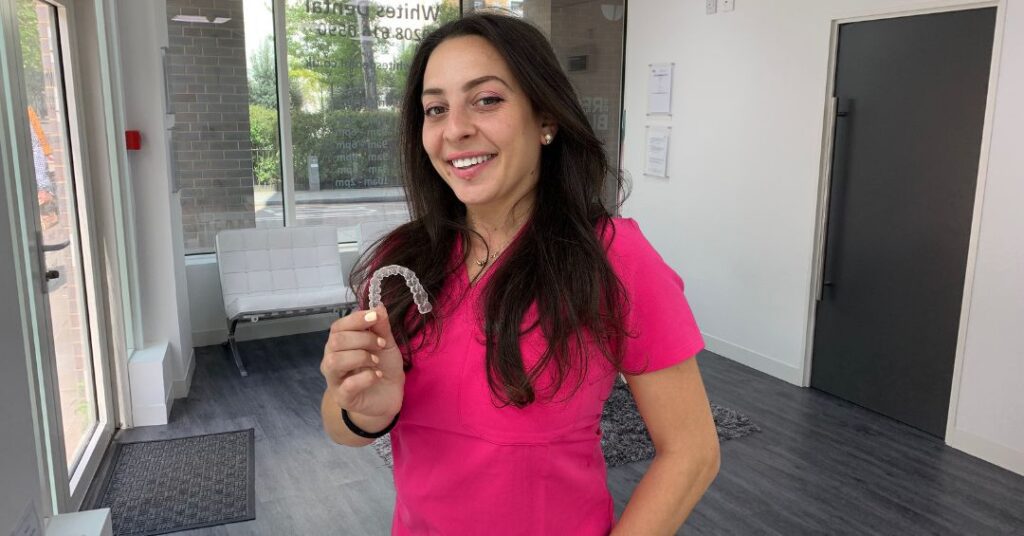


Choosing an orthodontist is not just about finding someone who offers braces or Invisalign.
Most patients only realise that once they start comparing clinics properly.
On the surface, many providers may appear to offer similar treatments. The names sound familiar, the before-and-after photos look polished, and the websites often promise straight teeth and a better smile. But orthodontic treatment is not simply about selling a product. It is about diagnosis, planning, control, and knowing how to guide teeth into better positions safely and predictably.
That makes the choice of orthodontist important.
The right orthodontist should understand your bite, plan carefully, explain things clearly, and recommend the most suitable approach for your case rather than the easiest option to sell.
This guide explains what makes a good orthodontist, what patients should look for, and how to judge the difference between basic smile straightening and genuinely well-planned orthodontic care.
Quick Answer: A good orthodontist should have specialist training, relevant experience, clear communication, careful treatment planning, and a strong focus on bite function and long-term stability. When choosing an orthodontist, look for someone who explains your options clearly, tailors the plan to your case, and does not pressure you into one treatment.
🔑 Key Takeaways
- A good orthodontist has specialist training in tooth movement and bite correction
- They assess the full bite, not just the visible front teeth
- Good communication and honest treatment advice matter as much as the appliance itself
- The right orthodontist will recommend treatment that suits your case, not just what is easiest to market
- Experience, planning, and attention to long-term stability are key signs of quality care
🧭 Jump to:
How To Choose A Good Orthodontist
Choosing a good orthodontist is about more than finding the nearest clinic or the first provider offering Invisalign or braces. The best choice is usually the clinician who can explain your problem clearly, assess your bite properly, and recommend a treatment plan that fits your actual case.
Before choosing, look for signs that the orthodontist is focused on diagnosis, planning and long-term results rather than simply promoting one appliance.
| What to look for | Why it matters |
|---|---|
| Specialist orthodontic knowledge | Tooth movement and bite correction need proper planning |
| Clear explanation of fixed braces and aligners | You should understand why one option suits your case better than another |
| Case-specific treatment plan | Good care should not feel generic or rushed |
| Honest discussion of limits and compromises | Patients need realistic expectations before treatment begins |
| Retention and stability planning | The result needs to be maintained after braces or aligners finish |
Does Specialist Training Matter When Choosing An Orthodontist?
Yes. It matters a great deal.
A good orthodontist is not simply a clinician who offers braces or aligners. They are someone with additional training focused on tooth movement, bite correction, and how the teeth and jaws work together over time.
That matters because orthodontic treatment involves more than making teeth appear straighter from the front. It requires an understanding of:
- Tooth movement mechanics
- Bite relationships
- Treatment sequencing
- Long-term stability
- How to manage simple and more complex cases safely
A good orthodontist should be able to explain why a treatment is suitable for your case, not simply tell you that it is available.
If you are comparing clinician types, our guide on specialist orthodontist vs general dentist explains why specialist input can matter.
A Good Orthodontist Looks Beyond The Obvious
Many patients only notice the visible part of the problem. They may focus on one crooked front tooth, a small gap, or an area of crowding. A good orthodontist looks past that first impression and assesses the full bite, the alignment of both arches, and the wider implications of treatment.
That broader view is a major part of what separates proper orthodontic care from a simpler cosmetic sales conversation.
What Makes Orthodontic Treatment Planning Good?
Good treatment planning is one of the clearest signs of a good orthodontist.
Orthodontic treatment should never feel random or rushed. Teeth need to be moved in a controlled sequence, with attention to both aesthetics and function. A well-planned case looks at the start point, the end point, and the safest path between them.
A good orthodontist will usually assess:
- The exact alignment issue
- Whether the bite is involved as well as the visible crowding or spacing
- Which treatment type suits the case best
- What compromises, if any, need to be discussed openly
- How the result will be maintained afterwards
Good Planning Is Not Just About Choosing An Appliance
Patients sometimes think the main decision is whether they want braces or Invisalign. In reality, that is only one part of the picture.
A good orthodontist asks a deeper set of questions, such as:
- What is the actual problem here?
- Does the bite need correction as well as the visible alignment?
- Is the patient mainly looking for cosmetic improvement, functional improvement, or both?
- What is the most appropriate treatment for this case, not just the most popular one?
If you are comparing treatment options, you can learn more about orthodontic treatment in London and the types of orthodontic care available.
You may also find it useful to read our guide on how an orthodontist creates a personalised treatment plan.
Should A Good Orthodontist Explain Fixed Braces Clearly?
Yes. If fixed braces are being recommended, a good orthodontist should explain why they suit your case, how they work, what type of braces are being considered, and what to expect during treatment.
This is especially important for patients comparing metal braces, ceramic braces, Damon braces, Invisalign or other aligner options. The recommendation should be based on the movement needed, the bite, the complexity of the case, and your priorities, not simply on which option sounds most appealing.
Clear explanation before treatment is a strong sign that the clinician is thinking carefully about your case rather than rushing you into a decision.
Why Does Communication Matter So Much?
A good orthodontist should be able to explain things clearly.
Orthodontic treatment is a process that unfolds over time. Patients need to understand what the issue is, what the proposed treatment will do, what the likely limits are, and what will be expected of them during treatment. If that is not communicated well, confidence drops quickly.
Good communication usually means the orthodontist can explain:
- What the actual alignment or bite problem is
- Why a certain treatment has been recommended
- What the timeline is likely to look like
- What you need to do during treatment
- What the realistic outcome is
Patients Should Feel Informed, Not Pressured
A good orthodontist is not just technically capable. They also make patients feel that the treatment recommendation is grounded, honest, and specific to their case.
That means they should not rely on vague promises or push one solution without properly explaining why it is the right fit. Patients should come away feeling clearer, not more confused.
For practical preparation, see our guide on questions to ask before choosing an orthodontist.
Does Experience Make A Difference?
Yes, experience matters.
The more orthodontic cases a clinician has assessed and treated, the more likely they are to recognise common patterns, spot complications early, and recommend treatment with greater confidence and accuracy.
Experience can make a difference in areas such as:
- Recognising when a case is straightforward or more complex
- Choosing the most suitable treatment system
- Managing bite changes during treatment
- Handling refinements or treatment adjustments sensibly
- Planning for stability after treatment ends
| Quality to look for | Why it matters | What it may look like in practice |
|---|---|---|
| Specialist focus | Orthodontics requires more than general dental knowledge | Clear explanation of bite and alignment issues |
| Treatment planning | Good outcomes depend on careful sequencing | A tailored plan rather than a generic recommendation |
| Communication | Patients need clarity and realistic expectations | You understand the problem and the proposed route |
| Experience | More experience usually improves judgement | Confidence in handling different case types |
| Retention mindset | The result needs to last, not just look good at the end | Retention is discussed as part of treatment, not an afterthought |
Experience Should Support Judgement, Not Shortcuts
Experience is valuable, but only when it is paired with proper case-specific thinking. A good orthodontist does not assume every case fits the same formula. They use experience to make better decisions, not to oversimplify the process.
We cover this in more depth in our guide on whether experience matters when choosing an orthodontist.
Does A Good Orthodontist Think About Long-Term Stability?
Yes. That is one of the strongest signs of quality.
It is easy for patients to focus on the visible end result. Straighter teeth are the thing they will see in the mirror. A good orthodontist thinks one step further and asks how that result will hold up over time.
This is why retention matters so much in orthodontics. A clinician who plans well will also explain:
- Why retainers are needed
- How teeth can shift after treatment
- What is required to help maintain the result
That long-term mindset is part of what makes orthodontic care feel properly considered rather than superficial.
Should A Good Orthodontist Recommend The Same Treatment For Everyone?
No, and that is often a warning sign.
If every patient seems to be pushed towards the same appliance or the same style of treatment regardless of their case, it is reasonable to question how individualised the planning really is.
A good orthodontist should recommend treatment based on:
- The specific alignment issue
- Whether bite correction is needed
- The complexity of the case
- The patient’s priorities and lifestyle
- What is realistically achievable
That may mean one patient is best suited to aligners, another to ceramic braces, and another to a different fixed system. Good care is not about forcing every case into the same format.
Red Flags When Choosing An Orthodontist
Sometimes the warning signs are just as important as the positive ones.
You may want to be cautious if a provider:
- Pushes one treatment option without explaining alternatives
- Does not assess or discuss your bite properly
- Gives vague promises about fast results
- Does not explain retainers or long-term stability
- Makes the consultation feel rushed or sales-led
- Cannot clearly explain why a treatment suits your case
A strong orthodontic consultation should make you feel clearer about your teeth, your bite, your options and your next step. If you leave feeling pressured or unsure what is actually being treated, that is worth paying attention to.
How Can Patients Judge Whether An Orthodontist Is Good?
Patients do not need to be clinicians to make a sensible judgement.
There are practical things you can look for during a consultation and while comparing providers.
A good orthodontist will usually give you the sense that:
- They understand the full problem, not just the visible symptom
- They are explaining your case rather than speaking in generic slogans
- They are thinking about bite and function as well as straightness
- They are realistic about what treatment can and cannot do
- They are focused on long-term outcome, not just short-term appearance
Questions Patients Can Ask Themselves After The Consultation
After meeting an orthodontist, it can help to reflect on a few simple questions:
- Did they explain my actual problem clearly?
- Did the treatment recommendation feel tailored to my case?
- Did they discuss the bite as well as the visible straightening?
- Did I feel informed rather than pressured?
- Did they explain what happens after treatment as well as during it?
If the answer to those questions is mostly yes, that is usually a very good sign.
If you are still working out what an orthodontist actually does, you may also find it useful to read What Does an Orthodontist Do?.
Are Reviews The Main Sign Of A Good Orthodontist?
Reviews can be helpful, but they should not be the only thing you rely on.
Patient feedback can give useful clues about communication, professionalism, organisation, and the overall experience. That said, orthodontic quality is not something most patients can judge in a technical sense. So reviews are best used as one signal among several, not the entire basis for a decision.
It is more useful to combine reviews with:
- How clearly the orthodontist explains things
- Whether the treatment recommendation feels case-specific
- Whether they discuss bite, stability, and retention properly
- Whether you feel confident in the consultation process itself
For a fuller breakdown, read our guide on how important reviews are when choosing an orthodontist.
FAQs: What Makes A Good Orthodontist?
Patients often ask this when they know they want treatment but are unsure how to choose well between providers. These are some of the most common questions patients ask before booking.
How Do You Choose A Good Orthodontist?
Choose an orthodontist who explains your diagnosis clearly, assesses your bite as well as your visible teeth, discusses suitable treatment options, and gives realistic advice about timelines, limits and retention.
What Should You Look For In An Orthodontist?
Look for specialist training, experience, clear communication, careful treatment planning, honest recommendations, and a focus on long-term stability after treatment.
Should An Orthodontist Explain Fixed Braces Before Treatment?
Yes. If fixed braces are recommended, the orthodontist should explain how they work, why they suit your case, what alternatives exist, and what will be expected during treatment.
Does Specialist Orthodontic Training Matter?
Yes. Orthodontic treatment involves tooth movement and bite correction, so specialist training is very important when assessing and planning treatment properly.
Is A Good Orthodontist Just Someone Who Offers Invisalign Or Braces?
No. A good orthodontist does more than offer treatment. They diagnose the problem properly, plan carefully, and recommend the most appropriate option for your case.
Does Experience Matter When Choosing An Orthodontist?
Yes. Experience can improve judgement, treatment planning, and the ability to manage a wider range of cases effectively.
Should A Good Orthodontist Explain Bite Issues As Well As Straight Teeth?
Yes. Good orthodontic care should consider the bite and long-term stability, not just the visible appearance of the front teeth.
Can A Good Orthodontist Tell Me If I Do Not Need Treatment?
Yes. Honest guidance is a good sign. A strong clinician should be willing to say when treatment is unnecessary, optional, or not the best next step.
Is Communication Really That Important?
Yes. Patients need to understand what the issue is, why treatment is being recommended, and what the likely result and commitment will be.
Should A Good Orthodontist Talk About Retainers And Stability?
Yes. Retention is a major part of protecting the result after treatment, so it should be discussed properly from the outset.
Are Online Reviews Enough To Judge An Orthodontist?
No. Reviews are useful, but they should be considered alongside training, communication, treatment planning, and the overall quality of the consultation.
Looking For A Good Orthodontist In London?
If you want orthodontic treatment that is carefully planned around your teeth, bite, and long-term result, the quality of the clinician matters just as much as the type of appliance used.
At Whites Dental, patients can explore treatment with an experienced orthodontist in London, with options for adults, teenagers, and children across a wide range of alignment and bite concerns.
Whether you are comparing braces, aligners, or simply trying to work out what kind of treatment would make sense for your case, a proper consultation is the best way to understand your options clearly.
- ✅ Specialist orthodontic assessment
- ✅ Clear aligner and fixed brace options
- ✅ Adult and child treatment pathways
- ✅ Central London clinic locations
Author

Dr Deepa Chopra
Principal Dentist & Clinic Founder
GDC registration number: 124489
Membership of the Faculty of Dental Surgery from the Royal College of Surgeons of Edinburgh
Membership of the British Dental Association
Restorative Dentistry from Tipton
Align Invisalign profile
LinkedIn profile
Areas of Expertise: 20+ Years Dentistry Experience. General Dentistry, Cosmetic Dentistry, Restorative Dentistry, Invisalign, Composite Bonding, Veneers, Root Canals, Crowns, Dentures, Gum Disease, Hygienist Services, Emergency Dental Services & Teeth Whitening.