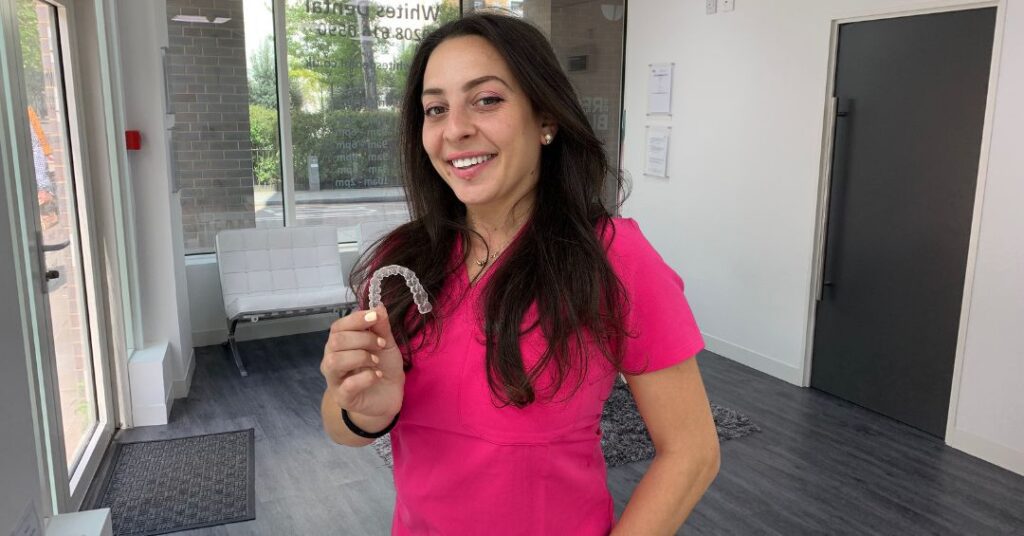


Crowded teeth are one of the most common reasons people start looking into orthodontic treatment.
Sometimes the issue is obvious. Teeth overlap, twist, or sit unevenly because there simply does not seem to be enough room. Other times, the crowding is milder and the main concern is how the smile looks in photos or how awkward certain teeth are to clean. In both situations, patients often end up asking the same thing: is this actually something an orthodontist can fix?
In most cases, yes.
Crowding sits right at the centre of what orthodontists assess and treat. But that does not mean every case is identical. Some crowded teeth are mainly a cosmetic concern, while others are tied to bite issues, tooth rotation, or a lack of space that affects the whole arch more than the patient first realises.
In this guide, we explain whether an orthodontist can help with crowded teeth, how crowding is assessed, and why the right treatment plan depends on more than simply whether teeth look a bit uneven.
Quick Answer: Yes, an orthodontist can often help with crowded teeth. Orthodontists assess how much crowding is present, whether it is affecting the bite as well as appearance, and which treatment options may be suitable to improve alignment safely. Depending on the case, treatment may involve braces or clear aligners. If you are considering orthodontist in London treatment, a consultation can show how severe the crowding is and what can realistically be corrected.
🔑 Key Takeaways
- Orthodontists commonly help patients with crowded teeth
- Crowding happens when there is not enough room for teeth to sit properly in line
- Some crowded teeth are mainly cosmetic, while others also affect bite and function
- An orthodontist will assess how severe the crowding is and whether other issues are involved
- Both braces and aligners may be options depending on the case
- A proper consultation helps show what can realistically be corrected and how
🧭 Jump to:
What Are Crowded Teeth?
Crowded teeth happen when there is not enough room for all the teeth to sit properly in line.
When that happens, teeth may:
- Overlap
- Twist or rotate
- Sit further forwards or backwards than they should
- Look uneven within the arch
Crowding can affect just one area, such as the lower front teeth, or it can be part of a wider alignment issue across the whole bite.
Why Crowding Happens
Crowding usually comes down to space.
In simple terms, the teeth need more room than the arch is naturally providing. That can lead to teeth competing for position rather than lining up neatly.
Some cases are mild. Others are more obvious and may also involve bite imbalance or more complex tooth positions.
Can An Orthodontist Help With Crowded Teeth?
Yes, this is one of the most common things orthodontists treat.
Orthodontists are trained to assess how much crowding is present, whether other issues are involved, and how the teeth may need to move in order to improve alignment.
That makes crowded teeth a very typical orthodontic concern.
Treatment may help by:
- Bringing teeth into better alignment
- Reducing overlap
- Improving the balance of the smile
- Supporting a more organised bite overall
Whether the crowding is mild or more advanced, the first step is usually proper assessment rather than guessing how simple it is.
Why Orthodontists Are The Right Professionals For Crowding
Crowded teeth are not just about appearances.
An orthodontist is not only looking at how crowded teeth look from the front. They are also thinking about:
- How severe the crowding really is
- Whether the crowding is linked to bite issues
- How the teeth need to move safely over time
- Which treatment option makes the most sense
That planning side is exactly why orthodontists are so relevant when crowding is the main concern.
How Does An Orthodontist Assess Crowded Teeth?
An orthodontist will usually assess crowded teeth by looking at the position of the teeth, the amount of space available, and whether the crowding affects the bite as well as appearance.
That may involve:
- Clinical examination
- Checking tooth position and rotation
- Assessing the bite
- Looking at how the upper and lower arches relate to each other
- Using scans, photos, or X-rays where needed
This helps the orthodontist understand not only that the teeth are crowded, but how the crowding fits into the wider case.
Why Mild Crowding May Be More Than It Looks
A patient may think they only have:
- A slightly crooked lower tooth
but the orthodontist may also see:
- Limited space in the arch
- Rotation affecting neighbouring teeth
- A bite issue contributing to the overall pattern
That is why a proper assessment matters before deciding what treatment is likely to help.
You can read more about the first-appointment checks in What Does An Orthodontist Check At Your First Appointment?.
Can An Orthodontist Tell How Severe The Crowding Is?
Often, yes.
A trained orthodontist can usually tell whether the crowding looks:
- Mild
- Moderate
- More complex
That early assessment helps shape the likely treatment discussion.
Some crowding is mostly cosmetic. Some affects multiple teeth or the bite more broadly. Some cases may look minor at first glance but need careful movement planning to get a stable result.
| Type Of Crowding | What It May Look Like | Why It Matters |
|---|---|---|
| Mild crowding | Slight overlap or one or two uneven teeth | May still affect appearance and cleaning |
| Moderate crowding | More visible overlap and limited space | May influence treatment choice and timing |
| More complex crowding | Multiple teeth displaced or rotated, possible bite involvement | Often needs more careful planning and control |
What Orthodontic Treatments Can Help With Crowded Teeth?
The right treatment depends on the case, but orthodontists may use different systems to improve crowded teeth.
These can include:
- Clear aligners
- Metal braces
- Ceramic braces
- Damon braces
The choice depends on factors such as:
- How crowded the teeth are
- Whether the bite is also affected
- How much movement is needed
- The patient’s goals and preferences
Why One Treatment Does Not Suit Every Crowding Case
Some patients assume that any straightening system will solve crowding in the same way.
That is not always true.
A good orthodontist will consider:
- Which option is suitable
- Which gives the right control for the movements needed
- Which route is realistic for the case and the patient’s lifestyle
If you are looking into orthodontic treatment London options, that is one of the most useful parts of the consultation.
Does Crowded Teeth Only Affect Appearance?
No, not always.
Many patients first seek help because they dislike how crowded teeth look, but crowding can also affect:
- How easy the teeth are to clean
- How evenly the bite comes together
- How stable the alignment feels over time
That does not mean every crowded tooth is causing major functional problems. But it does mean crowding is not always a purely cosmetic issue either.
Appearance And Function Often Overlap
A patient may start with a cosmetic concern and then learn that the crowding also involves:
- Rotation
- Space imbalance
- Bite changes affecting the way the teeth fit
This is part of why orthodontic assessment is so valuable. It turns a simple-looking concern into a clearer diagnosis.
Can Adults See An Orthodontist For Crowded Teeth?
Yes, absolutely.
Crowding is one of the most common reasons adults start orthodontic treatment. In some cases, it has been there for years. In others, it feels as though the teeth have shifted gradually over time.
Adults may seek help because:
- Lower front teeth have become more crowded
- They never had treatment when younger
- Previous orthodontic results have relapsed
- They want a straighter smile with a more discreet option
So yes, orthodontists very commonly help adults with crowded teeth.
Why Adult Crowding Often Feels Frustrating
Adults often say the crowding seems to have crept up on them.
They may feel:
- The smile used to look more even
- Teeth are harder to clean than before
- The crowding is now much more noticeable in photos
That is exactly the kind of concern an orthodontist is used to assessing.
If you are exploring orthodontist in London options as an adult, crowding is one of the most common reasons to book.
Should An Orthodontist Explain The Cause And Severity Of Crowding Clearly?
Yes.
A good orthodontist should explain:
- What kind of crowding is present
- How severe it appears
- Whether the bite is affected too
- Which treatment routes may be suitable
Patients should not be left with a vague “your teeth are a bit crowded” and nothing more.
Clear explanation of the crowding pattern is one of the strongest signs that the assessment is being done properly.
FAQs: Can An Orthodontist Help With Crowded Teeth?
Patients often know their teeth look crowded, but they are not always sure whether orthodontic treatment is really the right route or what an orthodontist can do about it. These are some of the most common questions people ask.
Can An Orthodontist Help With Crowded Teeth?
Yes. Orthodontists commonly help patients with crowded teeth by assessing the severity of the crowding and planning treatment to improve alignment safely.
What Causes Crowded Teeth?
Crowded teeth usually happen when there is not enough room in the arch for all the teeth to sit properly in line.
Can Braces Fix Crowded Teeth?
Yes. Braces are one of the common treatment options orthodontists may use to help improve crowded teeth, depending on the case.
Can Aligners Help With Crowded Teeth?
In many cases, yes. Clear aligners may be suitable for some crowding cases, depending on how much movement is needed and whether bite issues are involved too.
Can An Orthodontist Tell How Severe The Crowding Is?
Usually, yes. A trained orthodontist can often assess whether the crowding is mild, moderate, or more complex and explain how that affects treatment planning.
Do Crowded Teeth Only Affect Appearance?
Not always. Crowding may also affect how easy teeth are to clean and, in some cases, how the bite fits together.
Can Adults See An Orthodontist For Crowded Teeth?
Yes. Adult crowding is very common, and many adults seek orthodontic treatment for teeth that have become more uneven over time.
Will An Orthodontist Explain What Is Causing My Crowding?
Yes. A good orthodontist should explain what kind of crowding is present, how severe it is, and which treatment options may help.
Looking For A Specialist Orthodontist In London?
If your teeth feel crowded, overlap, or seem to be getting more uneven over time, the best next step is a proper orthodontic assessment so you can understand what is actually going on and what can be corrected.
At Whites Dental, patients can explore specialist orthodontist London treatment options for adults, teenagers, and children, including Invisalign, metal braces, ceramic braces, and Damon braces.
Whether the crowding is mild or more noticeable, a consultation can help you understand how severe it is, whether the bite is involved, and which treatment route may make the most sense.
- ✅ Specialist-led orthodontic assessments
- ✅ Invisalign and fixed brace options
- ✅ Adult and child suitability
- ✅ Central London clinic locations