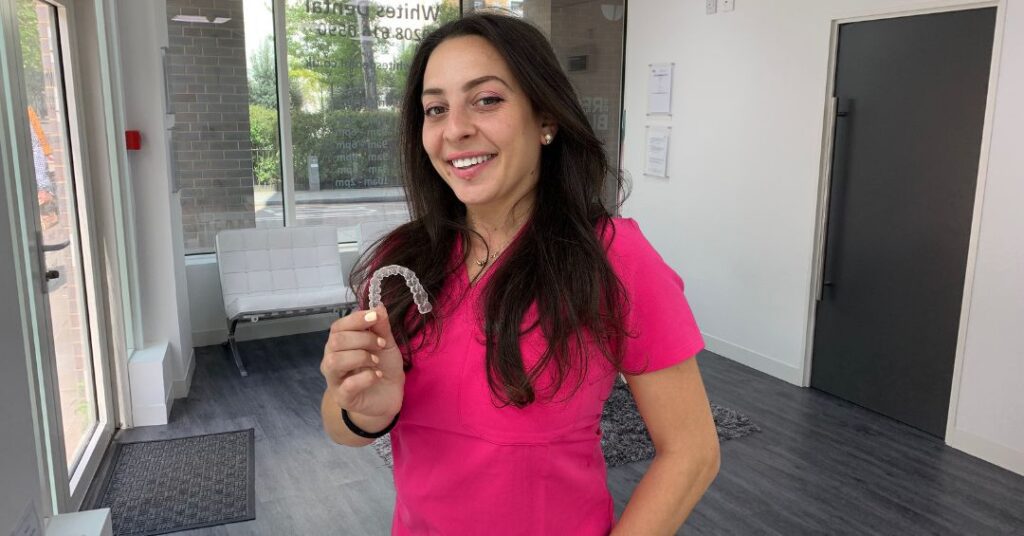


Choosing an orthodontist can feel oddly high pressure.
You are not just picking a clinic that happens to offer braces or aligners. You are choosing the person or team who will assess your bite, plan tooth movement, guide treatment over months, and help shape a result you will hopefully live with for years.
That is why a consultation should never feel like a one-way sales pitch.
The right questions can tell you a great deal about an orthodontist before treatment even begins. They can help you understand whether the provider is experienced with your type of case, whether the treatment options genuinely suit your needs, and whether the plan being suggested is based on convenience for the clinic or what is actually best for you.
In this guide, we break down the most important questions to ask before choosing an orthodontist, why those questions matter, and what sort of answers should give you confidence moving forward.
Quick Answer: The most important questions to ask an orthodontist are: what is the actual problem with my teeth or bite, which treatments are suitable, why are you recommending this option, how long will treatment take, what is included in the cost, and what retainers or aftercare will I need afterwards?
🔑 Key Takeaways
- Asking the right questions helps you compare orthodontists on more than just price or location
- A good orthodontist should explain both tooth straightening and bite correction clearly
- You should understand which treatment options are suitable for your case and why
- Questions about retainers, timelines, reviews, and aftercare are just as important as questions about braces or aligners
- An orthodontic consultation should leave you with clarity, not pressure
- Adults and parents choosing treatment for children may need to ask slightly different orthodontic questions
🧭 Jump to:
Orthodontist Question Checklist
If you only have a short consultation, these are the core questions worth asking before choosing an orthodontist or agreeing to treatment.
| Question to ask | Why it matters |
|---|---|
| What is the actual problem with my teeth or bite? | Shows whether the orthodontist has diagnosed your case clearly |
| Which treatments are suitable for me? | Helps compare braces, aligners and other options fairly |
| Why are you recommending this treatment? | Reveals whether the plan is case-specific or generic |
| How long will treatment likely take? | Gives you realistic expectations before committing |
| What is included in the fee? | Helps avoid confusion around appointments, retainers and aftercare |
| What happens after treatment finishes? | Retention is essential for keeping teeth in position |
Questions To Ask About Credentials And Specialist Status
Before comparing treatment options, it is sensible to confirm who will actually be planning your orthodontic care.
Useful questions include:
- Are you a specialist orthodontist or a dentist who provides orthodontic treatment?
- Are you registered with the General Dental Council?
- Do you regularly treat cases like mine?
- Who will be involved in my treatment and what are their roles?
- Can I see examples of similar orthodontic cases you have treated?
These questions help you understand whether the provider has the right background, experience and support team for your case. This is especially important if your treatment involves bite correction, complex crowding, relapse after previous braces, or a choice between fixed braces and aligners.
You can also read our guide on how to check if an orthodontist is registered in the UK.
Why Do Questions Matter Before Choosing An Orthodontist?
Many patients assume they will know whether an orthodontist is right for them just by looking at reviews, prices, or before-and-after photos.
Those things can help, but they only show part of the picture.
The questions you ask before choosing an orthodontist help reveal:
- How clearly the orthodontist explains your case
- Whether they are thinking about bite as well as appearance
- How flexible their treatment planning really is
- Whether the consultation feels honest or overly sales-led
- How well the provider understands your concerns and goals
Good orthodontics is not just about getting teeth straighter. It is about making sure the movement is planned properly, the bite works well, and the result is stable over time.
What A Good Orthodontic Consultation Should Feel Like
A good consultation should feel structured, calm, and informative.
You should leave with a stronger understanding of:
- What the actual problem is
- Whether it is cosmetic, functional, or both
- What treatment routes are suitable
- What treatment may involve over time
- What the costs and aftercare are likely to be
If you leave feeling confused, rushed, or pushed into a decision, that is not a great sign.
What Are The Best Questions To Ask Before Choosing An Orthodontist?
Some questions matter more than others.
A strong starting shortlist would be:
- What exactly is wrong with my bite or alignment?
- Which orthodontic treatments are suitable for me?
- Why are you recommending this treatment over another one?
- How long is orthodontic treatment likely to take?
- Will I need retainers afterwards?
- What is included in the quoted cost?
- Do you treat cases like mine often?
- What happens if teeth do not move as expected?
These questions help you move beyond general marketing and get into the details that actually matter.
| Question | Why It Matters | Good Sign |
|---|---|---|
| What is my actual orthodontic issue? | Shows whether the orthodontist is diagnosing properly | They explain crowding, spacing, overbite, crossbite, or other issues clearly |
| Which treatments are suitable? | Reveals how flexible the planning is | They explain more than one option where appropriate |
| Why this treatment? | Helps you understand the logic | They explain why braces or aligners fit your case |
| How long will treatment take? | Sets realistic expectations | They give a sensible estimated range, not a vague promise |
| What happens after treatment? | Retention is essential | They explain retainers and long-term stability clearly |
Should You Ask An Orthodontist About Your Bite Or Just About Straight Teeth?
You should absolutely ask about your bite.
A lot of patients first focus on the front teeth because that is what they see in the mirror. But orthodontic treatment is not only about the visible appearance of the smile.
It can also involve:
- How the upper and lower teeth meet
- Whether there is excessive overlap
- Whether some teeth bite inside or outside where they should
- Whether there is a gap when you bite together
That is why it helps to ask:
- Do I have a bite problem as well as crooked teeth?
- Will treatment improve how my teeth meet?
- Is this mainly cosmetic, or is function involved too?
If an orthodontist only talks about cosmetic straightening and never discusses bite, that is worth noting.
How Do You Compare Orthodontic Treatment Plans?
If you are comparing treatment plans from more than one orthodontist, avoid looking only at the headline price. Two plans can sound similar but include different treatment systems, review schedules, retainers, refinements or aftercare.
When comparing orthodontic treatment plans in London, ask:
- Are both plans treating the same problem?
- Do both explain the bite as well as the visible teeth?
- Are retainers included?
- Are refinements or extra appointments included?
- Is one plan more suitable for your lifestyle or case complexity?
The better plan is not always the cheapest or quickest one. It is the one that explains your diagnosis clearly and gives you confidence in the route being recommended.
What Questions Should You Ask About Orthodontic Treatment Options?
Different orthodontists may offer different systems, and different cases suit different approaches.
That makes treatment questions especially important.
Ask Which Orthodontic Treatments Are Suitable For Your Case
A useful question is:
Which treatments would work for my teeth, and why?
A good answer may include options such as:
- Clear aligners
- Metal braces
- Ceramic braces
- Damon braces
The point is not that every patient needs every option. The point is that you understand why one route is being recommended.
If you are comparing providers for orthodontic treatment in London, it is especially useful to choose a clinic that can explain where each system fits rather than simply promoting one solution for everyone.
What Should You Ask If Fixed Braces Are Recommended?
If fixed braces are recommended, ask the orthodontist to explain why they suit your case and what type of fixed brace system is being considered.
Useful questions include:
- Why are fixed braces better for my case than aligners?
- Would metal braces, ceramic braces or Damon braces be most suitable?
- How visible will the braces be?
- How often will adjustments be needed?
- What should I expect during the first few weeks?
A good provider should explain fixed braces clearly before treatment begins, including how they work, what they can correct, and what the alternatives are.
Ask Whether Clear Aligners Or Braces Are Better For You
Many adults understandably hope clear aligners will be suitable.
That is why these questions can be useful:
- Would aligners work for my case?
- Would fixed braces give a better result?
- What are the trade-offs between braces and aligners for me?
A good orthodontist should be able to explain this in straightforward language.
Ask Whether Your Case Is Simple Or More Complex Than It Looks
What seems minor on the surface is not always minor in orthodontic terms.
Ask:
- Does this look like a simple orthodontic case?
- Is there anything more complex happening underneath?
- Are there any limitations I should know about?
This helps you understand whether the treatment plan is based on proper assessment rather than assumptions.
What Questions Should Parents Ask Before Choosing An Orthodontist For A Child?
Parents often have slightly different concerns from adult patients booking for themselves.
Useful questions include:
- Is this the right age to start orthodontic treatment?
- Does my child need treatment now, or should it be monitored?
- Would braces, aligners, or another appliance be most suitable?
- How long is treatment likely to take?
- How often will review appointments be needed?
A good orthodontist should not rush a child into treatment without explaining timing properly.
What Questions Should Adults Ask Before Choosing An Orthodontist?
Adults often want to know how orthodontic treatment will fit around daily life.
That makes these questions especially useful:
- How visible will treatment be?
- Will this affect work or speaking?
- How often will I need appointments?
- What happens if I travel a lot or have a busy schedule?
- Are there discreet orthodontic options for my case?
Adults also often want reassurance that orthodontics is not just for teenagers, which is very common. Many private patients now start treatment later in life for both cosmetic and functional reasons.
What Questions Should You Ask About Cost And Aftercare?
Cost matters, but it should not be the first or only question.
It is more useful to ask:
- What is included in the fee?
- Does the cost include retainers?
- Are review appointments included?
- What happens if treatment takes longer than expected?
- Are finance options available?
This gives you a much clearer sense of total value than simply comparing headline numbers.
| Cost Question | Why Ask It | What You Want To Hear |
|---|---|---|
| What is included? | Avoids hidden surprises later | Clear explanation of appointments, appliances, and follow-up |
| Are retainers included? | Retention is essential after treatment | A clear aftercare plan is explained |
| Is finance available? | Makes private treatment more practical | Flexible monthly options are discussed clearly |
| What if treatment changes? | Some cases evolve over time | They explain how this would be handled |
If you are researching providers offering a free orthodontic consultation London patients can use as a starting point, it is still worth asking how much detail you will get from that first stage and what the next step involves.
Why Retainer Questions Matter So Much
A lot of patients focus so heavily on braces or aligners that they barely think about retention.
That is a mistake.
Ask:
- Will I need fixed or removable retainers?
- How long will I need to wear them?
- What happens if I stop wearing them?
Teeth naturally tend to move over time, so aftercare is not an optional extra. It is a core part of orthodontic treatment.
What Are The Red Flags When Choosing An Orthodontist?
Sometimes what matters most is not just the answers you get, but what feels missing.
Possible red flags include:
- Very vague answers about your bite or alignment problem
- No real explanation of why a treatment is being recommended
- Pressure to commit immediately
- No discussion of retainers or aftercare
- Overpromising fast results without explaining limits
- Treating every case as if the same system suits everyone
A strong provider should make you feel more informed, not more cornered.
Should You Write Down Your Orthodontic Questions Before The Consultation?
Yes, absolutely.
It is very easy to forget half of what you meant to ask once you are sitting in the room.
A simple notes list on your phone can help you cover:
- Your main concern
- Any bite concerns or symptoms
- Your treatment preference, if you have one
- Your questions about cost, timing, and retention
That helps the consultation feel more useful and less rushed.
FAQs: Questions To Ask Before Choosing An Orthodontist
Most people do not want to walk into an orthodontic consultation blind. They want to know what to ask, what matters most, and how to tell whether an orthodontist is genuinely right for them. These are some of the most common questions patients ask before booking.
What Is The Most Important Question To Ask An Orthodontist?
One of the most important questions is what your actual alignment or bite problem is. That helps you understand what is being treated and whether the plan is based on more than just cosmetic appearance.
Should I Ask If They Are A Specialist Orthodontist?
Yes. It is reasonable to ask whether the clinician is a specialist orthodontist or a dentist who provides orthodontic treatment. This helps you understand their training, focus and experience before choosing treatment.
What Questions Should I Ask An Orthodontist?
Ask what the actual problem is, which treatments are suitable, why one option is being recommended, how long treatment may take, what is included in the cost, and what retainers or aftercare will be needed.
How Do I Compare Orthodontic Treatment Plans?
Compare more than the price. Look at the diagnosis, treatment system, expected timeline, review appointments, refinements, retainers, aftercare and how clearly the orthodontist explains the plan.
What Should I Ask About Fixed Braces?
Ask why fixed braces are recommended, whether metal, ceramic or Damon braces are most suitable, how visible they will be, how often adjustments are needed, and whether aligners are also an option.
Should I Ask An Orthodontist About Bite Problems?
Yes. Orthodontics is not only about straightening visible teeth. It also involves how the upper and lower teeth meet and function together.
Should I Ask Whether Braces Or Aligners Are Better For Me?
Yes. Different cases suit different systems, so it is useful to ask which options are appropriate and why one may be better for your case.
What Cost Questions Should I Ask Before Choosing An Orthodontist?
Ask what is included in the fee, whether retainers are included, whether review appointments are covered, and whether finance is available.
Do I Need To Ask About Retainers Before Starting Treatment?
Yes. Retainers are a key part of keeping teeth in their new position after orthodontic treatment ends.
What If I Feel Pressured During The Orthodontic Consultation?
That is usually not a good sign. A proper consultation should help you understand your options rather than push you into a rushed decision.
Should Parents Ask Different Questions When Choosing An Orthodontist?
Often, yes. Parents may need to ask about timing, growth, suitability for early treatment, and how often their child will need review appointments.
Can I Book A Consultation Even If I Am Not Sure I Need Treatment?
Yes. A consultation can help you understand whether you need treatment now, later, or perhaps not at all.
Looking For A Specialist Orthodontist In London?
If you are comparing providers and want clearer answers before making a decision, the best next step is to book a consultation with a provider who can assess both your teeth and your bite properly.
At Whites Dental, patients can explore specialist orthodontist London treatment options including Invisalign, metal braces, ceramic braces, and Damon braces for adults, teenagers, and children.
Whether you are still deciding between systems or simply want honest advice on what is suitable for your case, asking the right questions at the right consultation can make the whole process feel far more straightforward.
- ✅ Specialist-led orthodontic assessments
- ✅ Discreet and fixed treatment options
- ✅ Adult and child suitability
- ✅ Central London clinic locations
Author

Dr Deepa Chopra
Principal Dentist & Clinic Founder
GDC registration number: 124489
Membership of the Faculty of Dental Surgery from the Royal College of Surgeons of Edinburgh
Membership of the British Dental Association
Restorative Dentistry from Tipton
Align Invisalign profile
LinkedIn profile
Areas of Expertise: 20+ Years Dentistry Experience. General Dentistry, Cosmetic Dentistry, Restorative Dentistry, Invisalign, Composite Bonding, Veneers, Root Canals, Crowns, Dentures, Gum Disease, Hygienist Services, Emergency Dental Services & Teeth Whitening.