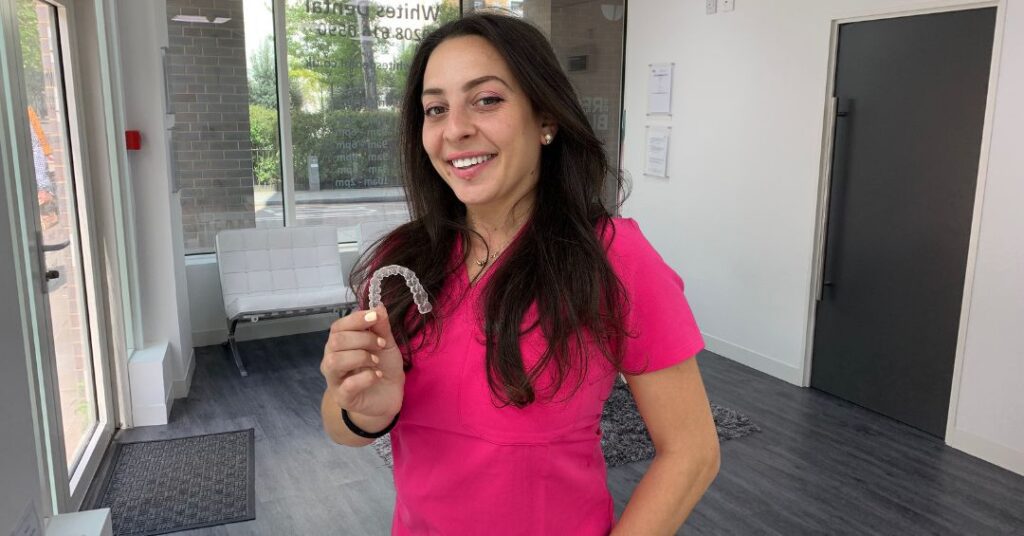


Crooked teeth are one of the most obvious reasons to see an orthodontist, but they are only one part of the picture.
Orthodontists treat problems involving tooth position, crowding, spacing, bite alignment and the way the upper and lower teeth meet. Some of these issues affect the appearance of the smile. Others can affect comfort, cleaning, tooth wear, bite balance or long-term stability.
That is why an orthodontic problem is not always obvious from the front of the smile. A patient may notice one overlapping tooth, a gap, or a bite that feels slightly off, while the orthodontist looks at the full relationship between the teeth, jaws and bite.
This guide explains the most common problems orthodontists treat, how those problems differ, and when orthodontic treatment may be worth considering.
Quick Answer: An orthodontist treats teeth and bite problems such as crooked teeth, crowding, gaps, overbites, underbites, crossbites, open bites, protruding teeth and teeth that have shifted over time. These are often called orthodontic problems because they involve tooth position, bite alignment or jaw relationship.
🔑 Key Takeaways
- Orthodontists treat more than just crooked teeth
- Common problems include crowding, spacing, bite issues, and protruding teeth
- Some orthodontic problems are cosmetic, while others affect function and long-term oral health
- Treatment may involve braces or clear aligners depending on the case
- Children, teenagers, and adults can all need orthodontic treatment
🧭 Jump to:
Common Orthodontic Problems At A Glance
Orthodontists treat problems where the teeth are not sitting, meeting or moving as ideally as they should. These problems can be mild, moderate or complex depending on the patient.
| Problem | What it means | Related guide |
|---|---|---|
| Crowded teeth | There is not enough room for teeth to sit neatly | Crowded teeth |
| Gaps between teeth | Visible spaces appear between teeth | Gaps between teeth |
| Overbite | Upper teeth overlap the lower teeth too much | Overbite |
| Underbite | Lower teeth sit in front of the upper teeth | Underbite |
| Crossbite | Some upper teeth bite inside the lower teeth | Crossbite |
| Open bite | Some teeth do not meet when biting together | Bite problems |
| Teeth that have shifted | Previously straight teeth have moved over time | Shifted teeth |
Why Might Orthodontic Problems Need Treatment?
Orthodontic problems are not always treated just because of appearance. Some patients want a straighter smile, but treatment may also be considered when the position of the teeth affects how the bite works, how easily the teeth can be cleaned, or how likely prominent or crowded teeth are to suffer wear or damage over time.
For example, crowded teeth can be harder to clean properly, protruding teeth may be more vulnerable to knocks, and bite problems can affect how the front and back teeth meet. The reason for treatment depends on the patient, the severity of the problem, and whether the concern is cosmetic, functional, or both.
Do Orthodontists Treat Crooked Teeth And Crowding?
Yes. This is one of the most common reasons people see an orthodontist.
Crooked teeth may look like a simple cosmetic concern, but they are often linked to crowding or imbalance in the way the teeth fit within the arch. In some cases, one or two teeth sit out of line. In others, several teeth overlap, twist, or sit at awkward angles because there is not enough space.
For a more focused guide, see our page on whether an orthodontist can help with crowded teeth.
Orthodontists commonly treat:
- Mild crookedness
- Moderate crowding
- Severe overlap
- Teeth that erupt out of line
- Smiles that look uneven because of alignment
Why Crowding Matters
Crowding is not only about appearance. When teeth overlap heavily, they can be harder to clean properly, which may make plaque control more difficult in certain areas. Crowding can also affect the overall balance of the smile and, in some cases, the bite.
Orthodontic treatment works by creating a more organised tooth position over time, helping the teeth sit more evenly within the arch.
Do Orthodontists Treat Gaps And Spacing Problems?
Yes. Orthodontists also treat spacing issues, where there are visible gaps between teeth.
Some patients dislike gaps mainly because of how they look. Others notice that spacing affects the overall balance of the smile. The reason behind the gaps can vary. Sometimes the teeth are naturally small in relation to the arch. Sometimes the spacing is linked to the bite or the way the teeth have erupted.
We cover this separately in our guide on whether an orthodontist can help with gaps between teeth.
Common spacing issues an orthodontist may treat include:
- A gap between the front teeth
- Generalised spacing across the smile
- Uneven spaces between certain teeth
- Spacing linked to bite imbalance
Not Every Gap Needs Cosmetic Treatment
Some patients assume gaps always need bonding or veneers. In many cases, orthodontic treatment may be a better way to close or redistribute spacing because it corrects the position of the teeth rather than covering the issue cosmetically.
If spacing is your main concern, it often makes sense to explore orthodontic treatment in London before considering cosmetic alternatives.
Do Orthodontists Treat Bite Problems?
Yes. Bite problems are a major part of what orthodontists treat.
This is one of the biggest misunderstandings around orthodontics. Many patients think orthodontists only deal with visible straightening, when in reality bite correction is often just as important.
For a broader explanation, read our guide on whether an orthodontist can help with bite problems.
Common bite problems include:
| Bite problem | What it means | Why it matters |
|---|---|---|
| Overbite | Upper teeth overlap the lower teeth too much | May affect function, tooth wear, or smile balance |
| Underbite | Lower teeth sit in front of upper teeth | Can affect bite and appearance |
| Crossbite | Some upper teeth bite inside the lower teeth | May affect chewing and alignment balance |
| Open bite | Some teeth do not meet when biting together | Can affect bite function and closure |
Bite Problems Are Not Always Obvious To Patients
Some people know their bite feels wrong. Others simply think their smile looks off without knowing why. That is where specialist assessment matters. A patient may focus on one crooked front tooth, while the orthodontist identifies an overbite or crossbite affecting the whole treatment plan.
This is one reason specialist orthodontic care can be so valuable in cases that go beyond mild cosmetic straightening.
Do Orthodontists Treat Protruding, Rotated, Or Uneven Teeth?
Yes. Orthodontists regularly treat teeth that stick out, sit at an angle, or are rotated out of position.
These issues may affect one tooth or several. They may also appear alongside crowding, spacing, or bite problems rather than on their own.
Examples include:
- Front teeth that protrude noticeably
- Teeth that are twisted or rotated
- Teeth sitting higher or lower than expected within the smile line
- Teeth that look uneven because of alignment rather than shape
Why Tooth Position Affects More Than Photographs
Patients often notice protruding or rotated teeth because of confidence or appearance. That is understandable. However, these issues can also affect the way teeth meet, how they wear over time, and how balanced the smile looks overall.
Orthodontic treatment aims to bring those teeth into a more controlled and harmonious position rather than masking them cosmetically.
Can An Orthodontist Treat Mild And Complex Problems?
Yes. Orthodontists treat both simple and more complex alignment issues.
Some patients only need treatment for mild crowding or a small gap. Others need correction for multiple issues happening together, such as crowding combined with a deep overbite or protruding teeth combined with spacing elsewhere.
A simple comparison makes this clearer:
| Type of case | Example problem | Possible orthodontic goal |
|---|---|---|
| Mild | Small gap or slight crowding | Improve smile alignment |
| Moderate | Several crowded teeth or visible protrusion | Improve alignment and balance |
| More complex | Crowding plus bite correction | Improve both appearance and function |
That range is why orthodontic treatment cannot really be reduced to just “braces for crooked teeth”. The underlying problem can vary a lot from one patient to another.
How Do You Know If You Need Braces Or Orthodontic Treatment?
You do not need to decide this from appearance alone. Some teeth look only slightly uneven from the front, but the bite may need closer assessment. Other smiles look noticeably crowded but may still have several treatment options.
Signs that orthodontic treatment may be worth discussing include teeth that overlap, gaps that bother you, front teeth that stick out, a bite that feels uncomfortable, teeth that are difficult to clean because of crowding, or previous orthodontic results that have relapsed.
The only reliable way to know whether braces, aligners, or monitoring are needed is to have an orthodontic assessment.
Who May Need Orthodontic Treatment For These Problems?
Orthodontic problems can affect children, teenagers, and adults. They are not limited to one age group.
Children may be seen because of developing crowding or bite issues. Teenagers often have treatment while the teeth and jaws are still developing. Adults frequently seek treatment because they want straighter teeth, better bite balance, or a more discreet way to improve the smile later in life.
| Patient group | Common orthodontic problems | Why treatment may be considered |
|---|---|---|
| Children | Early crowding, bite issues, developing alignment problems | Monitor growth and guide timing |
| Teenagers | Crooked teeth, gaps, bite correction | Improve smile and function |
| Adults | Crowding, spacing, protruding teeth, bite imbalance | Discreet straightening and long-term improvement |
If you want a clearer explanation of what the specialist role involves, you may also find it helpful to read What Does an Orthodontist Do?.
Are The Problems Orthodontists Treat Cosmetic Or Functional?
Often, they are both.
A patient may seek treatment because they dislike how their teeth look, but the issue may also affect the bite, spacing, crowding, or the overall balance of the smile. In some cases, the concern is mainly aesthetic. In others, the functional side is just as important.
This is why the same orthodontic problem can be described in different ways:
- “My teeth are crooked”
- “My bite feels wrong”
- “My front teeth stick out”
- “I have gaps I want to close”
- “My teeth overlap and are hard to clean”
Different wording, same specialist area.
If you are still deciding whether the issue is really orthodontic in nature, a consultation with an experienced orthodontist in London is the clearest way to understand what is happening and what your options are.
FAQs: What Problems Does An Orthodontist Treat?
Patients often ask this when they know something about their teeth or bite feels off, but they are not sure whether it is something an orthodontist actually deals with. These are some of the most common questions patients ask before booking.
What Are Orthodontic Problems?
Orthodontic problems are issues involving tooth position, spacing, crowding, bite alignment or the way the upper and lower teeth meet. They may affect appearance, function, cleaning or long-term stability.
How Do I Know If My Teeth Need Braces?
You may need braces or aligners if your teeth are crowded, overlapping, gappy, protruding, difficult to clean, or your bite feels uncomfortable. An orthodontic assessment is the best way to confirm what treatment, if any, is needed.
Can Orthodontic Treatment Fix Both My Bite And Straighten My Teeth?
Yes. In many cases, orthodontic treatment can improve tooth alignment and bite position together. The treatment plan depends on the type of bite problem, the amount of tooth movement needed, and the patient’s age and goals.
Do Orthodontists Only Treat Crooked Teeth?
No. Orthodontists also treat crowding, spacing, protruding teeth, and bite problems such as overbite, underbite, crossbite, and open bite.
Can An Orthodontist Fix Gaps Between Teeth?
Yes. Orthodontists often treat gaps and spacing problems by moving teeth into better positions.
Do Orthodontists Treat Overbites And Underbites?
Yes. Bite correction is a major part of orthodontic treatment, not just smile straightening.
Can An Orthodontist Help With Crowded Teeth?
Yes. Crowding is one of the most common reasons patients have orthodontic treatment.
Do Orthodontists Treat Adults As Well As Children?
Yes. Orthodontists regularly treat adults, teenagers, and children depending on the case.
Can Orthodontists Fix One Tooth That Sticks Out?
Yes, but the orthodontist will still assess the wider bite and alignment to understand how that tooth fits into the full treatment plan.
Is Spacing A Cosmetic Issue Or An Orthodontic Issue?
It can be both. Gaps affect appearance, but they can also reflect underlying alignment or bite issues.
What Is The Most Common Problem An Orthodontist Treats?
Crooked teeth and crowding are among the most common reasons people see an orthodontist, but bite problems are also very common.
Looking For Help With Orthodontic Problems In London?
If you are dealing with crooked teeth, spacing, protrusion, or a bite that does not feel quite right, the best next step is a proper orthodontic assessment.
At Whites Dental, patients can explore treatment with an experienced orthodontist in London, with options for adults, teenagers, and children across a wide range of alignment and bite concerns.
Whether your concern is mainly cosmetic, mainly functional, or a combination of both, a consultation can help clarify what the underlying problem is and how it can be treated.
- ✅ Specialist orthodontic assessment
- ✅ Clear aligner and fixed brace options
- ✅ Adult and child treatment pathways
- ✅ Central London clinic locations
Author

Dr Deepa Chopra
Principal Dentist & Clinic Founder
GDC registration number: 124489
Membership of the Faculty of Dental Surgery from the Royal College of Surgeons of Edinburgh
Membership of the British Dental Association
Restorative Dentistry from Tipton
Align Invisalign profile
LinkedIn profile
Areas of Expertise: 20+ Years Dentistry Experience. General Dentistry, Cosmetic Dentistry, Restorative Dentistry, Invisalign, Composite Bonding, Veneers, Root Canals, Crowns, Dentures, Gum Disease, Hygienist Services, Emergency Dental Services & Teeth Whitening.