

When people start researching Invisalign, they often assume there’s one “correct” type of provider.
An orthodontist.
Then they discover that many general dentists also offer Invisalign – sometimes at different price points, with different treatment options, and different claims about who it’s suitable for.
That’s when the real question appears:
What’s the difference between getting Invisalign from a dentist vs an orthodontist?
The short answer is that both can provide Invisalign, but their training and day-to-day case exposure can be different – and that difference matters more as your case becomes more complex.
This guide explains what each provider typically does, when either option can be appropriate, what questions to ask before committing, and how to choose safely (especially if you’re comparing clinics in London).
Quick Answer: Both dentists and orthodontists can provide Invisalign. A general dentist may be well suited for straightforward alignment and cosmetic cases, while an orthodontist is a specialist trained specifically in tooth movement and bite correction. The best choice depends on case complexity, your bite, and the provider’s experience with similar Invisalign cases.
🔑 Key Takeaways
- Dentists and orthodontists can both offer Invisalign, but their training pathways differ
- Case complexity (especially bite correction) is the main factor that changes what “best provider” means
- Experience matters more than job title – ask about similar cases and outcomes
- Monitoring, planning, and refinements are where provider skill shows up most
- The safest choice is a provider who can explain your plan clearly and manage issues quickly
🧭 Jump to:
Dentist vs orthodontist: the simple definition
A general dentist provides overall dental care – check-ups, hygiene, fillings, crowns, gum health, and often cosmetic dentistry. Many dentists also provide Invisalign, particularly for patients who want straighter teeth as part of broader smile improvement.
An orthodontist is a dental specialist whose main focus is tooth movement and bite correction. Orthodontists complete additional specialist training after dentistry and typically manage a higher volume of orthodontic cases.
That doesn’t mean a dentist can’t be highly experienced with Invisalign. It means the daily clinical focus is often different – and that becomes more important the more complex the bite and movement requirements are.
If you’re still at the early research stage, you may find it helpful to read: What is Invisalign?.
Training and focus: what’s different?
This is where people can get lost, because Invisalign itself has its own planning platform and aligner manufacturing process. It’s easy to assume the “system” does most of the work.
In reality, Invisalign outcomes are heavily influenced by the clinician who:
- Diagnoses your bite and case complexity
- Plans tooth movement sequencing
- Chooses whether attachments and elastics are required
- Monitors tracking and progress throughout treatment
- Decides when refinements are needed and how to plan them
General dentist (typical focus)
- Broad oral health management
- Cosmetic dentistry and smile improvements
- Invisalign for suitable mild–moderate alignment cases
- Often integrates Invisalign alongside whitening, bonding, veneers, etc.
Orthodontist (typical focus)
- Specialist training in tooth movement and occlusion (bite)
- More frequent management of complex cases
- Deep bite, open bite, crossbite, crowding, rotation and jaw-related bite patterns
- Long-term stability planning and finishing detail
Invisalign planning is not just “straightening teeth”. If bite correction is involved, your provider’s comfort with orthodontics tends to matter more.
If bite alignment is one of your goals, this is worth reading: Can Invisalign improve bite alignment?.
When a dentist can be a great choice for Invisalign
Many Invisalign patients have relatively straightforward goals:
- Minor crowding
- Small gaps
- Cosmetic alignment improvements for the front teeth
- A “smile tidy-up” before an event or milestone
In these cases, an experienced Invisalign dentist can be an excellent choice – especially if they are used to planning cosmetic outcomes and managing aesthetics.
Common “dentist-suited” Invisalign scenarios
- Gaps and spacing that don’t involve major bite changes (see: Invisalign for gaps between teeth)
- Mild crowding (see: Invisalign for crowded teeth)
- Shorter treatment plans where you are clearly suited to Lite or i7 Express
Those shorter plans can be a good fit if your dentist confirms you’re suitable:
Why some patients prefer a dentist
- You can often manage overall dental care and Invisalign in one place
- Cosmetic planning may be integrated with broader smile goals
- It can feel more convenient if you already trust your regular dentist
At the same time, the title “dentist” doesn’t automatically mean “simple case only”. Many dentists manage a high volume of Invisalign cases and have outstanding results.
When an orthodontist may be the better choice
The more your case involves bite correction and movement complexity, the more you benefit from specialist-level orthodontic thinking.
Here are some scenarios where you may want an orthodontist-led approach (or at least a provider who can clearly demonstrate deep experience in similar cases):
Cases that tend to be more complex
- Overbite / deep bite correction (see: Invisalign for overbite and Invisalign for deep bite)
- Open bite correction (see: Can Invisalign treat an open bite?)
- Crossbite correction (see: Can Invisalign fix a crossbite?)
- Underbite management in suitable cases (see: Can Invisalign treat an underbite?)
- Significant rotations (see: Can Invisalign straighten rotated teeth?)
- Cases where tracking issues are more likely, requiring close monitoring and refinements
If your bite is the main issue, a provider who deals with bite correction daily is often more comfortable managing the “moving parts” of the plan.
It’s also worth knowing that refinements are common in many Invisalign cases, especially where bite finishing and final detail matters: What are Invisalign refinements?.
What to ask before you choose (the questions that reveal quality)
Most people ask about price first. The better approach is to ask questions that reveal planning quality and monitoring.
Questions that matter
- How complex is my case? Is this primarily cosmetic alignment, or does bite correction matter?
- Which Invisalign plan suits me? Lite, i7 Express, or Comprehensive? (See: Invisalign Comprehensive (Full))
- How often will you review progress? What happens if tracking slips?
- Do you use attachments? If yes, why and where? (See: How Invisalign attachments work)
- What’s included if refinements are needed? Is it part of the plan, and how is it handled?
- Can I see before/after results? Not generic marketing photos – real outcomes you can discuss
If you want an example of what strong Invisalign outcomes look like, these results are useful context: Invisalign before and after.
A simple way to interpret the answers
| What you ask | A confident answer sounds like | A warning sign sounds like |
|---|---|---|
| How complex is my case? | Clear explanation of alignment vs bite, risks, and expectations | “It’s all basically the same” or vague reassurance |
| What happens if tracking slips? | Monitoring plan + options (wear time adjustment, attachment check, scan/refinement) | No clear process, or they dismiss tracking as unlikely |
| Are refinements included? | Transparent: what’s included, when used, and how long it typically adds | Avoids the topic or frames refinements as unusual |
If you’ve heard the term “tracking” but don’t know exactly what it means, this guide explains it clearly: What is Invisalign tracking?.
Does it change Invisalign cost?
Sometimes, but not always in the way people expect.
Invisalign cost is influenced by:
- The complexity of the case and number of aligners required
- The Invisalign plan used (Lite, Comprehensive, etc.)
- Monitoring time and clinician involvement
- Whether refinements are included and how they are handled
- Clinic location and overall service level
If you’re comparing providers, the best starting point is understanding what Invisalign costs typically include. This page breaks it down clearly: Cost of Invisalign in London.
Finance options and budgeting
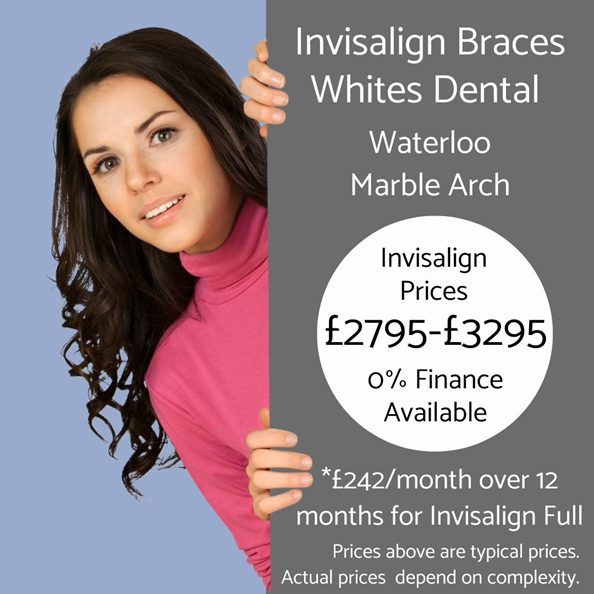
Many patients choose to spread cost monthly. If that’s relevant for you, you can explore: Invisalign on a finance plan.
FAQs: Invisalign Dentist vs Orthodontist
These are the most common questions patients ask when deciding who should manage their Invisalign treatment.
Can a general dentist provide Invisalign?
Yes. Many dentists provide Invisalign, especially for straightforward alignment and cosmetic cases. The most important factor is experience and case suitability.
Is an orthodontist always better for Invisalign?
Not always. Orthodontists are specialists in tooth movement and bite correction, which can be especially valuable for complex cases. For simpler cases, an experienced Invisalign dentist can be an excellent choice.
How do I know if my Invisalign case is complex?
Complexity usually increases when bite correction is involved (deep bite, open bite, crossbite, underbite), or when significant rotations and larger movements are required. A proper consultation and scan is the best way to assess this.
What should I ask an Invisalign provider before starting?
Ask about case complexity, which Invisalign plan suits you, how progress will be monitored, what happens if tracking slips, and whether refinements are included. You should also ask to see before/after results.
Does choosing a dentist vs orthodontist affect treatment time?
Treatment time depends primarily on case complexity and how well aligners track. Strong planning and monitoring can reduce delays. If you want a clear view of timelines, you can read: How long does Invisalign take?.
Considering Invisalign in London?
If you want to choose the right Invisalign provider for your case, the best first step is a proper consultation with a clear diagnosis and plan.
At Whites Dental, we provide advanced Invisalign treatment in Central London, with structured monitoring, transparent costs, and flexible treatment options.
Explore the key Invisalign pages:
- Invisalign before and after results
- Cost of Invisalign in London
- Invisalign on a finance plan
- Invisalign vs braces
📍 Visit our Central London clinics:
- ✅ Experienced Invisalign providers
- ✅ Clear suitability and planning explanation
- ✅ 0% finance options available
- ✅ Transparent Invisalign costs
If you’d like a clear answer on whether your case is straightforward or complex, we’ll walk you through it step-by-step.