


Key Takeaways
- Periodontal treatment is generally not painful, thanks to modern anaesthetics and gentle techniques.
- Deep cleaning (scaling and root planing) is typically performed under local anaesthetic for a comfortable experience.
- Some procedures may cause mild soreness afterward, but this is usually manageable with over-the-counter pain relief.
- Surgical treatments like gum grafts or pocket reduction involve more recovery but are still surprisingly manageable.
- Advanced technology such as lasers and ultrasonic tools make treatment faster and more comfortable.
💡 At Whites Dental in Waterloo (SE1) and Marble Arch (W2), our London periodontist treat gum disease in a manner designed to minimise discomfort and speed up healing.
Understanding Whether Periodontal Treatment Hurts
When patients first hear the term “periodontal treatment”, one of the most common questions is:
“How painful is it?”
The honest answer is this: Most periodontal treatments are far less painful than people expect and modern dentistry has made the experience comfortable, controlled and predictable.
Although gum disease can be sensitive, the procedures used to treat it typically involve:
- Local anaesthetic
- Gentler instrumentation.
- Laser technology
- Minimally invasive techniques
- Tailored aftercare
💡 This means discomfort is kept to a minimum, even for more advanced gum disease treatments.
Why Patients Fear Periodontal Treatment

Fear of pain, especially with gums, is very common, and completely understandable. Patients often worry because:
- The gums are sensitive tissue.
- They associate deep cleaning with scraping.
- They’ve had painful past dental experiences.
- They’re unsure what the procedure involves
- They fear needles or anaesthetics
But the good news is: periodontists are gum specialists trained to deliver comfortable care and they use techniques that general dentists may not.
At Whites Dental London, our periodontist provides calm, gentle treatment, explaining every step so patients feel at ease.
What Periodontal Treatment Includes
Periodontal treatment can range from simple gum cleaning to more advanced procedures. Understanding these helps patients know what to expect in terms of discomfort. The most common treatments include:
Deep Cleaning (Scaling And Root Planing)
This removes plaque and tartar from below the gumline and smooths the roots. It is the most common non-surgical periodontal treatment.
Gum Surgery
This may involve pocket reduction, gum reshaping, or removing infected tissue.
Gum Grafting
Used to restore receding gums and protect exposed tooth roots.
Bone Grafting
Restores lost bone caused by advanced gum disease.
Dental Implants
Placed by periodontists when teeth are missing or need to be replaced after periodontal issues.
💡 Each of these procedures has a different discomfort profile, so let’s break it down.
How Painful Is Deep Cleaning (Scaling And Root Planing)?
Deep cleaning is usually the first treatment for gum disease—and the one patients worry about most. However, this procedure is usually very comfortable because:
- It is done under local anaesthetic
- The gums become numb, so you feel pressure but not pain
- Ultrasonic tools reduce scraping and make cleaning gentler
- The periodontist works carefully in small sections
What discomfort feels like:
- Mild pressure during the cleaning
- Slight aching afterward
- Temporary sensitivity to cold
Pain level:
- Mild to moderate discomfort afterward for some patients
- Minimal discomfort during the procedure
How long it lasts:
Usually 24–48 hours, easily managed with paracetamol or ibuprofen.
💡 Most patients say deep cleaning was “much easier than expected”.
How Painful Is Periodontal Surgery?
Periodontal surgery sounds frightening, but modern techniques are far more comfortable than patients imagine.
Pocket Reduction Surgery
This procedure gently lifts the gums to clean deep pockets and reposition the tissue.
Pain during:
None (local anaesthetic)
Pain after:
Mild to moderate soreness and swelling for 2–4 days.
Gum Graft Surgery
Used for receding gums. Tissue is taken from the palate or a donor source and grafted to the area.
Pain during:
None (anaesthetic used at both sites)
Pain after:
- Mild discomfort at the graft site
- Tenderness at the palate (if tissue was taken from there)
- Usually manageable with over-the-counter pain medication
Crown Lengthening
Used for functional or cosmetic reasons (e.g., “gummy smile”).
Pain level:
Mild to moderate tenderness afterward.
Laser Periodontal Treatment
Laser treatment is one of the least painful surgical options. It removes bacteria and diseased tissue without cutting.
Pain level:
Minimal during and after.
💡 Overall, periodontal surgery is not painful during treatment and aftercare is manageable with normal pain relief.
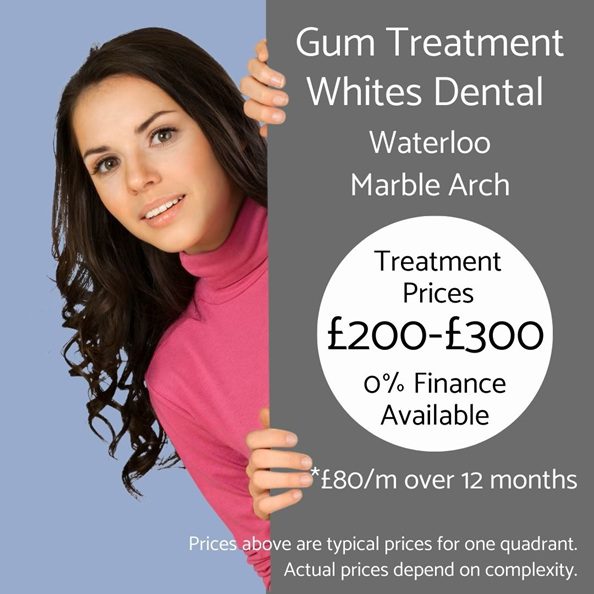
Does a Periodontist Make Treatment Less Painful?
Yes — absolutely. Periodontists specialise in gum and bone treatment, so they use:
- Smaller, more precise instruments.
- Advanced anaesthetic techniques.
- Laser technology
- Gentle procedures designed specifically for gum tissue.
- Methods that reduce bleeding and swelling.
This leads to:
- Faster healing.
- Less discomfort
- More predictable outcomes
💡 At Whites Dental Waterloo and Marble Arch (W2), periodontal treatment is performed by a specialist with years of experience, ensuring a gentle and controlled experience throughout.
Does Gum Disease Itself Cause Pain?
Interestingly, gum disease is often painless in the early stages, which is why it can go unnoticed. However, untreated gum disease can cause:
- Swollen gums.
- Bleeding.
- Bad breath.
- Loose teeth
- Gum recession
- Chronic tooth sensitivity.
💡 Sometimes, the treatment is more comfortable than the symptoms you’re already experiencing.
Pain Management During Periodontal Treatment
To ensure maximum comfort, periodontists use a range of pain-management methods:
Local Anaesthetic
Numbs the area completely so you feel pressure but no pain.
Topical Gel
Applied before anaesthetic is given to make injections more comfortable.
Sedation (For Anxious Patients)
Options may include:
- Inhalation sedation
- Oral sedation
- IV sedation
These help extremely nervous patients stay relaxed.
Laser Technology
Reduces the need for cutting and sutures.
Ultrasonic Cleaners
Use gentle vibrations instead of scraping.
Aftercare Plans
Including pain medication, cold compresses and hygiene advice to minimise tenderness.
What Does Periodontal Treatment Feel Like?

Here is a breakdown of what you may feel during different procedures:
During Treatment
- Pressure
- Slight vibration
- Water spray
- No sharp pain.
- No burning sensation.
After Treatment
- Mild soreness
- Tender gums.
- Slight swelling
- Temporary sensitivity
💡 Discomfort is usually manageable and typically improves within 24–72 hours.
Is Periodontal Treatment More Painful If Gum Disease Is Severe?
Patients with severe gum disease often have:
- Inflamed gums
- Deeper pockets
- Loose teeth.
- Bone loss
These issues can make the gums more sensitive. However:
- Anaesthesia eliminates pain during treatment.
- Treatment often reduces discomfort already caused by gum disease
- Post-treatment soreness is usually mild and temporary
💡Ironically, the pain from gum disease symptoms is often worse than the treatment itself.
How Long Does Pain Last After Periodontal Treatment?
Recovery varies, but most patients experience:
- 24–48 hours of mild soreness after deep cleaning
- 3–7 days of discomfort after minor surgery
- 1–2 weeks of healing after gum grafts
- Minimal discomfort with laser treatment
💡 Your periodontist will give you precise aftercare instructions to speed up healing.
How To Reduce Pain After Periodontal Treatment
Here are simple ways to stay comfortable:
Use Over-the-Counter Pain Relief
Paracetamol or ibuprofen works well for most patients.
Use Cold Compresses
Helps minimise swelling within the first 24 hours.
Avoid Hard Or Crunchy Foods
Soft foods like yoghurt, eggs, mashed potatoes, and soups are recommended.
Use a Soft Toothbrush
Prevents irritation.
Avoid Smoking
Smoking delays healing and increases discomfort.
Rinse With Salt Water (If Recommended)
Helps soothe the gums and keep them clean. These steps significantly reduce tenderness after treatment.
Why Periodontal Treatment Is Worth It — Even If You’re Nervous About Pain
While no dental treatment is completely sensation-free, periodontal therapy offers major benefits that far outweigh temporary discomfort:
- Stops gum disease progression
- Prevents tooth loss
- Reduces swelling and bleeding
- Eliminates infections
- Protects the jawbone
- Improves breath
- Enhances smile aesthetics
- Supports long-term health
💡 Left untreated, gum disease can become much more painful than any professional treatment.
Periodontal Treatment at Whites Dental London
At Whites Dental, our specialist periodontists provide gum treatment using advanced, minimally invasive techniques. We offer:
- Deep cleaning
- Laser periodontal therapy.
- Gum grafting.
- Bone regeneration
- Pocket reduction procedures.
- Dental implant placement.
- Periodontal maintenance plans.
Locations:
Whites Dental Waterloo
172 Blackfriars Road, London SE1 8ER
📞 020 8616 0590
Whites Dental Marble Arch (W2)
52B Kendal Street, St George’s Fields, London W2 2BP
📞 020 3576 2325
Conclusion: Is Periodontal Treatment Painful?
The simple answer is: Periodontal treatment is far less painful than most patients expect.
With modern techniques, anaesthetic, and specialised care, treatment is usually comfortable and highly effective. Any post-treatment discomfort is temporary — but the benefits last a lifetime.
If you’re experiencing bleeding gums, gum recession or sensitivity, visiting a periodontist is the best way to get your oral health back on track gently and professionally.