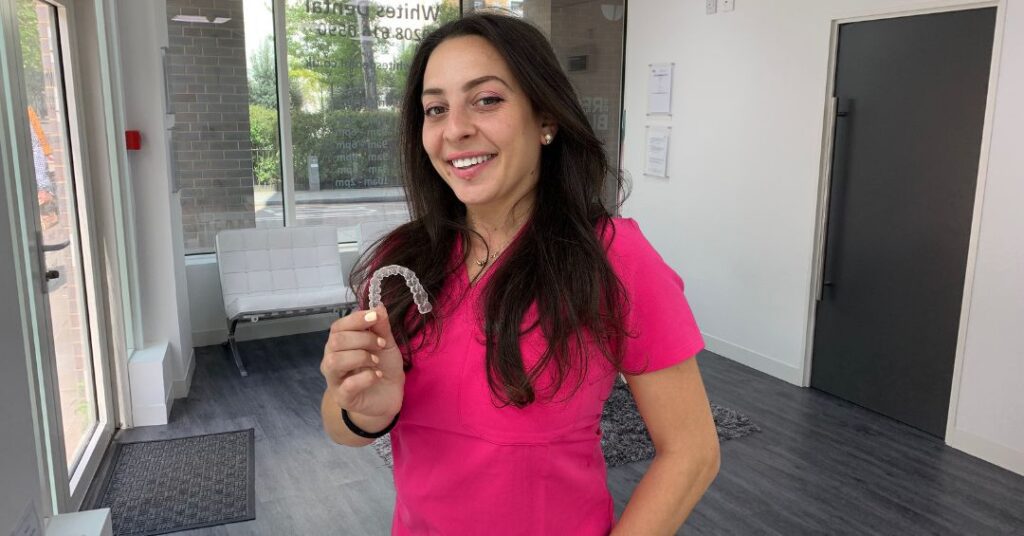


At a first orthodontic appointment, most patients are focused on one simple thing: their teeth.
They want to know whether they are too crooked, whether braces or aligners could help, and how long treatment might take. What many people do not realise is that an orthodontist is checking far more than just what shows in the mirror.
That first assessment is not only about whether teeth look straight or uneven. It is about how the teeth fit together, how the bite works, whether there is enough space, whether crowding or jaw position is part of the issue, and whether the case is simpler or more complex than it first appears.
That is why the first appointment matters so much.
In this guide, we explain exactly what an orthodontist checks at your first appointment, why those checks matter, and how they help shape the right treatment plan from the start.
Quick Answer: At your first appointment, an orthodontist will usually check your tooth position, bite, crowding, spacing, jaw relationship, and overall orthodontic suitability. They may also assess whether braces or aligners are appropriate and whether scans, photographs, or X-rays are needed. If you are considering orthodontist in London treatment, the first appointment is where the orthodontist begins to understand what is happening clinically, not just cosmetically.
🔑 Key Takeaways
- An orthodontist checks much more than whether your teeth look crooked
- The first appointment usually includes assessment of bite, crowding, spacing, and jaw relationship
- The orthodontist is often looking for both cosmetic and functional issues
- Even a mild-looking case can involve deeper bite or alignment concerns
- These early checks help determine whether braces, aligners, or another route is most suitable
- The first appointment is about understanding the case properly before treatment begins

🧭 Jump to:
First Orthodontist Appointment At A Glance
Your first orthodontist appointment is usually an assessment, not the day treatment starts. The orthodontist checks your teeth, bite, spacing, jaw relationship and treatment suitability before explaining what may happen next.
| Part of the appointment | What usually happens |
|---|---|
| Initial discussion | You explain your concerns, goals and any previous orthodontic treatment |
| Orthodontic assessment | The orthodontist checks tooth position, bite, crowding, spacing and jaw relationship |
| Records if needed | Scans, photographs or X-rays may be recommended where clinically appropriate |
| Treatment suitability | You may be told whether braces, aligners or monitoring are likely to be suitable |
| Next steps | The clinic may explain costs, timelines, records appointments or treatment planning |
What Does An Orthodontist Check First At Your Appointment?
At your first appointment, an orthodontist will usually begin by looking at the overall position of your teeth and how your bite comes together.
They are not just checking whether the teeth look straight from the front. They are also looking at:
- Whether the teeth are crowded
- Whether there are gaps or spacing issues
- Whether any teeth are rotated or protruding
- How the upper and lower teeth meet
- Whether there are signs of bite imbalance
This early overview helps the orthodontist work out whether the case is mainly cosmetic, more functional, or a mixture of both.
Why The First Look Matters
That initial assessment often reveals things a patient may not have noticed.
For example, someone may come in thinking they only have one crooked front tooth, but the orthodontist may also see:
- A deeper bite issue
- Crowding elsewhere in the arch
- Space limitations affecting treatment options
That is why the first appointment is not just a cosmetic check. It is a clinical starting point.
Does An Orthodontist Check Your Bite At The First Appointment?
Yes, absolutely.
A proper orthodontic first appointment should always involve checking the bite.
That means assessing how the upper and lower teeth meet when you close together. This is important because a patient may focus on visible straightness, while the orthodontist is also thinking about function and long-term stability.
The orthodontist may be looking for issues such as:
- Overbite
- Underbite
- Crossbite
- Open bite
These can affect far more than appearance alone.
Why Bite Checks Matter So Much
Bite assessment matters because orthodontic treatment is not just about lining teeth up neatly. It also needs to consider:
- How the teeth function together
- Whether uneven contact may cause wear
- Whether treatment needs to improve both appearance and function
Does An Orthodontist Check For Crowding, Gaps, And Tooth Position?
Yes, this is one of the central parts of the first appointment.
The orthodontist will usually assess:
- Whether there is enough room for the teeth
- Whether some teeth are overlapping or twisted
- Whether gaps are present and how significant they are
- Whether certain teeth sit too far forwards or backwards
These checks help show what sort of tooth movement may be needed and whether the case is likely to be mild, moderate, or more involved.
| What The Orthodontist Checks | What It May Show | Why It Matters |
|---|---|---|
| Crowding | Not enough room for teeth to sit properly | Affects treatment planning and suitability |
| Spacing | Visible gaps between teeth | May affect both appearance and bite balance |
| Tooth rotation | Teeth sitting twisted or out of line | Can make a case more complex than it looks |
| Protrusion or retraction | Teeth sitting too far forwards or backwards | May affect both profile and bite relationship |
Why Mild Cases Still Need Checking Properly
A patient may think they only have “a bit of crowding”, but even mild cases can involve:
- Hidden space issues
- Rotations that take longer to correct
- Bite changes that need careful management
That is one reason a first orthodontic appointment is so valuable.
Does An Orthodontist Check Your Jaw At The First Appointment?
Yes, in the sense that they are looking at how the jaws and teeth relate to each other.
Orthodontists are not only interested in individual teeth. They are also thinking about the overall relationship between the upper and lower arches and whether jaw positioning is influencing the bite.
That can be relevant where there are signs of:
- Significant overbite or underbite patterns
- Crossbite issues
- Developmental concerns in younger patients
For children especially, the first appointment may also help indicate whether treatment needs to begin now or whether things should simply be monitored.
Adults Vs Children At The First Appointment
The checks may feel similar, but the context can be different.
For adults, the orthodontist may focus more on:
- Existing tooth position
- Bite function
- Treatment practicality and visibility
For children, there may also be attention on:
- Growth and development
- Whether crowding is likely to worsen
- Whether early intervention might help
Do You Get Braces At Your First Orthodontist Appointment?
Usually, no. The first orthodontist appointment is normally used for assessment, discussion and planning rather than fitting braces straight away.
In most cases, the orthodontist first needs to understand your teeth, bite, treatment goals and whether any further records are needed. Braces or aligners are usually only started once the treatment plan has been confirmed and you are happy to proceed.
Some clinics may be able to move quickly if your case is straightforward, but patients should generally expect the first visit to be about diagnosis and options rather than same-day braces.
How Long Does A First Orthodontist Appointment Take?
The length of a first orthodontist appointment can vary depending on the clinic and whether scans, photographs or X-rays are needed.
A straightforward consultation may be relatively short, while a more detailed assessment or records appointment can take longer. If additional imaging is needed, the appointment may take more time because the orthodontist needs enough information to assess the case properly.
Does An Orthodontist Check If Braces Or Aligners Are Suitable?
Yes, this is one of the main reasons for the first appointment.
The orthodontist is usually assessing not just what is wrong, but also what kind of treatment may be suitable.
That may include deciding whether your case is more suited to:
- Clear aligners
- Metal braces
- Ceramic braces
- Damon braces
They may also explain whether one option would give more control, better efficiency, or a more discreet route depending on your case.
If you are comparing providers for orthodontic treatment in London, this is one of the most useful parts of the first visit because it helps move you from guessing to understanding.
Does An Orthodontist Check If You Have Had Previous Treatment Before?
Yes, if relevant.
If you have had braces or aligners in the past, the orthodontist will usually want to know:
- What treatment you had
- Whether teeth have moved again afterwards
- Whether retainers were worn consistently
Previous orthodontic treatment can affect what is being checked because the case may now involve relapse rather than a first-time alignment issue.
Why Previous Treatment History Matters
A history of past treatment may influence:
- Which treatment systems are suitable now
- How stable the result may be long term
- How much movement is realistically needed
So yes, what happened in the past can be part of what is assessed at the first appointment.
Will The Orthodontist Check If Scans Or X-Rays Are Needed?
Yes.
The first appointment often helps determine whether extra records are needed to understand the case properly.
That may include:
- Digital scans
- Clinical photographs
- X-rays where clinically appropriate
The purpose is not to make the appointment feel complicated. It is to gather the right level of detail for proper planning.
What Do These First Appointment Checks Help Determine?
All of these checks help answer the questions patients usually care about most.
They help determine:
- What the actual orthodontic issue is
- Whether the case is simple or more involved
- Whether treatment is mainly cosmetic or also functional
- Which systems are likely to be suitable
- What further records or next steps are needed
In other words, the first appointment is the foundation for everything that follows.
What Patients Should Leave Knowing
By the end of the first appointment, a patient should ideally have a clearer sense of:
- What is being checked
- What the orthodontist has found
- Whether treatment is recommended
- What likely options exist
A good first appointment should reduce uncertainty, not increase it.
FAQs: What Does An Orthodontist Check At Your First Appointment?
Patients often know that the first appointment is important, but they are not always sure what the orthodontist is actually assessing. These are some of the most common questions people ask before that first visit.
What Does An Orthodontist Check At Your First Appointment?
An orthodontist will usually check your tooth position, crowding, spacing, bite, and overall orthodontic suitability. They may also assess whether braces or aligners are appropriate and whether further records are needed.
Does An Orthodontist Check Your Bite At The First Appointment?
Yes. A proper first appointment should include assessment of how your upper and lower teeth meet, not just whether the front teeth look straight.
Does An Orthodontist Check For Crowding And Gaps?
Yes. Crowding, spacing, rotation, and tooth position are all central parts of an orthodontic assessment.
Will An Orthodontist Check My Jaw At The First Visit?
Yes, in terms of how the upper and lower jaws and arches relate to each other, especially where bite issues may be involved.
Can An Orthodontist Tell If I Need Braces Or Aligners At The First Appointment?
Often, yes. The first appointment is commonly used to assess which treatment options may suit your case, even if further records are sometimes needed before final planning.
Does The Orthodontist Check If I Had Braces Before?
Yes, if relevant. Previous orthodontic treatment and relapse can influence what is being assessed and what treatment may now be suitable.
Will I Need Scans Or X-Rays At My First Orthodontist Appointment?
Possibly. The orthodontist may decide that scans, photographs, or X-rays are needed to understand the case in more detail.
Is The First Orthodontist Appointment Just About Looking At Teeth?
No. It is also about checking bite, space, jaw relationship, treatment suitability, and whether the case is more complex than it first appears.
What Happens At Your First Orthodontist Appointment?
Your first orthodontist appointment usually involves a discussion about your concerns, an assessment of your teeth and bite, and advice on whether braces, aligners or further records may be needed.
Do You Get Braces On Your First Orthodontist Appointment?
Usually not. The first appointment is normally for assessment and treatment planning. Braces are usually fitted at a later appointment once the plan has been agreed.
How Long Does A First Orthodontist Appointment Take?
This depends on the clinic and whether scans, photographs or X-rays are needed. A simple consultation may be shorter, while a more detailed assessment can take longer.
What Is A Records Appointment For Braces?
A records appointment is where the clinic gathers detailed information for treatment planning. This may include scans, photographs, X-rays or impressions of your teeth.
Looking For A Specialist Orthodontist In London?
If you are trying to understand what an orthodontist will actually assess at your first appointment, the best next step is to book a consultation with a provider who can explain your teeth, your bite, and your options clearly.
At Whites Dental, patients can explore specialist orthodontist London treatment options for adults, teenagers, and children, including Invisalign, metal braces, ceramic braces, and Damon braces.
Whether your main concern is crooked teeth, spacing, crowding, or a bite issue that feels more complex than it looks, a proper first appointment helps create clarity before treatment begins.
- ✅ Specialist-led orthodontic assessments
- ✅ Invisalign and fixed brace options
- ✅ Adult and child suitability
- ✅ Central London clinic locations
Author

Dr Deepa Chopra
Principal Dentist & Clinic Founder
GDC registration number: 124489
Membership of the Faculty of Dental Surgery from the Royal College of Surgeons of Edinburgh
Membership of the British Dental Association
Restorative Dentistry from Tipton
Align Invisalign profile
LinkedIn profile
Areas of Expertise: 20+ Years Dentistry Experience. General Dentistry, Cosmetic Dentistry, Restorative Dentistry, Invisalign, Composite Bonding, Veneers, Root Canals, Crowns, Dentures, Gum Disease, Hygienist Services, Emergency Dental Services & Teeth Whitening.