

Composite veneers are widely promoted as a conservative cosmetic dental option, but a common concern remains: do composite veneers damage teeth? This article explores the truth behind that question, separating myths from clinical realities while explaining how technique, material choice, and dentist skill directly influence tooth health. For patients considering composite veneers in London, understanding the biological impact on natural teeth is essential before committing to treatment.
Key Takeaway
Composite veneers do not damage teeth when planned and applied correctly. They are one of the most enamel-preserving cosmetic treatments available, but poor technique, incorrect case selection or lack of maintenance can lead to avoidable complications. The long-term health of your teeth depends far more on the dentist’s skill and aftercare than on the veneers themselves.
Understanding What Composite Veneers Are

Composite veneers are thin layers of tooth-coloured resin that are bonded directly to the surface of natural teeth. Unlike porcelain veneers, they are sculpted chairside and usually require minimal or no tooth reduction. Composite veneers are often chosen for their conservative nature, affordability, and reversibility when compared to ceramic alternatives.
How Composite Veneers Bond To Teeth
The bonding process is central to whether teeth remain healthy.
- A gentle etching solution microscopically roughens the enamel
- Bonding agents create a chemical link between enamel and composite
- The composite resin is layered and cured with a light
- Final shaping and polishing seal the surface
This process does not involve drilling deep into tooth structure when performed correctly.
💡 Bonding to enamel is far safer than bonding to dentine, which is why minimal preparation matters.
Why People Worry About Tooth Damage
Concerns around composite veneers often come from confusion with other cosmetic treatments or from seeing poor outcomes online.
Common Fears Patients Have
- Permanent enamel loss
- Increased tooth sensitivity
- Higher risk of decay
- Weakening of natural teeth
- Dependence on veneers for life
While these concerns are understandable, they are not inherent to composite veneers themselves.
💡 Most damage stories trace back to aggressive preparation or poor aftercare, not the material.
Enamel Preservation And Composite Veneers
Enamel is the protective outer layer of the tooth, and preserving it is critical to long-term oral health. Composite veneers are designed to work with enamel, not replace it.
How Much Enamel Is Removed?
In many cases, no enamel is removed at all.
- Veneers can be added directly to intact enamel
- Minor surface roughening may be sufficient
- Preparation is often limited to polishing only
- Reversibility is possible in select cases
By contrast, porcelain veneers almost always require irreversible enamel reduction.
💡 The less enamel removed, the healthier your teeth remain long term.
When Composite Veneers Can Cause Problems
High-quality composite veneers themselves are not damaging, but certain situations increase risk.
Scenarios That Increase Tooth Damage Risk
- Excessive tooth shaving before bonding
- Bonding onto dentine instead of enamel
- Poor bite assessment
- Over-bulking veneers
- Inadequate polishing
These issues are technique-related, not material-related.
💡 Composite veneers are only as safe as the hands placing them.
The Role Of Dentist Skill In Tooth Safety
Skill level is the single biggest factor in whether composite veneers damage teeth.
What A Skilled Dentist Does Differently
- Preserves enamel wherever possible
- Designs veneers around natural bite forces
- Builds anatomy in thin, controlled layers
- Avoids unnecessary drilling
- Finishes surfaces to resist plaque build-up
Experienced cosmetic dentists treat teeth veneers as micro-restorations, not shortcuts.
💡 Always evaluate experience, not just price, when choosing a veneer provider.
Composite Veneers Vs Porcelain Veneers And Tooth Damage
Comparing veneer types helps clarify risk.
Tooth Impact Comparison
- Composite veneers are minimally invasive
- Porcelain veneers require irreversible enamel removal
- Composite is easier to repair without further drilling
- Porcelain replacement often means more tooth loss
For patients concerned about tooth preservation, composite veneers are often the safer starting point.
💡 Composite veneers are frequently recommended for patients prioritising enamel protection.
Tooth Sensitivity After Composite Veneers
Sensitivity is often mistaken for damage.
Why Sensitivity Can Occur
- Temporary dehydration of enamel during bonding
- Minor gum inflammation
- Bite imbalance
- Existing enamel wear beneath veneers
Most sensitivity resolves quickly when veneers are correctly placed.
💡 Persistent sensitivity usually signals a bite issue, not tooth damage.
Do Composite Veneers Increase Decay Risk?
Decay risk depends on margins, hygiene, and maintenance.
Factors That Influence Decay Around Veneers
- Poorly sealed edges
- Overhanging composite
- Inadequate polishing
- Poor oral hygiene habits
- Irregular dental check-ups
Well-fitted composite veneers do not inherently increase decay risk.
💡 Smooth margins and regular hygiene visits protect teeth long term.
Reversibility And Tooth Health

One major advantage of composite veneers is reversibility.
What Reversibility Means In Practice
- Veneers can sometimes be removed without drilling
- Teeth may return close to original shape
- Adjustments can be made without further enamel loss
- Repairs avoid full replacement
This makes composite veneers especially appealing to younger patients.
💡 Reversibility offers peace of mind when exploring cosmetic changes.
Long-Term Tooth Health With Composite Veneers
Composite veneers can coexist with healthy teeth for many years.
Habits That Protect Teeth Under Veneers
- Consistent brushing and flossing
- Wearing a night guard if you grind
- Avoiding biting hard objects
- Regular professional polishing
- Attending routine dental exams
Longevity is a partnership between dentist and patient.
💡 Maintenance matters as much as placement.
Composite Veneers And Gum Health
Healthy gums support healthy teeth.
How Veneers Affect Gums
- Poorly contoured veneers irritate gums
- Over-extended margins trap plaque
- Skilled contouring supports natural gum shape
- Proper polishing reduces inflammation
Gum health directly impacts perceived tooth health.
💡 Natural emergence profiles protect both gums and enamel.
Myths About Composite Veneers Damaging Teeth
Misinformation online fuels unnecessary fear.
Common Myths Explained
- “They ruin your teeth forever” – False when done conservatively
- “They always cause decay” – Only with poor margins
- “They weaken enamel” – Enamel is preserved when bonded correctly
- “They fall off easily” – Proper bonding is extremely strong
Evidence-based dentistry tells a different story.
💡 Trust clinical evidence over viral horror stories.
Are Composite Veneers Safe For Young Patients?
Younger patients often worry about long-term impact.
Why Composite Veneers Suit Younger Teeth
- Minimal enamel removal
- Adaptable as teeth change
- Easier repairs over time
- Conservative aesthetic improvement
This makes them a popular option in London cosmetic dentistry.
💡 Conservative treatments are ideal when teeth are still evolving.
How Whites Dental Helps Protect Your Teeth
Choosing the right clinic is essential when considering composite veneers. At Whites Dental, composite veneers are designed with tooth preservation as the top priority. Our composite veneers specialists in London provide our patient’s some of the best composite veneers.
What Sets Whites Dental Apart
- Focus on enamel-preserving techniques
- Advanced smile planning before treatment
- High-quality composite materials
- Detailed bite analysis
- Long-term maintenance support
Patients can visit Whites Dental at their Waterloo or Marble Arch London locations for personalised cosmetic care.
💡 Experience and philosophy matter as much as materials.
Final Thoughts On Tooth Damage And Composite Veneers
Composite veneers do not damage teeth by default. When placed by a skilled cosmetic dentist using conservative techniques, they can enhance smiles while preserving natural tooth structure. Problems arise only when shortcuts are taken or maintenance is neglected. For patients researching composite veneers in London, the safest approach is to prioritise experience, planning and aftercare over speed or cost.
💡 Healthy teeth and beautiful smiles are not mutually exclusive when composite veneers are done right.
Related Articles
Author

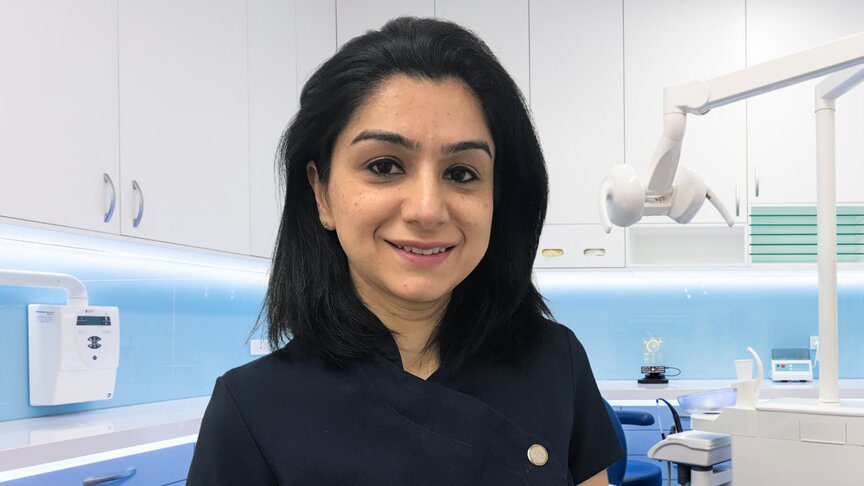
Dr Deepa Chopra
Principal Dentist & Clinic Founder
GDC registration number: 124489
Membership of the Faculty of Dental Surgery from the Royal College of Surgeons of Edinburgh
Membership of the British Dental Association
Restorative Dentistry from Tipton
Align Invisalign profile
LinkedIn profile
Areas of Expertise: 20+ Years Dentistry Experience. General Dentistry, Cosmetic Dentistry, Restorative Dentistry, Invisalign, Composite Bonding, Veneers, Root Canals, Crowns, Dentures, Gum Disease, Hygienist Services, Emergency Dental Services & Teeth Whitening.