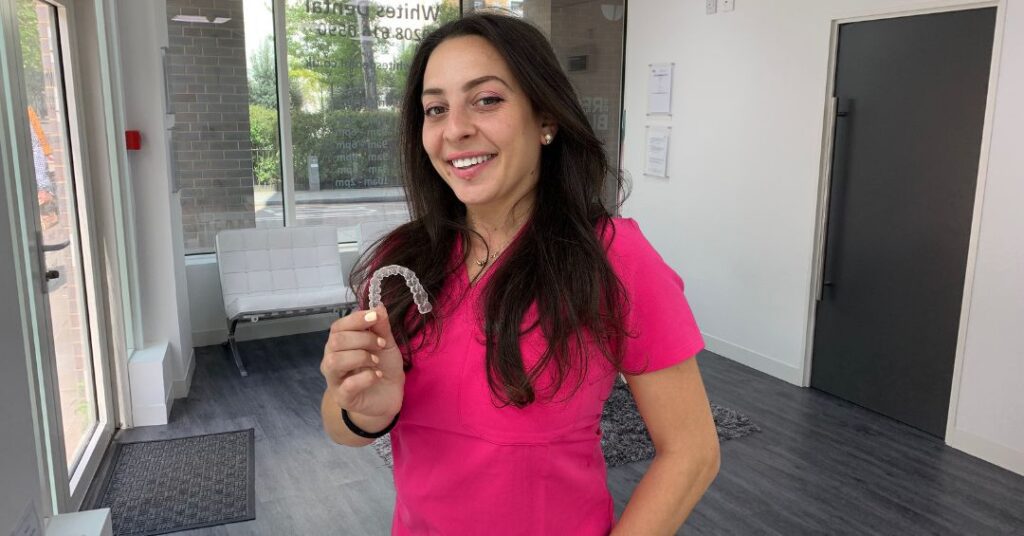
What Conditions Can Orthodontics Correct?

Whites Dental Waterloo

Example Icon 0208 616 0590

Example Icon 172 Blackfriars Rd, London SE1 8ER

Whites Dental Marble Arch (W2)

Example Icon 0203 576 2325

Example Icon 52B Kendal St, St George's Fields, London W2 2BP


A lot of people think orthodontics is only for visibly crooked teeth.

That is one part of it, but it is nowhere near the whole picture. Orthodontic treatment is designed to correct a wide range of alignment and bite problems, many of which affect more than appearance alone. Some patients come in wanting a straighter smile and only discover during assessment that the real issue also involves crowding, spacing, or the way their upper and lower teeth meet.

That is why orthodontics often goes beyond what patients expect.

The goal is not simply to make teeth look neater in photographs. It is to improve positioning, bite relationships, and, in many cases, long-term function as well. Depending on the case, that can make teeth easier to clean, help reduce uneven contact, and create a result that feels more balanced overall.

In this guide, we explain what conditions orthodontics can correct, how those issues are identified, and why some problems that seem cosmetic on the surface may actually involve a deeper bite or alignment concern.

Quick Answer: Orthodontics can correct conditions such as crowding, spacing, crooked teeth, overbite, underbite, crossbite, open bite, and certain jaw-related alignment problems. Treatment may involve braces or clear aligners depending on the case. If you are considering orthodontic treatment London patients usually begin with an assessment to find out which problems are present and how they can be corrected safely.

Ask A Question

🔑 Key Takeaways

  • Orthodontics can correct more than just crooked teeth
  • Common orthodontic conditions include crowding, spacing, overbite, underbite, crossbite, and open bite
  • Some orthodontic problems are mainly cosmetic, while others also affect function and bite balance
  • A problem that looks simple from the front may involve more than one condition
  • Orthodontic assessment helps identify which conditions are present and how they relate to one another
  • Different conditions may suit different treatment systems depending on the case
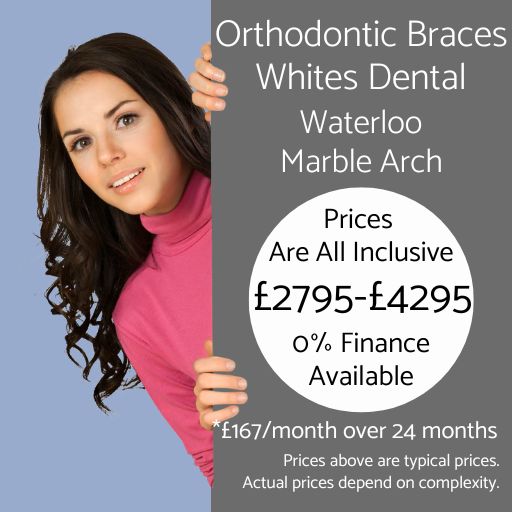

Orthodontic treatment in London at Whites Dental

🧭 Jump to:

What Orthodontics Can Correct
Crowding And Spacing
Bite Problems
Jaw-Related Issues
How Orthodontists Identify Conditions
FAQs

What Conditions Can Orthodontics Correct?

Orthodontics can correct a range of conditions that affect the position of the teeth and the way the bite works.

These commonly include:

  • Crowding
  • Spacing or gaps
  • Crooked or rotated teeth
  • Overbite
  • Underbite
  • Crossbite
  • Open bite

In some cases, orthodontics may also help with broader alignment issues where the relationship between the teeth and jaws needs to be assessed carefully.

Why Orthodontics Is About More Than Appearance

Many patients first think about orthodontics because they want a straighter smile.

That is understandable, but orthodontic treatment can also matter because these conditions may affect:

  • How the teeth fit together
  • How easy the teeth are to clean
  • How evenly the bite functions
  • How stable the teeth are likely to be over time

That is why a condition that seems cosmetic at first can still have a functional side too.

Can Orthodontics Correct Crooked Teeth?

Yes, this is one of the most common reasons patients seek orthodontic treatment.

Crooked teeth may involve:

  • Teeth that overlap
  • Teeth that sit at an angle
  • Teeth that are rotated or out of line

Some cases are mild and mostly cosmetic. Others are tied to crowding, bite imbalance, or lack of space in the arch.

Orthodontics can help by guiding the teeth into a more even, balanced position over time.

Why Crooked Teeth Are Not Always A Simple Problem

A single visibly crooked tooth may seem like an isolated issue, but it can be part of a wider orthodontic pattern.

For example, it may relate to:

  • Crowding elsewhere in the arch
  • A deeper bite issue
  • Space limitations affecting how the teeth fit together

This is one reason orthodontic assessment is so important before deciding on treatment.

Can Orthodontics Correct Crowding And Gaps?

Yes.

Crowding and spacing are two of the most common conditions orthodontics is used to correct.

Crowding

Crowding happens when there is not enough room for the teeth to sit in the correct position.

This can lead to:

  • Overlapping teeth
  • Twisted teeth
  • Teeth pushed forwards or backwards out of line

Orthodontic treatment can help create a more organised alignment so the teeth sit more evenly within the arch.

Spacing

Spacing means there are visible gaps between teeth.

Some patients are mainly concerned with the look of the gaps. In other cases, spacing also affects how the teeth contact one another and how balanced the bite feels overall.

Orthodontics can often help close or reduce these spaces in a controlled way.

Condition What It Means How Orthodontics May Help
Crowding Not enough room for teeth to sit properly Improves alignment and tooth position
Spacing Visible gaps between teeth Helps close or manage spaces more evenly
Crooked or rotated teeth Teeth sit at angles or out of line Moves teeth into a more balanced position

Can Orthodontics Correct Bite Problems?

Yes, and this is one of the most important parts of orthodontics.

Bite problems involve how the upper and lower teeth meet when you close together. These are not always obvious to patients, but they often matter just as much as visible alignment.

Common bite problems that orthodontics may correct include:

  • Overbite
  • Underbite
  • Crossbite
  • Open bite

Orthodontic treatment is often used not only to straighten the teeth, but to improve how they come together as a functioning bite.

Overbite

An overbite means the upper front teeth overlap the lower front teeth more than they should.

Underbite

An underbite means the lower teeth sit in front of the upper teeth.

Crossbite

A crossbite means some upper teeth bite inside the lower teeth instead of outside.

Open Bite

An open bite means some teeth do not meet when the mouth is closed, leaving a gap in contact.

These bite problems may affect more than appearance. They can also influence function and treatment complexity.

We explain bite diagnosis in more detail in How Orthodontists Diagnose Bite Problems.

In some cases, yes.

Orthodontists also assess how the upper and lower arches and jaws relate to each other, especially when the bite suggests more than a simple tooth-position issue.

This may be relevant where there are signs of:

  • Significant overbite or underbite patterns
  • Developmental bite imbalance in younger patients
  • A more complex relationship between the arches

Not every jaw-related issue is treated in exactly the same way, but orthodontics often plays an important role in assessing and managing these cases.

Why Jaw Relationship Matters

Sometimes the problem is not just that individual teeth are out of line. It may also involve the overall way the upper and lower arches relate to one another.

That is why orthodontic treatment planning often includes:

  • Bite assessment
  • Arch relationship
  • Developmental timing in younger patients

This is also why some cases that look mild on the surface can still need more thoughtful treatment planning.

Can Orthodontics Correct Problems In Adults As Well As Children?

Yes.

Orthodontics is not only for teenagers. Adults can also seek treatment for conditions such as:

  • Crowding
  • Spacing
  • Bite problems
  • Relapse after previous treatment

In fact, many adults pursue orthodontic treatment for both cosmetic and functional reasons.

Children may be assessed earlier because growth and development can affect timing, but adults can absolutely have orthodontic treatment when the case and goals are appropriate.

Why Adult Cases May Differ

Adults may have:

  • Older crowding that has worsened gradually
  • Previous orthodontic relapse
  • A stronger preference for discreet treatment

So while the conditions treated may overlap with younger patients, the planning and treatment goals can differ.

If you are looking at orthodontist in London options as an adult, an assessment is the best way to understand what is actually correctable in your case.

How Do Orthodontists Identify What Conditions Are Present?

Orthodontists identify these conditions through assessment of the teeth, bite, and overall case.

That may involve:

  • Clinical examination
  • Bite assessment
  • Discussion of your concerns
  • Scans, photographs, and sometimes X-rays where needed

This helps them work out:

  • Which conditions are present
  • Whether there is more than one issue involved
  • Which treatment options may be suitable

Why Some Conditions Overlap

Orthodontic cases often do not fall into just one simple category.

A patient may have:

  • Crowding and an overbite
  • Spacing and a crossbite
  • Crooked teeth plus a more functional bite issue

That is why proper diagnosis matters so much before treatment begins.

You can read more about what is assessed at that stage in What Does An Orthodontist Check At Your First Appointment?.

Does Orthodontics Correct Every Tooth Or Bite Problem?

Orthodontics can correct many alignment and bite problems, but the exact approach always depends on the case.

The orthodontist still needs to assess:

  • What the problem actually is
  • How severe or complex it appears
  • Which treatment route is likely to work best

So the answer is not simply “yes to everything”. It is more accurate to say that orthodontics can address a wide range of conditions, but the right treatment depends on diagnosis and planning.

Why Assessment Comes Before Treatment

That is exactly why the first consultation matters.

A patient may think:

  • “I just have one crooked tooth”

when the orthodontist may actually see:

  • Crowding
  • Rotation
  • A bite pattern affecting the case more widely

Assessment turns assumptions into a proper treatment plan.

If you want a broader overview of that planning process, see How An Orthodontist Creates A Personalised Treatment Plan.

Should An Orthodontist Explain Which Conditions You Actually Have?

Yes.

A good orthodontist should explain:

  • What the condition is called
  • What it means in practical terms
  • Whether it is mainly cosmetic or also functional
  • How it influences the treatment plan

Patients should not be left with vague labels and no real understanding of what is being treated.

If you are comparing providers for orthodontic treatment London patients can access privately, clear explanation of the problem is one of the strongest trust signals you can get.

FAQs: What Conditions Can Orthodontics Correct?

Patients often know orthodontics can straighten teeth, but they are not always sure which specific problems it can actually treat. These are some of the most common questions people ask.

What Conditions Can Orthodontics Correct?

Orthodontics can correct conditions such as crowding, spacing, crooked teeth, overbite, underbite, crossbite, and open bite, along with some broader alignment and jaw-related issues.

Can Orthodontics Fix Crooked Teeth?

Yes. Straightening crooked, overlapping, or rotated teeth is one of the most common reasons people have orthodontic treatment.

Can Orthodontics Correct Crowding And Gaps?

Yes. Orthodontics is commonly used to improve crowded teeth and close or manage spacing issues between teeth.

Can Orthodontics Fix Bite Problems?

Yes. Orthodontics may help correct bite problems such as overbite, underbite, crossbite, and open bite depending on the case.

Can You Have More Than One Orthodontic Condition At Once?

Yes. Many patients have more than one issue, such as crowding plus a bite problem or spacing plus uneven tooth contact.

Can Adults Have Orthodontic Treatment For These Conditions?

Yes. Adults can seek orthodontic treatment for many of the same conditions as younger patients, including crowding, spacing, and bite concerns.

Does Orthodontics Only Correct Cosmetic Problems?

No. While many patients start for cosmetic reasons, orthodontics can also help improve function, bite balance, and overall alignment.

How Does The Orthodontist Know Which Conditions I Have?

They assess your teeth and bite through examination, discussion, and records such as scans, photographs, or X-rays where needed.

Ask A Question

Looking For Orthodontic Treatment In London?

If you are unsure whether your concern is simple crowding, a bite issue, or something more involved, the best next step is to have it assessed properly by an orthodontist who can explain what is actually going on.

At Whites Dental, patients can explore orthodontic treatment London options for adults, teenagers, and children, including Invisalign, metal braces, ceramic braces, and Damon braces.

Whether your concern is crooked teeth, spacing, crowding, or the feeling that your bite does not meet properly, a proper orthodontic assessment can help clarify what can be corrected and how.

  • ✅ Specialist-led orthodontic assessments
  • ✅ Invisalign and fixed brace options
  • ✅ Adult and child suitability
  • ✅ Central London clinic locations

Ask A Question

Whites Dental
Privacy Overview

Whites Dental (“we”, “us” or “our”) are committed to protecting and respecting your privacy.

The practice respects your privacy and is committed to protecting your personal data. This Privacy Policy sets out how we will do this, taking into account data protection laws as well as our professional guidelines and requirements.

The data controller is Whites Dental; the Information Governance Lead is Deepa Chopra.

This Privacy Policy is available on the practice website at www.whitesdental.co.uk/privacy-policy, by email if you contact [email protected] or by calling the practice on 0204 527 3210.

This policy (together with our Cookies Policy) sets out the basis on which any personal data we collect, or that you provide to us, will be processed by us. It does not include data where the identity has been removed (i.e. anonymous data).

Please read the following carefully to understand our views and practices regarding your personal data and how we will treat it.

You will be asked to provide personal information when joining the practice. The purpose of us processing this data is to provide optimum health care to you by, for example, recommending the most relevant treatment and ensuring your safety by taking your medical history.

The categories of data we process

  • Contact data (such as name, address, email address, telephone number) for the purposes of corresponding with you, for example, regarding your appointments and treatment.
  • Contact data (such as name, address, email address, telephone number) for the purposes of direct mail/email/text/marketing.
  • Special category data concerning health (including health records, medical history, medication, your doctor’s name and address, warning cards or bracelets, alcohol and drug use) for the purposes of the delivery of safe health care.
  • Treatment data (such as photos, moulds, X-rays, clinical findings) for the purposes of providing you with the best treatment.
  • Financial data (such as credit card details, bank account information, credit history, employment status) for the purposes of processing your payment for treatment(s).
  • Usage data (such as information about how you use our website, products and services) for the purposes of improving the way we provide our treatment and services.

The ways we collect information about you

We may collect and process the following data about you in operating the website and performing any of our services and treatment(s):

Direct
  • Information you give us (including information you give to our Clinical Lead, Specialists, Dentists, Hygienists and Orthodontic Therapists who are contracted to work for us). You may give us information about you by filling in forms on our website www.whitesdental.co.uk or by corresponding with us by phone, email, in person or otherwise.
  • Personal data is obtained when a patient joins the practice, when a patient is referred to the practice and when a patient subscribes to an email list.
Automatic
  • Information we automatically collect about you. With regard to each of your visits to our website we may automatically collect the following information:
  • Technical information, including the internet protocol (IP) address used to connect your computer to the internet, your login information, browser type and version, time zone setting, browser plugin types and versions, operating system and platform; and
  • Information about your visit, including the full Uniform Resource Locators (URL) clickstream to, through and from our site (including date and time); products you viewed or searched for; page response times, download errors, length of visits to certain pages, page interaction information (such as scrolling, clicks, and mouseovers), and methods used to browse away from the page and any phone number used to call our customer service number.
From third parties
  • Our Clinical Lead, Specialists, Dentists, Hygienists and Orthodontic Therapists are third parties working for us as contractors, however, they are contractually bound to us with regard to obligations of confidentiality in the same way as our employees and by professional obligations of confidentiality.
  • You may have been referred to us for treatment from Invisalign and we will therefore receive contact data, special category data concerning health, treatment data and/or financial data from them.
  • Information we receive from other sources. We may receive information about you if you use any of the other websites we operate or the other services we provide.
  • We are also working closely with third parties (including, for example, business partners, subcontractors in technical, payment and delivery services, advertising networks, analytics providers, search information providers, credit reference agencies) and may receive information about you from them.
  • We use third-party analytics services (such as Google Analytics) to evaluate your use of the website, compile reports on activity, collect demographic data, analyze performance metrics, and collect and evaluate other information relating to our website and internet usage. These third parties use cookies and other technologies to help analyse and provide us with data.

How we share data with third parties

We may share your Contact data, special category of data relating to health, Financial data, Treatment data and/or Usage data with selected third parties including:

  • Our Clinical Lead, Specialists, Dentists, Hygienists and Orthodontic Therapists.
  • Private health insurance companies (at your request if you are using private health insurance).
  • Credit reference agencies.
  • Equipment providers and laboratories such as Align Tech, Nimrodental, and Ashford Orthodontics.
  • Professional compliance organisations such as BDA.
  • Data storage and transfer platforms such as Microsoft Sharepoint and Dropbox.
  • Our payment platform Natwest.
  • Our practice management and CRM software providers Pearl.
  • Our live chat provider Quriobot.
  • Advertisers and advertising networks that require the data to select and serve relevant adverts to you and others such as Facebook.
  • Analytics and search engine providers that assist us in the improvement and optimisation of our site such as Google.

This is a list of the main third parties with whom we share your personal data. If you would like a full list of third parties who process your data, and their contact details, please contact us using the details set out above.

We never pass your personal details to a third party unless we have a contract for them to process data on our behalf and will otherwise keep it confidential.

If we intend to refer a patient to another practitioner or to secondary care such as a hospital we will gain your consent before the referral is made and the personal data is shared.

The website may include links to third party websites, plugins and applications. Clicking on those links or enabling those connections may allow third parties to collect or share data about you. We do not control these third party websites and are not responsible for their privacy statements. When you leave our website, we encourage you to read the privacy notice of every website you visit.

Data transferred outside the EU

  • Personal data is stored in the EU whether in digital or hard copy format.
  • Personal data is stored in the US in digital format when the data storage company is certified with the EU-US Privacy Shield.

Lawful basis for processing personal data

The lawful bases for processing personal data (including providing your personal data to third parties) are:

  • Consent of the data subject for data relating to treatment, care, our services, processing payment, credit checks, marketing and reviews, improving our services and improving our website (including using data analytics). This will also apply to the storage of personal data for these purposes.
  • Processing is necessary for the performance of a contract with the data subject or to take steps to enter into a contract such as the provision of the services by us.
  • Processing is necessary to comply with a legal obligation such as financial, tax and contractual laws.

For consent relating to children and people who may not have mental capacity to give consent, please contact us using the details above for a copy of our Safeguarding and Mental Capacity policies.

The reason for processing special category data such as patients’ health data is:

  • The processing is necessary for the purposes of preventative or occupational medicine, for assessing the working capacity of the employee, medical diagnosis, the provision of health or social care or treatment or management of health or social care systems and services on the basis of Union or Member State law or a contract with a health professional; and
  • Data is processed by or under the responsibility of a professional subject to the obligation of professional secrecy under Union or Member State law or rules established by national competent bodies or by another person also subject to an obligation of secrecy under Union or Member State law or rules established by national competent bodies.

Purposes for processing personal data

We (and the third parties listed above) process your personal data for the following purposes:

  • To provide you with our services.
  • To discuss relevant treatments.
  • To provide a safe working environment for staff, contractors and patients.
  • To check your employment and financial status for payment plans.
  • To process payments.
  • To keep you informed of our latest offers, other services we provide and general marketing activities.
  • To obtain reviews and feedback on your experience of our services.
  • To store our data.

If you would like more information about how your data is processed please contact us by using the details set out above.

Data retention

The retention period for special category data in patient records is a minimum of 10 years and may be longer for complex records in order to meet our legal requirements. The retention periods for other personal data is two years after it was last processed.

You will receive marketing emails until you unsubscribe, either by contacting us or by clicking on the unsubscribe link at the bottom of the email. For details of other retention periods please contact us using the details set out above.

Your personal data rights

You have the following personal data rights:

  • The right to be informed.
  • The right of access to your personal data, which enables you to receive a copy of the personal data we hold about you and to check that we are lawfully processing it.
  • The right to rectification of your personal data that you consider to be inaccurate. This enables you to have any incomplete or inaccurate data we hold about you corrected.
  • The right to erasure. This enables you to ask us to delete or remove your personal data (however clinical records must be retained for a certain time period).
  • The right to restrict processing. This gives you the option to ask us to suspend the processing of your personal data e.g. if you want us to establish the data’s accuracy or you do not want us to erase it.
  • The right to data portability. If you request us to do so, we will provide to you, or a third party of your choice, your personal data in a commonly used, machine-readable format.
  • The right to object. This enables you to object to the processing of your personal data if you feel it impacts on your fundamental rights and freedoms, however, in some cases, we may have compelling legitimate grounds to process your information which can override your right to object.
  • The right to request confirmation as to whether or not your personal data is being processed.
  • The right to not have a decision made about you based solely on automated processing.

You have the right to withdraw consent at any time. If you request us to do so, we will no longer process your data. However, this will not affect the lawfulness of any processing carried out before you withdraw your consent. If you withdraw your consent, we will not be able to provide you with the services. You have the right to obtain a free copy of your patient records within one month of submitting a request.

If you are not a patient of the practice you have the right to withdraw consent for processing personal data, to have a free copy of it within one month of submitting a request, to correct errors in it or to ask us to delete it. You can also withdraw consent from communication methods such as telephone, email or text.

We have carried out a Privacy Impact Assessment and if you would like a copy please contact us using the details set out above.

If you wish to exercise any of the rights set out above, in the first instance, please contact us using the details set out above.

You will not have to pay a fee to access your personal data (or to exercise any of the other rights). However, we may charge a reasonable fee if your request is clearly unfounded, repetitive or excessive. Alternatively, we may refuse to comply with your request in these circumstances.

We may need to request specific information from you to help us confirm your identity and ensure your right to access your personal data (or to exercise any of your other rights). This is a security measure to ensure that personal data is not disclosed to any person who has no right to receive it. We may also contact you to ask you for further information in relation to your request to speed up our response.

Further details of these rights can be obtained on the Information Commissioner’s website.

Data security

We have put in place appropriate security measures to prevent your personal data from being lost, used or accessed in an unauthorised way, altered or disclosed. In addition, we limit access to your personal data to those employees, agents, contractors and other third parties who have a business need to know. They will only process your personal data on our instructions and they are subject to a duty of confidentiality.

We have put in place procedures to deal with any suspected personal data breach and will notify you and any applicable regulator of a breach where we are legally required to do so.

Unfortunately, the transmission of information via the internet is not completely secure. Although we will do our best to protect your personal data, we cannot guarantee the security of your data transmitted through our website; any transmission is at your own risk. Once we have received your information, we will use strict procedures and security features to try to prevent unauthorised access.

Comments, suggestions and complaints

Please contact the practice for a comment, suggestion or a complaint about your data processing at [email protected], or 0204 527 3210 or by writing to or visiting the practice. We take complaints very seriously.

If you are unhappy with our response or if you need any advice you should contact the Information Commissioner’s Office (ICO). Their telephone number is 0303 123 1113, you can also find other contact options here. The ICO can investigate your claim and take action against anyone who’s misused personal data. You can also visit their website for information on how to make a data protection complaint.

Marketing by us

We offer individuals real choice and control. Our consent procedures put individuals in charge to build customer trust and engagement.

Our consent for marketing requires a positive opt-in, we don’t use pre-ticked boxes or any other method of default consent. We make it easy for people to withdraw consent, tell you how to and keep contemporaneous evidence of consent. Consent to marketing is never a precondition of a service.

You will receive marketing communications from us if you have requested information from us or if you have signed up via our contact form on the website and, in each case, you have not opted out of receiving that marketing.

Marketing by third parties

We do not share your data with third parties for marketing purposes.

Opting out

Where you opt-out of receiving these marketing messages, this means that you may not receive messages relating to your appointments or treatment so please let us know by using the details set out above if you would like to continue to receive messages about your appointments and treatment.