


Scaling & Root Planing: Periodontal Treatment For Gums
Scaling and root planing is a procedure that is the bed rock for periodontal treatment for gum disease. It goes far beyond a routine dental clean by removing harmful bacteria from beneath the gumline, helping inflamed gums heal, slowing bone loss and preventing tooth loss. For patients with gum disease, this deep cleaning is often the most important step in regaining long-term oral health and avoiding more invasive periodontal surgery.
The cost of scaling and root planing in London typically ranges from £200 to £400 per quadrant, depending on the severity of the gum disease and the complexity of treatment required. While costs can vary between practices, early intervention is often more affordable than treating advanced periodontal disease, making timely treatment a worthwhile investment in long-term oral health.

Understanding Why Scaling And Root Planing Matters For Periodontal Disease
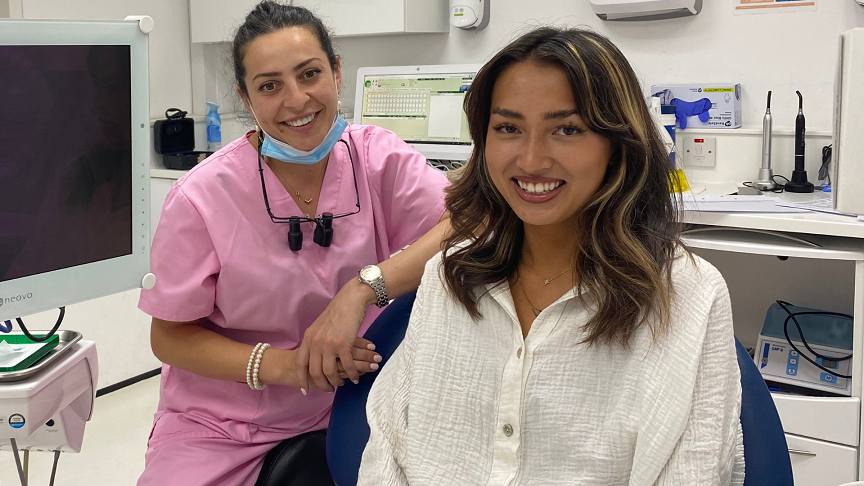
Bleeding gums, persistent bad breath, gum recession and loose teeth are rarely random problems. In most cases, they are signs of underlying gum disease. Scaling and root planing is designed specifically to treat this condition at its source. Gum disease begins when plaque builds up along and below the gumline. Over time, this plaque hardens into tartar, creating an ideal environment for bacteria to thrive. These bacteria trigger inflammation, damage the supporting tissues and gradually destroy the bone around the teeth.
Scaling and root planing interrupts this destructive cycle.
- Removes plaque and tartar below the gumline
- Reduces bacterial load causing inflammation.
- Allows gums to reattach to the teeth.
- Slows or halts bone loss
- Prevents progression to advanced periodontitis
Without this type of periodontal treatment, gum disease almost always worsens over time.
💡 Bleeding gums are not a hygiene issue alone—they are often a warning sign that deeper periodontal treatment is needed.
What Scaling And Root Planing Is And How It Differs From A Regular Clean

Many patients assume scaling and root planing is simply a more thorough dental cleaning. In reality, it is a targeted periodontal procedure designed to treat gum disease, not just polish teeth. A routine dental clean focuses on visible plaque and tartar above the gumline. Scaling and root planing focuses on what cannot be seen.
Scaling Below The Gumline
Scaling removes hardened tartar from:
- Beneath the gum margin
- Along tooth roots.
- Inside periodontal pockets
This is where gum disease bacteria live and multiply.
Root Planing To Promote Healing
Root planing smooths the tooth root surfaces to:
- Remove bacterial toxins.
- Prevent future plaque buildup.
- Help inflamed gums reattach
This smoothing process is critical for long-term periodontal stability.
💡 If gum pockets are deeper than normal, a standard clean is not enough to treat gum disease effectively.
How Gum Disease Leads To The Need For Deep Periodontal Cleaning
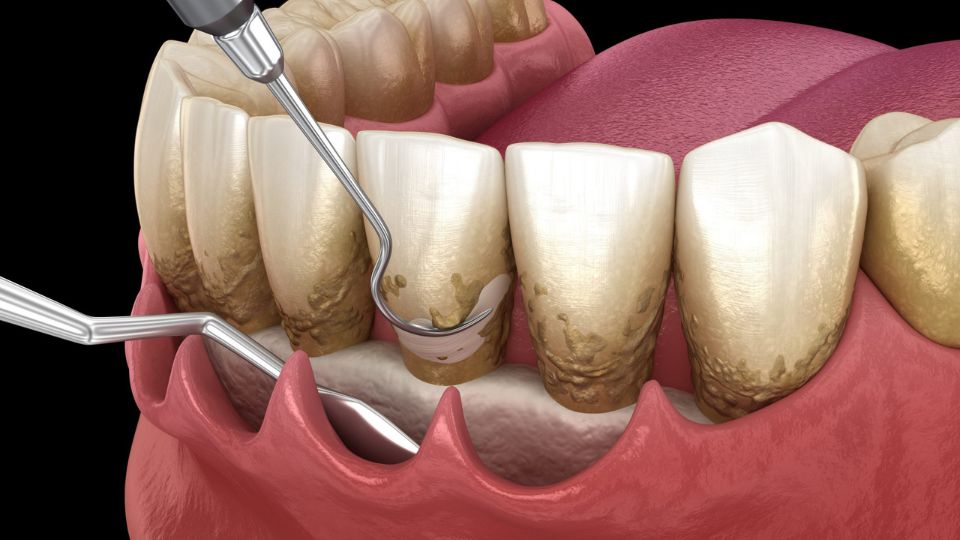
Periodontal disease develops in stages, and scaling and root planing is typically recommended once gingivitis progresses into early or moderate periodontitis.
Gingivitis Vs Periodontitis
Gingivitis is limited to gum inflammation and is reversible with proper care. Periodontitis involves permanent damage to supporting bone and tissue. Signs that gum disease has progressed include:
- Persistent bleeding gums.
- Gum recession
- Deep periodontal pockets.
- Loose or shifting teeth.
- Chronic bad breath
At this stage, scaling and root planing becomes essential periodontal treatment.
💡 Treating gum disease early with deep cleaning can prevent the need for surgical periodontal procedures later.
Scaling and Root Planing Cost in London
What Is Included In The Cost Of Scaling And Root Planing?
Scaling and root planing is a non-surgical periodontal treatment designed to remove plaque, tartar, and bacteria from below the gum line while smoothing the tooth roots to encourage healing. The cost typically reflects the time, expertise, and equipment required to effectively treat periodontal disease.
Treatment fees may include:
- Comprehensive periodontal assessment
- Measurement of gum pocket depths
- Deep cleaning beneath the gums
- Root surface decontamination and smoothing
- Local anaesthetic where required
- Post-treatment review appointments
Typical Scaling And Root Planing Costs In London
The cost of scaling and root planing in London varies depending on the severity of gum disease, the number of areas requiring treatment and whether care is provided by a dentist, hygienist or periodontist.
| Treatment | Typical Cost Range |
|---|---|
| Single Quadrant Deep Cleaning | £200 –£400 |
| Two Quadrants | £300–£800 |
| Full Mouth Scaling and Root Planing | £800–£1,600 |
| Periodontal Consultation | £65–£150 |
| Periodontal Maintenance Visit | £100–£250 |
💡 Prices are indicative and may vary between practices across London based on the experience and expertise of the treating dentist.
Periodontal Pockets And Why They Matter In Treatment Planning
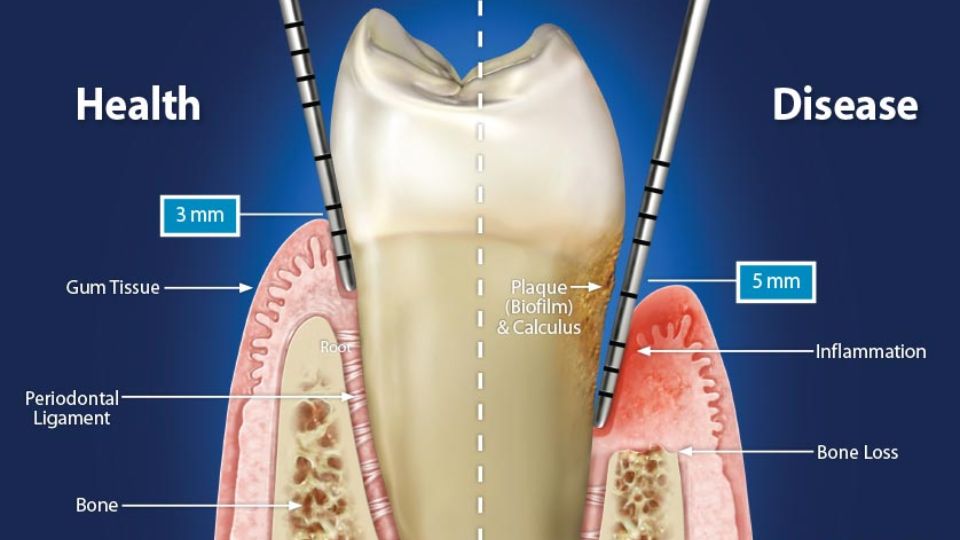
One of the main reasons periodontists recommend scaling and root planing is the presence of periodontal pockets. Healthy gums attach snugly to teeth, creating shallow spaces that are easy to clean. Gum disease causes these spaces to deepen, forming pockets that trap bacteria.
How Periodontal Pockets Form
- Bacteria trigger inflammation
- Gums pull away from teeth
- Bone begins to resorb
- Pockets deepen over time
Scaling and root planing reduces pocket depth by removing the cause of inflammation.
- Shallower pockets are easier to clean
- Healing reduces ongoing damage
- Risk of future flare-ups decreases
💡 Pocket depth measurements guide whether scaling and root planing is sufficient or further gum disease treatment is needed.
The Role Of Scaling And Root Planing In Periodontal Treatment Plans
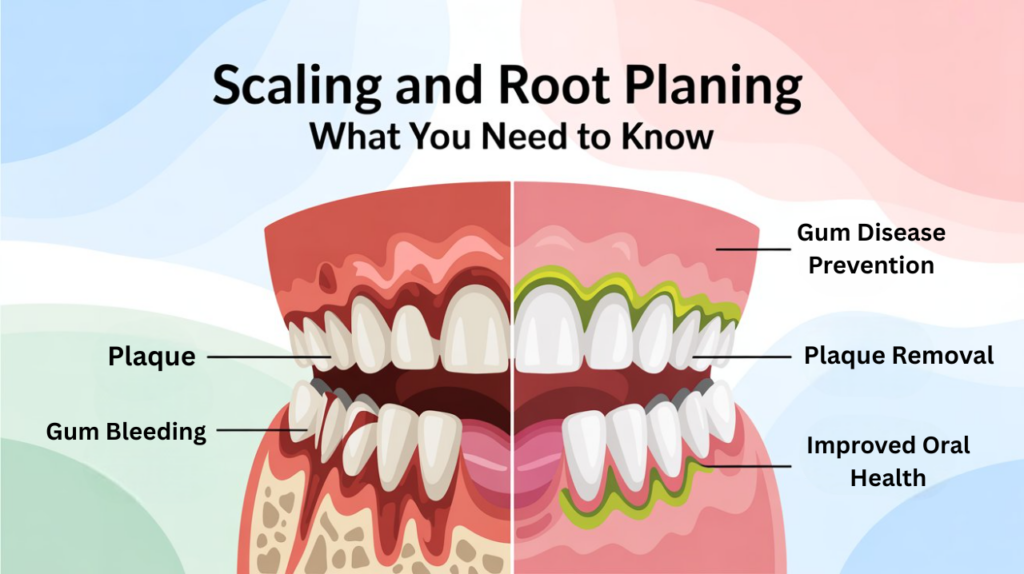
Scaling and root planing is rarely a standalone procedure. It forms the foundation of a broader periodontal treatment strategy. After treatment, periodontists reassess healing to determine next steps.
- Improved gum attachment
- Reduced bleeding and inflammation.
- Stabilised bone levels.
- Better long-term prognosis
If gums respond well, ongoing maintenance may be all that’s needed. If disease persists, further treatment may be recommended.
💡 Deep cleaning is both a treatment and a diagnostic step in managing gum disease.
What To Expect During Scaling And Root Planing For Periodontal Disease Treatment
Patients often feel anxious about deep periodontal cleaning, but understanding the process helps reduce fear.
Comfort And Anaesthesia
Most scaling and root planing treatments are performed with local anaesthetic to ensure comfort. Sensitivity is managed carefully.
Treatment Sessions
- Often completed over multiple visits
- Sections of the mouth treated separately
- Allows thorough cleaning and healing
Duration And Precision
Periodontists and hygienists take time to ensure:
- All tartar is removed
- Root surfaces are properly smoothed
- Inflamed tissue is not traumatised
💡 Properly performed scaling and root planing should feel controlled and comfortable, not rushed.
Healing After Scaling And Root Planing For Periodontal Gum Disease
Healing is where the benefits of periodontal treatment become visible.
Common Post-Treatment Changes
- Reduced bleeding
- Less swelling
- Improved gum firmness
- Fresher breath
Mild sensitivity is normal and temporary.
How Gums Recover
As bacteria are removed:
- Inflammation decreases
- Gums shrink and tighten
- Pocket depth reduces
This healing phase is crucial to long-term success.
💡 Following aftercare instructions greatly improves gum healing after deep cleaning.
Periodontal Maintenance After Scaling And Root Planing

Scaling and root planing is not a cure—it is the start of disease control.
Periodontal Maintenance Visits
Patients with gum disease require more frequent cleanings:
- Every 3–4 months
- Focused on preventing reinfection
- Monitors pocket stability
Home Care Matters
- Daily interdental cleaning
- Gentle brushing techniques
- Antibacterial mouth rinses when advised
💡 Consistent maintenance is what keeps gum disease from returning after treatment.
When Scaling And Root Planing Is Not Enough For Periodontal Treatment
In advanced cases, deep cleaning alone may not fully resolve gum disease. Signs additional treatment may be needed include:
- Persistent deep pockets.
- Ongoing inflammation
- Continued bone loss.
At this stage, surgical periodontal treatment may be recommended to access deeper areas and regenerate tissue.
💡 Early intervention with scaling and root planing improves the chances of avoiding surgery.
Scaling And Root Planing Vs Surgical Periodontal Treatment
Non-surgical periodontal therapy is always preferred when effective. Scaling and root planing:
- Preserves natural tissue.
- Requires minimal recovery.
- Is cost-effective
Surgical treatment is reserved for cases where deep pockets cannot heal with cleaning alone.
💡 Deep cleaning is often the least invasive way to stabilise gum disease.
How Scaling And Root Planing Protects Long-Term Oral Health
Left untreated, gum disease is a leading cause of tooth loss in adults. Scaling and root planing directly addresses the infection responsible for this damage. Long-term benefits include:
- Improved tooth stability
- Reduced risk of tooth loss.
- Better oral comfort
- Healthier smile appearance
It also supports overall health by reducing chronic inflammation.
💡 Treating gum disease helps protect both oral and general health.
How Whites Dental Supports Periodontal Gum Disease Treatment
At Whites Dental, scaling and root planing is provided as part of comprehensive periodontal care tailored to each patient’s needs. Patients benefit from:
- Detailed periodontal assessments.
- Advanced diagnostic tools
- Personalised gum disease treatment in London
- Ongoing periodontal maintenance
At Whites Dental, our highly experienced expert periodontists in London offer specialist gum disease treatment from our two Central London clinics located in Waterloo and Marble Arch. The team focuses on preserving natural teeth wherever possible through evidence-based periodontal treatment.
💡 Choosing an experienced periodontal team improves treatment outcomes and long-term gum health.
Author

Dr Deepa Chopra
Principal Dentist & Clinic Founder
Areas of Expertise: 20+ Years Dentistry Experience. General Dentistry, Cosmetic Dentistry, Restorative Dentistry, Invisalign, Composite Bonding, Veneers, Root Canals, Crowns, Dentures, Gum Disease, Hygienist Services, Emergency Dental Services & Teeth Whitening.
Profile On LinkedIn
Profile At Align