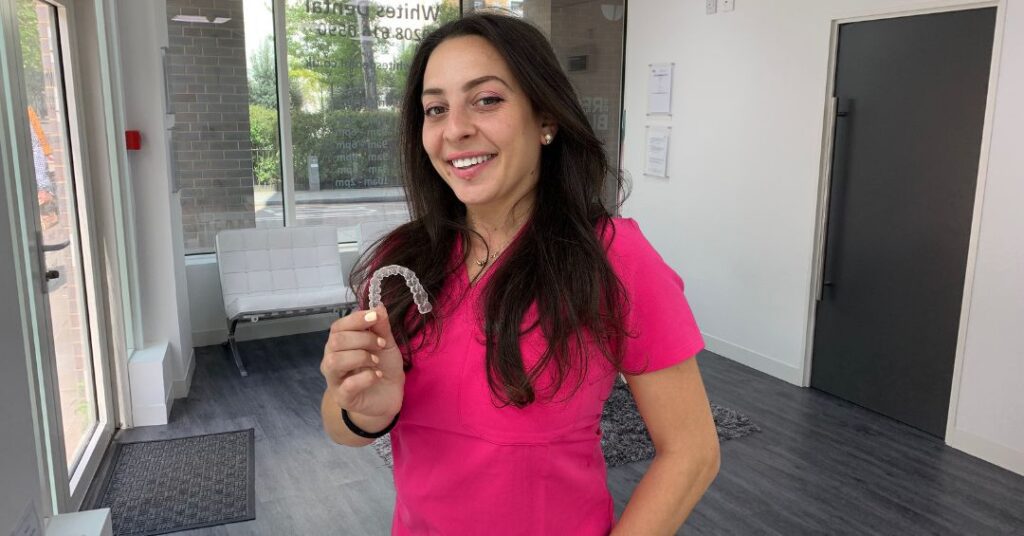


A better smile can mean very different things depending on what is actually bothering you.
For one patient, the issue might be crowded teeth, a deep bite, overlapping front teeth, or gaps caused by tooth position. For another, it might be staining, worn edges, small chips, old bonding, or teeth that look uneven in photographs.
That difference matters because orthodontics and cosmetic dentistry solve different problems.
An orthodontist improves a smile by moving the teeth and correcting the bite. A cosmetic dentist improves a smile by changing the visible appearance of the teeth, such as their colour, shape, surface, or proportions.
In some cases, the right answer is simple. Crooked teeth usually need orthodontic assessment. Stained or chipped teeth may be better suited to cosmetic dentistry. In other cases, the best result comes from combining both: straightening the teeth first, then refining the smile with whitening, bonding, or veneers if needed.
This guide explains the difference between an orthodontist and a cosmetic dentist, when each option makes sense, and why starting in the right place can help avoid unnecessary treatment.
Quick Answer: The main difference between an orthodontist and a cosmetic dentist is that an orthodontist moves teeth and corrects bite problems, while a cosmetic dentist improves the colour, shape or surface appearance of teeth. If your teeth are crooked, crowded or your bite feels wrong, an orthodontist is usually the better place to start. If your teeth are already well positioned but look stained, chipped or uneven, cosmetic dentistry may be more suitable.
🔑 Key Takeaways
- Orthodontists improve smile appearance by moving teeth into better positions
- Cosmetic dentists improve smile appearance by changing the colour, shape, or surface of teeth
- If your teeth are crooked, crowded, gappy, or your bite feels off, orthodontic treatment is usually more appropriate
- If your teeth are already in a good position but look worn, stained, chipped, or uneven, cosmetic dentistry may be more relevant
- Some patients benefit from orthodontic treatment first and cosmetic dentistry afterwards
🧭 Jump to:
Orthodontist Vs Cosmetic Dentist: Quick Comparison
The difference between orthodontics and cosmetic dentistry is easiest to understand by looking at what each treatment approach actually changes.
| Question | Orthodontist | Cosmetic Dentist |
|---|---|---|
| What do they mainly change? | Tooth position and bite alignment | Tooth colour, shape and surface appearance |
| Best for crooked teeth? | Usually yes | Only in selected mild cosmetic cases |
| Best for veneers? | Usually no | Yes |
| Best for bite problems? | Yes | Not usually |
| Can they work together? | Yes, often first | Yes, often after straightening |
What Does An Orthodontist Do?
An orthodontist focuses on the position of the teeth and the way the bite fits together. Their role is to diagnose alignment problems and correct them using controlled tooth movement.
That means orthodontic treatment is usually aimed at issues such as:
- Crooked teeth
- Crowding
- Spacing or gaps
- Overbites
- Underbites
- Crossbites
- Open bites
Orthodontists usually improve a smile by moving the natural teeth into a better position rather than covering or reshaping them. Treatment may involve clear aligners, metal braces, ceramic braces, or Damon braces depending on the case.
If you want to understand the specialist role in more detail, read our guide on what an orthodontist does.
If your concern is mainly about crooked teeth or bite alignment, it makes sense to start by learning more about orthodontic treatment in London.
Orthodontists Improve The Position Of The Teeth
This is the key point. Orthodontists do not mainly change the surface appearance of a tooth. They change where the teeth sit.
That can improve:
- Smile symmetry
- Alignment
- Bite balance
- Ease of cleaning
- Long-term function
For patients with noticeable crowding or bite issues, moving the teeth is often a better foundation than trying to disguise the problem cosmetically.
What Does A Cosmetic Dentist Do?
A cosmetic dentist focuses on improving the appearance of the teeth themselves. That may involve changing the colour, shape, surface, size, or visible proportions of the smile.
Cosmetic dentistry is often used for concerns such as:
- Tooth staining or discolouration
- Chips and minor wear
- Uneven edges
- Small gaps in some cases
- Tooth shape concerns
- Smile refinement after orthodontic treatment
Typical cosmetic treatments may include:
| Cosmetic treatment | What it changes | Best for |
|---|---|---|
| Teeth whitening | Colour | Stained or yellow teeth |
| Composite bonding | Shape and minor imperfections | Chips, uneven edges, subtle reshaping |
| Veneers | Shape, colour, visible surface appearance | More significant cosmetic smile changes |
A cosmetic dentist can make teeth look better, but that does not necessarily mean they are changing the underlying alignment or bite.
For patients comparing broader dental roles, our guide to orthodontist vs dentist explains how specialist orthodontics differs from general dental care.
Cosmetic Dentists Improve How The Teeth Look
Cosmetic dentistry can be excellent for the right patient. If your teeth are already in a good position but you dislike their colour, shape, or surface appearance, cosmetic treatment may be exactly what you need.
Where patients sometimes go wrong is assuming cosmetic dentistry should be the first answer to crooked or crowded teeth. In many of those cases, the better first step is to correct the position of the teeth rather than mask the issue.
What Is The Main Difference Between An Orthodontist And A Cosmetic Dentist?
The main difference is that an orthodontist moves teeth, while a cosmetic dentist changes how teeth look.
Both can improve a smile, but they do so in different ways and for different reasons.
| Area | Orthodontist | Cosmetic Dentist |
|---|---|---|
| Main goal | Improve tooth position and bite | Improve visible appearance of teeth |
| Typical concerns | Crowding, spacing, crooked teeth, bite issues | Staining, chips, worn edges, tooth shape |
| Main methods | Braces, Invisalign, aligners, retention | Whitening, bonding, veneers |
| Changes bite? | Yes | Not usually |
| Moves natural teeth? | Yes | Not as the main treatment aim |
This is why the phrase “I want a better smile” can lead in two very different directions. It depends on whether the problem is mainly positional or mainly cosmetic.
Cosmetic Improvement And Functional Improvement Are Not Always The Same Thing
A smile can look better after orthodontic treatment because the teeth are straighter. A smile can also look better after cosmetic dentistry because the teeth are whiter or more symmetrical. Those outcomes may overlap, but the clinical approach behind them is different.
If the bite is unbalanced or the teeth are crowded, orthodontic treatment may solve both the cosmetic and functional issue at the same time. Cosmetic treatment alone may not.
Who Should You See For Your Smile Concern?
The answer depends on what is actually bothering you.
See An Orthodontist If Your Main Issue Is:
- Crooked teeth
- Crowding
- Gaps caused by alignment problems
- A bite that feels off
- Teeth that protrude or overlap
- A smile that needs position correction rather than just surface improvement
See A Cosmetic Dentist If Your Main Issue Is:
- Tooth colour
- Small chips or worn edges
- Minor shape differences
- Surface imperfections
- The look of otherwise well-positioned teeth
Another way to think about it is this:
- If the teeth are in the wrong place, orthodontics is often the better starting point.
- If the teeth are in the right place but do not look how you want, cosmetic dentistry may be more appropriate.
If you are unsure, a specialist orthodontic assessment is often a sensible place to begin when alignment is part of the concern, especially before considering more invasive cosmetic options.
Should You Get Veneers Or Braces For Crooked Teeth?
This is one of the most common versions of the question.
For genuinely crooked teeth, braces or aligners are often the more conservative and biologically sensible option because they move the teeth rather than reshape or cover them.
Veneers may improve the appearance of some mildly uneven smiles, but they do not correct tooth position in the same way orthodontic treatment does. That is why many patients prefer to straighten first, then decide whether any cosmetic refinement is still needed afterwards.
If crookedness is your main issue, seeing an orthodontist in London first usually makes more sense than jumping straight to veneers.
You may also find it useful to read our guide on whether you need an orthodontist or dentist for crooked teeth.
Are Braces Considered Cosmetic Dentistry?
Braces can improve the appearance of your smile, but they are usually classed as orthodontic treatment rather than cosmetic dentistry. This is because braces and clear aligners move the teeth and can also improve bite function, tooth position and long-term alignment.
Cosmetic dentistry usually focuses on the visible surface of the teeth, such as colour, shape, edges or proportions. Orthodontics focuses on where the teeth sit and how they meet when you bite.
That means braces may have a cosmetic benefit, but the treatment itself is orthodontic.
When Should Orthodontics Come Before Cosmetic Dentistry?
Orthodontics often makes more sense before cosmetic dentistry when the teeth are in the wrong position. This is especially true if there is crowding, overlap, protrusion, spacing caused by alignment, or a bite problem behind the cosmetic concern.
Trying to disguise crooked teeth with bonding or veneers may sometimes mean removing more tooth structure or placing restorations under more pressure than necessary. Straightening first can create a healthier, more stable foundation before cosmetic refinements are considered.
Orthodontics may be the better first step if:
- Your teeth are crowded or overlapping
- Your bite feels uneven or uncomfortable
- Your front teeth stick out or sit at an angle
- You are considering veneers mainly to make teeth look straighter
- You want to reduce the amount of cosmetic work needed later
Cosmetic dentistry may still be useful afterwards, but the order matters. In many cases, moving the teeth first creates a more conservative route than trying to correct everything on the tooth surface.
Can You Need Both An Orthodontist And A Cosmetic Dentist?
Yes, and many of the best smile outcomes involve both at different stages.
For example, a patient may first have orthodontic treatment to correct crowding, spacing, or bite position. Once the teeth are properly aligned, cosmetic dentistry can then be used to refine colour, shape, or minor surface details if needed.
This approach can often be more conservative because it reduces the need to use cosmetic treatment to hide a positional problem.
A Common Sequence Is Straighten First, Refine Second
That sequence can make sense when a patient has both alignment issues and cosmetic concerns.
This is especially common for adults who want their teeth straightened first before considering whitening, composite bonding or veneers.
A typical journey may look like this:
- Orthodontic consultation and treatment planning
- Braces or aligner treatment to move the teeth
- Retention to maintain the new position
- Optional cosmetic refinement such as whitening or bonding
For many patients, this sequence protects more natural tooth structure and gives cosmetic work a better foundation.
Is An Orthodontist Better Than A Cosmetic Dentist?
Not overall. They simply do different things.
An orthodontist is better when the problem is about position, movement, and bite. A cosmetic dentist is better when the problem is about shape, colour, and visible appearance.
The question is not which one is “better” in general. The real question is which one is more appropriate for your specific concern.
| Smile concern | Usually better first step | Why |
|---|---|---|
| Crooked front teeth | Orthodontist | The position of the teeth needs changing |
| Crowding or bite issue | Orthodontist | Function and alignment matter |
| Stained teeth | Cosmetic dentist | The issue is appearance, not alignment |
| Small chips or worn edges | Cosmetic dentist | Reshaping or surface improvement may be enough |
| Crooked and discoloured teeth | Often orthodontist first | Position usually needs correcting before cosmetic finishing |
If you want to understand the orthodontic role itself in more detail, you may also find it useful to read What Does an Orthodontist Do?.
FAQs: Orthodontist Vs Cosmetic Dentist
Patients often ask this when they want to improve their smile but are unsure which type of treatment makes the most sense. Some are comparing braces with veneers, while others want to know whether whitening, bonding, or aligners should come first. These are some of the most common questions patients ask before booking.
What Is The Difference Between Cosmetic Dentistry And Orthodontics?
Cosmetic dentistry focuses on improving the visible appearance of teeth, including colour, shape, size and surface finish. Orthodontics focuses on moving teeth into better positions and correcting bite problems using braces or clear aligners.
Are Braces Cosmetic Dentistry?
Braces are usually considered orthodontic treatment rather than cosmetic dentistry. They can improve how your smile looks, but they work by moving teeth and correcting alignment, not by changing the surface appearance of the teeth.
What Is A Cosmetic Orthodontist?
The phrase cosmetic orthodontist is sometimes used to describe orthodontic treatment chosen mainly for smile improvement. However, orthodontics still focuses on tooth movement and bite alignment, even when the patient’s main goal is cosmetic.
Should I See An Orthodontist Or Cosmetic Dentist For Crooked Teeth?
If crooked teeth are the main issue, an orthodontist is usually the better place to start because the teeth need to be moved rather than cosmetically disguised.
Can A Cosmetic Dentist Fix Crooked Teeth?
A cosmetic dentist may improve the appearance of mildly uneven teeth in some cases, but cosmetic treatment does not correct tooth position in the same way braces or aligners do.
Who Is Better For Veneers, A Cosmetic Dentist Or Orthodontist?
Veneers are a cosmetic treatment, so a cosmetic dentist would usually provide them. However, if the teeth are significantly crooked, orthodontic treatment may be the more appropriate first step.
Is Invisalign Orthodontic Or Cosmetic?
Invisalign is an orthodontic treatment because it moves teeth into a new position, even though the cosmetic result is often one of the reasons patients choose it.
Can I Have Braces And Cosmetic Dentistry?
Yes. Many patients have orthodontic treatment first and then choose cosmetic refinement such as whitening or bonding afterwards.
Should I Get Bonding Before Braces?
If alignment is a major issue, it often makes more sense to straighten the teeth first and then decide whether bonding is still needed afterwards.
Is A Cosmetic Dentist The Same As An Orthodontist?
No. An orthodontist focuses on tooth movement and bite correction, while a cosmetic dentist focuses on the appearance of the teeth.
Can Orthodontic Treatment Improve How My Smile Looks Without Veneers?
Yes. For many patients, simply improving the position of the teeth creates a major cosmetic improvement without the need for veneers.
Looking For The Right Smile Treatment In London?
If you are trying to decide between orthodontic treatment and cosmetic dentistry, the right answer depends on whether your concern is mainly about tooth position or tooth appearance.
If your teeth are crooked, crowded, gappy, or your bite feels unbalanced, specialist orthodontic advice is usually the best place to begin.
At Whites Dental, patients can explore treatment with an experienced orthodontist in Central London, with options for adults, teenagers, and children across a wide range of alignment and bite concerns.
- ✅ Specialist orthodontic assessment
- ✅ Clear aligner and fixed brace options
- ✅ Adult and child treatment pathways
- ✅ Central London clinic locations
Author

Dr Deepa Chopra
Principal Dentist & Clinic Founder
GDC registration number: 124489
Membership of the Faculty of Dental Surgery from the Royal College of Surgeons of Edinburgh
Membership of the British Dental Association
Restorative Dentistry from Tipton
Align Invisalign profile
LinkedIn profile
Areas of Expertise: 20+ Years Dentistry Experience. General Dentistry, Cosmetic Dentistry, Restorative Dentistry, Invisalign, Composite Bonding, Veneers, Root Canals, Crowns, Dentures, Gum Disease, Hygienist Services, Emergency Dental Services & Teeth Whitening.