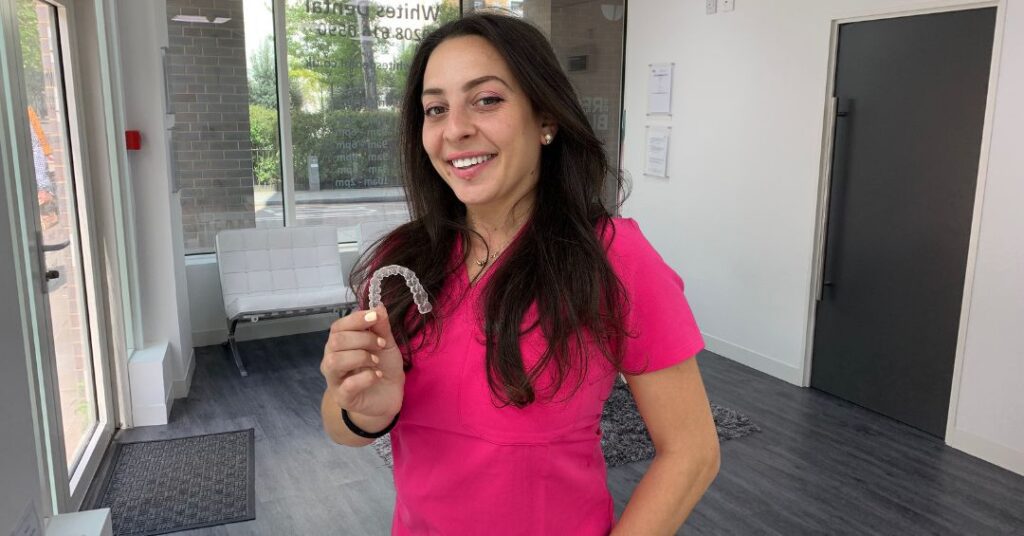


If you are about to book braces, Invisalign, aligners, or bite correction, it is sensible to check who is actually providing your treatment.
In the UK, dental professionals can be checked through the General Dental Council register. This can help you confirm whether someone is registered to practise dentistry and, where relevant, whether they are listed as a specialist orthodontist.
This matters because orthodontic treatment is not a quick cosmetic purchase. It involves diagnosis, tooth movement, bite assessment, review appointments and retainers after treatment.
This guide explains how to check if an orthodontist is registered in the UK, how to use the GDC register, what details to look for, and what to do if you are unsure whether someone is a specialist orthodontist.
Quick Answer: To check if an orthodontist is registered in the UK, search their name on the General Dental Council register. Check that the name and registration details match the clinician you are researching, then look for whether orthodontics is listed as a specialist area if they are described as a specialist orthodontist.
🔑 Key Takeaways
- Patients in the UK can check whether an orthodontist is registered by using the General Dental Council register
- Registration confirms a dental professional is allowed to practise in the UK
- Being registered and being a specialist orthodontist are related, but not exactly the same thing
- It is worth checking both professional registration and whether orthodontics is their specialist area
- Registration checks are especially helpful when comparing orthodontists for braces, aligners, or bite correction
- Reviews matter, but formal registration is a more basic trust check that should come first
🧭 Jump to:
How To Check An Orthodontist On The GDC Register
The quickest way to check an orthodontist is to use the official General Dental Council register and search for the clinician by name.
- Go to the GDC register search.
- Enter the orthodontist’s full name. Use the name shown on the clinic website, treatment plan, email, or consultation paperwork.
- Check the registration result carefully. Make sure the name and professional details match the clinician you are researching.
- Look for specialist information. If someone is described as a specialist orthodontist, check whether orthodontics appears as their specialist area.
- Ask the clinic if anything is unclear. Patients are entitled to ask who will be planning or supervising their orthodontic treatment.
This check should only take a few minutes, but it gives you a stronger baseline before comparing reviews, treatment options, prices or clinic location.
Why Does It Matter If An Orthodontist Is Registered In The UK?
It matters because registration is one of the clearest baseline trust checks a patient can make.
Before thinking about reviews, clinic branding, price, or before-and-after cases, it makes sense to confirm that the person you are considering is properly registered to practise in the UK.
That matters even more with orthodontics because treatment usually involves:
- Long-term planning
- Multiple review appointments
- Bite assessment
- Controlled tooth movement over time
- Retention after treatment finishes
If you are trusting someone with that process, registration should not feel like an optional detail. It is the starting point.
What Registration Tells Patients
Checking registration can help confirm:
- The clinician is legally allowed to practise dentistry in the UK
- Their professional details can be found on an official register
- You are dealing with a real, accountable dental professional
It does not tell you everything about their experience, communication style, or treatment quality, but it does provide a very important first layer of reassurance.
What Should You Look For On The GDC Register?
When you search the GDC register, the aim is not just to find a similar name. You want to check that the entry matches the clinician you are researching.
Look carefully at:
- The clinician’s full name
- Their professional registration details
- Whether the entry appears to match the clinic or person you are considering
- Whether orthodontics is listed as a specialist area, if specialist status is being claimed
If you cannot confidently match the register entry to the provider, ask the clinic directly for clarification before booking treatment.
What Details Should Match?
When checking a professional register entry, you want the details to make sense in context.
That may include:
- The clinician’s name
- Their professional registration information
- Whether the profile lines up with the provider you are researching
- Whether specialist orthodontic status is shown where applicable
If you are comparing different providers for orthodontist in London treatment, this kind of check can help you separate surface-level marketing from more concrete trust signals.
What If You Cannot Find The Orthodontist On The Register?
If you cannot find the clinician on the register, do not panic immediately. There may be a simple explanation, such as a spelling difference, shortened name, maiden name, or the clinic using a different professional name from the one listed publicly.
However, you should not ignore it either. If you cannot find a clear match, ask the clinic for the clinician’s registered name or GDC number so you can check again.
If the clinic cannot or will not provide clear registration information, that is a reason to pause before booking treatment.
Is Being Registered The Same As Being A Specialist Orthodontist?
No, and this is where some patients understandably get confused.
Being registered means the dental professional is on the appropriate UK register and is allowed to practise dentistry.
Being a specialist orthodontist means something more specific. It indicates orthodontics is a recognised specialist area of focus, rather than just general dentistry.
So while the two ideas are connected, they are not identical.
| Term | What It Means | Why It Matters To Patients |
|---|---|---|
| Registered dentist | A dental professional legally registered to practise in the UK | Confirms a basic level of professional legitimacy |
| Specialist orthodontist | A dentist whose specialist area is orthodontics | More directly relevant where braces, aligners, or bite correction are the main concern |
That distinction matters because some patients are not just asking, “Is this person registered?” They are really asking, “Are they the right kind of professional for my alignment problem?”
Why Patients Should Understand The Difference
If your main concern is:
- Crooked teeth
- Crowding
- Gaps
- Overbite, underbite, crossbite, or open bite
- Choosing between braces and aligners
then specialist orthodontic focus becomes more relevant than broad dental registration alone.
For a broader role comparison, you may find Orthodontist Vs Dentist useful.
Can A Dentist Be Registered Without Being A Specialist Orthodontist?
Yes.
A dentist can be fully registered in the UK without orthodontics being their specialist focus. That is normal because general dentistry and specialist orthodontics are not the same field.
This is why patients sometimes need to check two things:
- Is this clinician properly registered?
- Are they also a specialist in orthodontics, or is orthodontics simply one part of what they offer?
Neither question is unreasonable. In fact, both are very sensible when you are considering private treatment.
What Else Should You Check Apart From Registration?
Registration is the foundation, but it is not the whole picture.
Once you have confirmed that basic trust signal, it is also worth checking:
- Whether the clinician regularly treats orthodontic cases like yours
- Whether the clinic clearly explains treatment options
- Whether they discuss bite as well as appearance
- Whether there are reviews or patient comments that support the overall picture
- Whether the treatment process feels clear and transparent
A strong provider usually combines formal legitimacy with practical clarity.
If you are comparing providers, our guide on questions to ask before choosing an orthodontist can help you prepare for consultation.
A Simple Patient Checklist
Before choosing an orthodontic provider, a patient might reasonably check:
- Professional registration
- Whether orthodontics is a specialist focus
- What treatment systems are offered
- Whether adults, children, or both are treated
- How the consultation process works
If you are researching specialist orthodontist London treatment options, this kind of checklist helps you compare providers much more confidently.
Why Do Patients Check If An Orthodontist Is Registered?
Usually, patients check because they want reassurance before making a commitment.
That may be because:
- They are comparing several providers
- They are considering private orthodontic treatment for the first time
- They want to verify that a clinician is genuinely qualified
- They are choosing treatment for their child and want extra peace of mind
This is especially common when someone is already in research mode and trying to narrow down options carefully rather than just booking the nearest clinic.
Registration Checks Are A Sign Of A Careful Patient
Checking a register does not mean a patient is being overly cautious. It usually means they are taking the decision seriously.
That is often a good sign, because orthodontic treatment is not a casual purchase. It is a clinical, practical, and financial commitment.
Should You Only Choose An Orthodontist Based On Registration?
No, registration alone should not be the only deciding factor.
It is the baseline, not the full answer.
A registered orthodontic provider may still differ from another in terms of:
- Treatment range
- How clearly options are explained
- Experience with complex bite issues
- Suitability for adults versus children
- How practical the clinic is for ongoing appointments
So registration is a necessary check, but not the only one that matters.
What If You Are Not Sure Whether Someone Is A Specialist Orthodontist?
That is exactly where careful checking becomes useful.
If you are unsure, it helps to:
- Read how the clinician is described on the clinic website
- Check the professional register entry
- Look for clarity around whether orthodontics is their specialist area
- Ask directly during the consultation if needed
Patients are completely entitled to ask who will be planning and overseeing their orthodontic treatment.
FAQs: How To Check If An Orthodontist Is Registered In The UK
Patients often ask about registration when they are trying to verify whether an orthodontic provider is legitimate, qualified, and suitable for treatment. These are some of the most common questions that come up.
Where Can I Search The Orthodontist Register?
You can search for a UK dental professional using the General Dental Council register. Search by the clinician’s full name and check that the details match the person or clinic you are researching.
What Is The GDC Register?
The GDC register is the official register used to check whether dental professionals are registered to practise in the UK. It can also help patients check specialist information where relevant.
What If I Cannot Find My Orthodontist On The Register?
Ask the clinic for the clinician’s registered name or GDC number and search again. If you still cannot confirm their details, it is sensible to pause before booking treatment.
How Do I Check If An Orthodontist Is Registered In The UK?
You can usually check by searching the clinician’s name on the General Dental Council register and confirming that the details match the provider you are researching.
Does Being Registered Mean Someone Is A Specialist Orthodontist?
Not necessarily. Registration confirms that a dental professional is allowed to practise in the UK, but specialist orthodontic status is a more specific designation.
Can A General Dentist Be Registered In The UK Without Being An Orthodontist?
Yes. A general dentist can be fully registered without orthodontics being their specialist area.
Should I Check Registration Before Booking Orthodontic Treatment?
Yes. It is a sensible baseline trust check before committing to braces, aligners, or any longer-term orthodontic treatment plan.
What Else Should I Check Apart From Registration?
You should also check whether orthodontics is a specialist focus, whether the clinic explains treatment clearly, and whether the provider seems suitable for your specific case.
Can I Ask A Clinic Directly About Orthodontic Registration Or Specialist Status?
Yes. Patients are completely entitled to ask who will be planning their treatment and what that clinician’s orthodontic background is.
Why Do Patients Check If An Orthodontist Is Registered?
Usually for reassurance. It helps confirm that the clinician is a real, accountable dental professional before treatment begins.
Is Registration Enough To Choose The Right Orthodontist?
No. Registration is important, but you should also look at specialist focus, clarity of advice, treatment options, and overall fit for your needs.
Looking For A Private Orthodontist In London?
If you are comparing providers and want more confidence before booking, checking registration is a sensible first step – but it also helps to choose a provider who explains treatment clearly and offers the right options for your case.
At Whites Dental, patients can explore private orthodontist London treatment options for adults, teenagers, and children, including Invisalign, metal braces, ceramic braces, and Damon braces.
Whether you are checking credentials, comparing treatment systems, or simply trying to understand who is best placed to guide your case, a proper orthodontic consultation can help you move forward with more clarity.
- ✅ Specialist-led orthodontic assessments
- ✅ Invisalign and fixed brace options
- ✅ Adult and child suitability
- ✅ Central London clinic locations
Author

Dr Deepa Chopra
Principal Dentist & Clinic Founder
GDC registration number: 124489
Membership of the Faculty of Dental Surgery from the Royal College of Surgeons of Edinburgh
Membership of the British Dental Association
Restorative Dentistry from Tipton
Align Invisalign profile
LinkedIn profile
Areas of Expertise: 20+ Years Dentistry Experience. General Dentistry, Cosmetic Dentistry, Restorative Dentistry, Invisalign, Composite Bonding, Veneers, Root Canals, Crowns, Dentures, Gum Disease, Hygienist Services, Emergency Dental Services & Teeth Whitening.