

Invisalign treatment is designed as a series of small, controlled tooth movements. Each aligner applies gentle pressure to guide teeth into new positions over time. But one of the most common early questions patients ask is:
How fast does Invisalign start working?
Some people expect immediate visible change. Others worry when they do not see movement in the first week. The reality sits somewhere in between.
Quick Answer: Invisalign begins working from the first aligner, applying controlled force to teeth immediately. Most patients begin noticing visible changes within 2–6 weeks, depending on case complexity and wear time.
🔑 Key Takeaways
- Invisalign starts applying force from day one
- Most patients notice visible change within 2–6 weeks
- Movement happens in small staged increments
- Wear time directly affects speed of progress
- Case complexity influences how quickly results appear

🧭 Jump to:
Does Invisalign Work From Day One?
Yes.
The moment you insert your first aligner, it begins applying gentle orthodontic force to specific teeth. You may feel mild pressure during the first 24–48 hours. That sensation indicates biological movement is beginning.
Although you cannot see change immediately, the remodelling process inside the bone has already started.
When Do You Start Seeing Visible Results With Invisalign?
Most patients begin noticing visible changes between 2 and 6 weeks. Small alignment shifts in the front teeth are often the first to become noticeable. These early improvements may appear subtle, but they signal that staged movement is progressing.
More complex bite correction may take longer to become visibly apparent.
Typical Invisalign Progress Timeline
While every case is different, progress often follows a general pattern:
- Week 1–2: Mild pressure as teeth begin responding biologically.
- Week 3–4: Subtle alignment shifts may become noticeable in the front teeth.
- Month 2–3: More visible improvement in crowding or spacing.
- Mid-treatment: Bite adjustments and fine positioning continue.
This gradual sequence is intentional. Orthodontic movement must occur within safe biological limits.
Invisalign results after 1 month and 3 months
After one month, many patients notice small changes, such as slightly improved spacing, reduced crowding, or trays feeling easier toward the end of each wear cycle.
After three months, visible progress is usually clearer, especially in mild to moderate front-tooth alignment cases. More complex bite changes may still be developing in the background and may not look dramatic yet.
Why Isn’t Movement Immediate?
Tooth movement is a biological process.
Invisalign does not “push” teeth instantly into position. Instead, it stimulates gradual bone remodelling around each tooth root.
This controlled approach protects:
- Root health
- Gum stability
- Bite balance
Moving teeth too quickly can increase risks, which is why aligners are staged carefully.
How quickly does Invisalign move teeth?
Invisalign moves teeth in small, controlled increments with each aligner. The exact amount varies depending on the tooth, the movement required, and the treatment plan.
Trying to move teeth faster than planned can reduce predictability and increase the risk of tracking issues.
What Affects How Fast Invisalign Works?
Several factors influence speed of visible progress:
1. Invisalign aligner wear time
Aligners should be worn 20–22 hours per day. Reduced wear time slows biological response and delays visible results.
2. Case complexity
Mild crowding often shows improvement faster than significant rotations or bite correction.
3. Tooth type
Front teeth may appear to move sooner than molars, which are often repositioned later in staging.
4. Attachment engagement
Attachments help guide precise movement. If one detaches, progress may slow.
5. Individual biology
Bone density and tissue response vary between patients.
Do Front Teeth Move Faster With Invisalign Than Bite Changes?
Often, yes.
Front teeth are usually aligned earlier in treatment because visible improvement boosts motivation. Bite correction may continue throughout treatment and can feel less noticeable initially. This is why some patients feel that little is happening, even when movement is progressing as planned.
Bite correction often continues throughout treatment. You can read more about this here: Can Invisalign Improve Bite Alignment?
Signs Invisalign Is Working
Early progress is not always dramatic. Signs movement is occurring include:
- Mild tightness with new trays
- Aligners feeling slightly loose before the next change
- Small changes in spacing between teeth
- Improved alignment in photographs
Even if changes feel subtle, consistent staging indicates progress.
How do you know Invisalign is working?
Invisalign is usually working if your trays fit closely, new aligners apply mild pressure, attachments engage properly, and gaps reduce during each wear cycle.
Progress is not always obvious in the mirror. Comparing photos every few weeks can make subtle movement easier to see.
What If I Don’t See Changes Yet?
It is common not to notice visible movement in the first few weeks. Teeth often shift in small increments that are difficult to detect day-to-day. Internal movement may be occurring even if the mirror does not show dramatic change.
If you are unsure whether progress is on track, a review appointment with your Invisalign clinic can confirm alignment is following the digital plan. If movement appears stalled beyond the expected timeline, this guide explains what to do next: What Happens If Invisalign Isn’t Working as Planned?
FAQs: How Fast Does Invisalign Start Working?
Every Invisalign case progresses at a slightly different pace. The answers below address common concerns about early movement and visible change.
How long does Invisalign take to show results?
Most patients notice small visible changes within 2–6 weeks.
Is it normal not to see change in the first week of Invisalign treatment?
Yes. Biological movement begins immediately, but visible change takes time.
Should Invisalign feel tight?
Mild pressure during the first couple of days with each new tray is expected.
Can Invisalign work faster if I change trays early?
Advancing trays too quickly can disrupt staging and reduce predictability. Always follow your dentist’s instructions.
What if I don’t see results after a month?
Subtle changes may be occurring even if they are not obvious. If concerned, schedule a progress review.
In some cases, additional trays called refinements are used to fine-tune movement. Learn more here: What Are Invisalign Refinements?
How long does each Invisalign tray move teeth?
Each aligner is typically worn for 1–2 weeks and moves teeth by small controlled increments during that period.
Does Invisalign work faster than braces?
Treatment length depends on case complexity. Invisalign can be similar in duration to braces for many mild to moderate cases.
Can Invisalign work in two weeks?
Biological movement begins immediately, but visible alignment usually takes several weeks to notice.
Will people notice my teeth changing?
Early changes are often subtle. More noticeable improvements typically appear within the first 1–3 months.
Does age affect how fast Invisalign works?
Adults and teenagers can both respond well to Invisalign, although biological response varies between individuals.
Can Invisalign work in 3 months?
Some very mild cases may show strong improvement within three months, especially with shorter plans. More complex cases usually take longer because bite correction, rotations, or spacing changes need more stages.
What does Invisalign progress look like month by month?
Progress is usually subtle at first. Month one may show small alignment changes, months two to three often show clearer front-tooth improvements, and later stages may focus on bite correction and finishing details.
How do I know Invisalign is working?
Good signs include close tray fit, mild pressure with new aligners, attachments engaging properly, and small visible changes over several weeks.
When do teeth start moving with Invisalign?
Teeth begin responding from the first aligner, but visible movement usually takes a few weeks to notice.
Considering Invisalign Treatment? Visit Whites Dental In London
At Whites Dental in Central London, Invisalign treatment is carefully planned using 3D digital scans and structured review appointments. Visit Whites Dental for a free Invisalign consultation in London.
If you’re unsure whether Invisalign is suitable for your case, see: Am I a Candidate for Invisalign?
- ✅ Detailed digital planning
- ✅ Clear staging roadmap
- ✅ Structured monitoring
- ✅ Transparent Invisalign costs
- ✅ 0% finance options available
Author

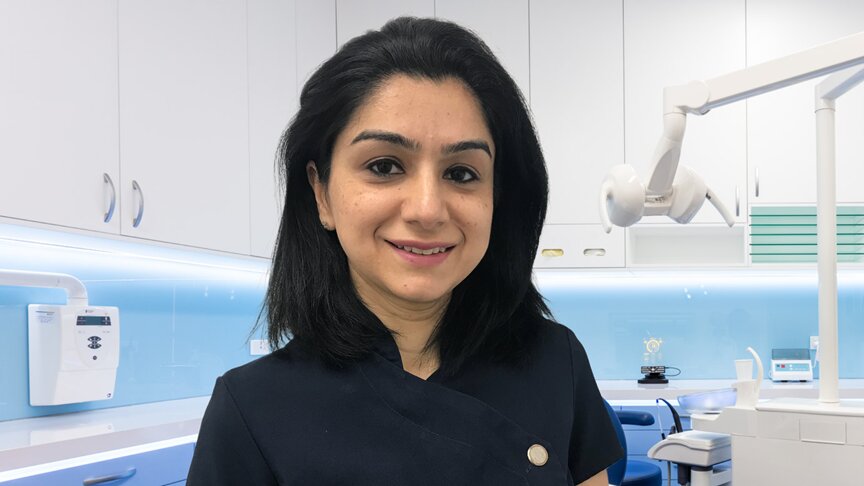
Dr Deepa Chopra
Principal Dentist & Clinic Founder
GDC registration number: 124489
Membership of the Faculty of Dental Surgery from the Royal College of Surgeons of Edinburgh
Membership of the British Dental Association
Restorative Dentistry from Tipton
Align Invisalign profile
LinkedIn profile
Areas of Expertise: 20+ Years Dentistry Experience. General Dentistry, Cosmetic Dentistry, Restorative Dentistry, Invisalign, Composite Bonding, Veneers, Root Canals, Crowns, Dentures, Gum Disease, Hygienist Services, Emergency Dental Services & Teeth Whitening.