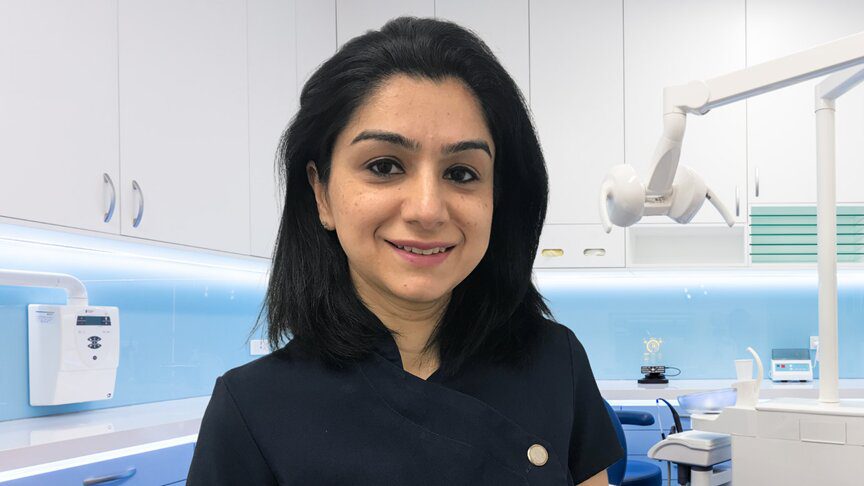
How Dentists Diagnose The Cause Of Toothache

Whites Dental Waterloo

Example Icon 0208 616 0590

Example Icon 172 Blackfriars Rd, London SE1 8ER

Whites Dental Marble Arch (W2)

Example Icon 0203 576 2325

Example Icon 52B Kendal St, St George's Fields, London W2 2BP


Toothache can feel overwhelming, especially when the pain appears suddenly or worsens without warning. While painkillers and home remedies may dull discomfort temporarily, they do not reveal why the pain is happening. Accurate diagnosis is the foundation of effective toothache treatment. Dentists use a structured diagnostic process to identify the exact source of pain, prevent further damage and deliver long-term tooth pain relief rather than short-term fixes.

This article explains how dentists diagnose toothache, what patients should expect during an examination, and why professional diagnosis is essential for lasting pain relief. It is designed to support patients seeking expert toothache treatment in London and to reinforce the importance of professional dental care when pain strikes.


Key Takeaway

Toothache diagnosis is a step-by-step clinical process that combines patient history, visual examination, bite analysis, nerve testing and dental imaging. Dentists do not guess the cause of pain—they systematically narrow it down to identify the true source and recommend targeted treatment. Early diagnosis prevents complications, reduces treatment time and protects long-term oral health.

💡 Toothache rarely resolves permanently without diagnosis, even if the pain fades temporarily.


Why Toothache Diagnosis Matters More Than Pain Relief Alone

Toothache treatment dentist - Whites Dental in London

Tooth pain is a symptom, not a diagnosis. Treating pain without identifying its cause often leads to recurring discomfort or worsening dental problems. Dentists focus on understanding why pain is present before recommending treatment. Toothache diagnosis helps to:

  • Identify hidden problems before they escalate.
  • Prevent infection from spreading.
  • Avoid unnecessary or incorrect treatment.
  • Provide faster and more effective pain relief
  • Protect surrounding teeth and gum tissue

Pain intensity does not always match the seriousness of the problem. Mild discomfort can indicate advanced decay, while severe pain may stem from reversible inflammation.

💡 Never assume pain severity reflects how serious the issue is—diagnosis reveals the real risk.


Step One: Understanding Your Toothache Symptoms

Diagnosis begins before any tools are used. Dentists rely heavily on patient-reported symptoms to guide the examination.

Questions Dentists Ask About Toothache

A dentist treating a toothache gathers detailed information to narrow down potential causes, including:

  • When the pain started.
  • Whether the pain is constant or intermittent.
  • What triggers the pain, such as chewing or temperature
  • Whether pain radiates to the jaw, ear or head.
  • How long pain lasts after stimulation
  • Whether swelling, bad taste or fever is present.

These details help distinguish between nerve pain, gum issues, bite problems, or referred pain.

How Pain Patterns Guide Diagnosis

Certain pain patterns point toward specific conditions:

  • Sharp pain on biting often suggests cracks or bite imbalance
  • Lingering sensitivity may indicate nerve inflammation
  • Throbbing pain can signal infection
  • Dull, constant aches may relate to gum disease or grinding

💡 Be as specific as possible when describing pain—details speed up accurate diagnosis.


Step Two: Visual Examination Of Teeth And Gums

Once symptoms are discussed, dentists perform a thorough visual inspection of the mouth. This step identifies obvious signs of damage or disease. Dentists examine:

  • Tooth surfaces for decay or fractures
  • Existing fillings or crowns for failure.
  • Gum tissue for inflammation or recession.
  • Signs of infection, abscess or swelling.
  • Tooth wear from grinding or clenching

A strong light and magnification allow dentists to spot early problems invisible to the naked eye.

💡 Even tiny cracks or early decay can cause pain—visual exams are more detailed than patients expect.


Step Three: Checking The Bite And Chewing Function

Pain triggered by chewing or biting often relates to how teeth meet. Dentists assess bite alignment and pressure distribution.

How Bite Testing Works

Dentists may ask patients to bite on special paper or tools to reveal:

  • Uneven pressure points.
  • Teeth hitting too early.
  • Stress on restorations or cracked teeth

Even minor bite issues can cause significant pain over time, especially after dental work or due to grinding.

Bite Issues Commonly Linked To Toothache

  • Cracked tooth syndrome
  • Overloaded fillings or crowns
  • Jaw joint strain
  • Tooth mobility due to bone loss

💡 Bite-related pain often worsens over time without correction.


Step Four: Sensitivity And Nerve Testing

Nerve tests help determine whether tooth pulp is healthy, inflamed or infected. This step is essential for diagnosing conditions like pulpitis. Dentists may use:

Responses are measured based on intensity and duration, not just whether pain occurs.

What Nerve Test Results Reveal

  • Brief sensitivity usually indicates a healthy nerve
  • Lingering pain suggests nerve inflammation
  • No response may indicate nerve death
  • Pain on tapping often points to infection around the root

💡 Nerve testing is diagnostic, not harmful and provides critical treatment guidance.


Step Five: Dental X-Rays And Imaging

Many causes of toothache cannot be seen visually. X-rays enable your dentist to see underneath the surface of your tooth to see what’s happening beneath the surface.

What X-Rays Help Diagnose

  • Deep decay beneath fillings
  • Infections at the tooth root
  • Bone loss from gum disease
  • Hidden cracks
  • Impacted or erupting teeth

X-rays help confirm findings from clinical tests and rule out alternative causes.

Why Imaging Is Essential

Without imaging, treatment for toothache may address symptoms rather than the source. Modern digital X-rays use minimal radiation while delivering high diagnostic accuracy.

💡 X-rays often reveal problems long before pain becomes severe.


Step Six: Assessing Gums And Supporting Structures

Tooth pain is not always caused by the tooth itself. Gum disease and bone loss frequently contribute to discomfort. Dentists assess:

  • Gum pocket depth.
  • Bleeding or inflammation.
  • Tooth mobility
  • Recession exposing sensitive roots

Advanced gum disease can cause dull aching pain and chewing discomfort without obvious cavities.

💡 Healthy teeth still hurt if their support system is compromised.


Step Seven: Identifying Referred And Non-Dental Pain

Private Dentist In London - Whites Dental

Not all tooth pain originates from the tooth. Dentists are trained to identify referred pain from other areas. Possible sources include:

  • Sinus infections.
  • Jaw joint disorders.
  • Muscle tension
  • Nerve disorders
  • Headaches or ear conditions

When pain does not match dental findings, dentists investigate alternative causes to avoid unnecessary treatment.

💡 Accurate diagnosis prevents treating the wrong problem.


Common Toothache Diagnoses Dentists Make

After gathering all findings, dentists identify the most likely cause of pain. Common diagnoses include:

  • Tooth decay reaching the nerve.
  • Cracked or fractured teeth.
  • Dental abscesses.
  • Gum disease
  • Failed restorations
  • Tooth grinding damage
  • Sinus-related pressure pain

Each diagnosis leads to a specific treatment plan aimed at long-term relief.

💡 One symptom can have multiple causes—diagnosis ensures precision.


How Diagnosis Determines The Right Treatment

Once the cause is confirmed, dentists recommend appropriate treatment rather than trial-and-error solutions. Treatment may include:

  • Fillings or replacement restorations.
  • Root canal treatment.
  • Bite adjustment.
  • Gum therapy
  • Antibiotics when infection is present
  • Tooth extraction in severe cases

Accurate diagnosis reduces treatment time and prevents repeat visits.

💡 Correct diagnosis often shortens recovery and lowers overall cost.


Why Professional Diagnosis Beats Self-Diagnosis

Online advice and pain relief products cannot replace professional evaluation. Self-diagnosis often delays necessary treatment. Risks of self-diagnosing include:

  • Masking infection
  • Worsening nerve damage.
  • Increased treatment complexity.
  • Higher long-term costs

Dentists combine experience, tools, and clinical judgment that cannot be replicated at home.

💡 Tooth pain relief in London without diagnosis is only temporary.


How Whites Dental Helps Diagnose Toothache Accurately

Whites Dental offers toothache diagnosis and treatment with our expert team of toothache dentists in London. We are focused on identifying the root causes of tooth pain followed by effective treatment. Our clinical approach prioritises patient comfort, accuracy, and long-term results rather than temporary fixes. Patients benefit from:

  • Thorough clinical examinations.
  • Advanced diagnostic imaging.
  • Clear explanations of findings
  • Tailored treatment plans
  • Prompt pain-relief solutions

Whites Dental offers expert toothache diagnosis at both Whites Dental Waterloo and Whites Dental Marble Arch (W2), making professional care accessible when tooth pain strikes.

💡 Early diagnosis at an experienced clinic often prevents emergency treatment later.


Final Thoughts On Toothache Diagnosis

Toothache is a warning sign, not a mystery to endure. Dentists use a structured, evidence-based process to uncover the true cause of pain and guide effective treatment. From symptom analysis to imaging and nerve testing, each step plays a critical role in achieving lasting relief.

Ignoring toothache or relying on temporary relief increases risk, discomfort, and long-term damage. Professional diagnosis ensures pain is treated correctly the first time.

💡The fastest route to pain relief is not guessing—it is diagnosis.


Related Articles

Whites Dental
Privacy Overview

Whites Dental (“we”, “us” or “our”) are committed to protecting and respecting your privacy.

The practice respects your privacy and is committed to protecting your personal data. This Privacy Policy sets out how we will do this, taking into account data protection laws as well as our professional guidelines and requirements.

The data controller is Whites Dental; the Information Governance Lead is Deepa Chopra.

This Privacy Policy is available on the practice website at www.whitesdental.co.uk/privacy-policy, by email if you contact [email protected] or by calling the practice on 0204 527 3210.

This policy (together with our Cookies Policy) sets out the basis on which any personal data we collect, or that you provide to us, will be processed by us. It does not include data where the identity has been removed (i.e. anonymous data).

Please read the following carefully to understand our views and practices regarding your personal data and how we will treat it.

You will be asked to provide personal information when joining the practice. The purpose of us processing this data is to provide optimum health care to you by, for example, recommending the most relevant treatment and ensuring your safety by taking your medical history.

The categories of data we process

  • Contact data (such as name, address, email address, telephone number) for the purposes of corresponding with you, for example, regarding your appointments and treatment.
  • Contact data (such as name, address, email address, telephone number) for the purposes of direct mail/email/text/marketing.
  • Special category data concerning health (including health records, medical history, medication, your doctor’s name and address, warning cards or bracelets, alcohol and drug use) for the purposes of the delivery of safe health care.
  • Treatment data (such as photos, moulds, X-rays, clinical findings) for the purposes of providing you with the best treatment.
  • Financial data (such as credit card details, bank account information, credit history, employment status) for the purposes of processing your payment for treatment(s).
  • Usage data (such as information about how you use our website, products and services) for the purposes of improving the way we provide our treatment and services.

The ways we collect information about you

We may collect and process the following data about you in operating the website and performing any of our services and treatment(s):

Direct
  • Information you give us (including information you give to our Clinical Lead, Specialists, Dentists, Hygienists and Orthodontic Therapists who are contracted to work for us). You may give us information about you by filling in forms on our website www.whitesdental.co.uk or by corresponding with us by phone, email, in person or otherwise.
  • Personal data is obtained when a patient joins the practice, when a patient is referred to the practice and when a patient subscribes to an email list.
Automatic
  • Information we automatically collect about you. With regard to each of your visits to our website we may automatically collect the following information:
  • Technical information, including the internet protocol (IP) address used to connect your computer to the internet, your login information, browser type and version, time zone setting, browser plugin types and versions, operating system and platform; and
  • Information about your visit, including the full Uniform Resource Locators (URL) clickstream to, through and from our site (including date and time); products you viewed or searched for; page response times, download errors, length of visits to certain pages, page interaction information (such as scrolling, clicks, and mouseovers), and methods used to browse away from the page and any phone number used to call our customer service number.
From third parties
  • Our Clinical Lead, Specialists, Dentists, Hygienists and Orthodontic Therapists are third parties working for us as contractors, however, they are contractually bound to us with regard to obligations of confidentiality in the same way as our employees and by professional obligations of confidentiality.
  • You may have been referred to us for treatment from Invisalign and we will therefore receive contact data, special category data concerning health, treatment data and/or financial data from them.
  • Information we receive from other sources. We may receive information about you if you use any of the other websites we operate or the other services we provide.
  • We are also working closely with third parties (including, for example, business partners, subcontractors in technical, payment and delivery services, advertising networks, analytics providers, search information providers, credit reference agencies) and may receive information about you from them.
  • We use third-party analytics services (such as Google Analytics) to evaluate your use of the website, compile reports on activity, collect demographic data, analyze performance metrics, and collect and evaluate other information relating to our website and internet usage. These third parties use cookies and other technologies to help analyse and provide us with data.

How we share data with third parties

We may share your Contact data, special category of data relating to health, Financial data, Treatment data and/or Usage data with selected third parties including:

  • Our Clinical Lead, Specialists, Dentists, Hygienists and Orthodontic Therapists.
  • Private health insurance companies (at your request if you are using private health insurance).
  • Credit reference agencies.
  • Equipment providers and laboratories such as Align Tech, Nimrodental, and Ashford Orthodontics.
  • Professional compliance organisations such as BDA.
  • Data storage and transfer platforms such as Microsoft Sharepoint and Dropbox.
  • Our payment platform Natwest.
  • Our practice management and CRM software providers Pearl.
  • Our live chat provider Quriobot.
  • Advertisers and advertising networks that require the data to select and serve relevant adverts to you and others such as Facebook.
  • Analytics and search engine providers that assist us in the improvement and optimisation of our site such as Google.

This is a list of the main third parties with whom we share your personal data. If you would like a full list of third parties who process your data, and their contact details, please contact us using the details set out above.

We never pass your personal details to a third party unless we have a contract for them to process data on our behalf and will otherwise keep it confidential.

If we intend to refer a patient to another practitioner or to secondary care such as a hospital we will gain your consent before the referral is made and the personal data is shared.

The website may include links to third party websites, plugins and applications. Clicking on those links or enabling those connections may allow third parties to collect or share data about you. We do not control these third party websites and are not responsible for their privacy statements. When you leave our website, we encourage you to read the privacy notice of every website you visit.

Data transferred outside the EU

  • Personal data is stored in the EU whether in digital or hard copy format.
  • Personal data is stored in the US in digital format when the data storage company is certified with the EU-US Privacy Shield.

Lawful basis for processing personal data

The lawful bases for processing personal data (including providing your personal data to third parties) are:

  • Consent of the data subject for data relating to treatment, care, our services, processing payment, credit checks, marketing and reviews, improving our services and improving our website (including using data analytics). This will also apply to the storage of personal data for these purposes.
  • Processing is necessary for the performance of a contract with the data subject or to take steps to enter into a contract such as the provision of the services by us.
  • Processing is necessary to comply with a legal obligation such as financial, tax and contractual laws.

For consent relating to children and people who may not have mental capacity to give consent, please contact us using the details above for a copy of our Safeguarding and Mental Capacity policies.

The reason for processing special category data such as patients’ health data is:

  • The processing is necessary for the purposes of preventative or occupational medicine, for assessing the working capacity of the employee, medical diagnosis, the provision of health or social care or treatment or management of health or social care systems and services on the basis of Union or Member State law or a contract with a health professional; and
  • Data is processed by or under the responsibility of a professional subject to the obligation of professional secrecy under Union or Member State law or rules established by national competent bodies or by another person also subject to an obligation of secrecy under Union or Member State law or rules established by national competent bodies.

Purposes for processing personal data

We (and the third parties listed above) process your personal data for the following purposes:

  • To provide you with our services.
  • To discuss relevant treatments.
  • To provide a safe working environment for staff, contractors and patients.
  • To check your employment and financial status for payment plans.
  • To process payments.
  • To keep you informed of our latest offers, other services we provide and general marketing activities.
  • To obtain reviews and feedback on your experience of our services.
  • To store our data.

If you would like more information about how your data is processed please contact us by using the details set out above.

Data retention

The retention period for special category data in patient records is a minimum of 10 years and may be longer for complex records in order to meet our legal requirements. The retention periods for other personal data is two years after it was last processed.

You will receive marketing emails until you unsubscribe, either by contacting us or by clicking on the unsubscribe link at the bottom of the email. For details of other retention periods please contact us using the details set out above.

Your personal data rights

You have the following personal data rights:

  • The right to be informed.
  • The right of access to your personal data, which enables you to receive a copy of the personal data we hold about you and to check that we are lawfully processing it.
  • The right to rectification of your personal data that you consider to be inaccurate. This enables you to have any incomplete or inaccurate data we hold about you corrected.
  • The right to erasure. This enables you to ask us to delete or remove your personal data (however clinical records must be retained for a certain time period).
  • The right to restrict processing. This gives you the option to ask us to suspend the processing of your personal data e.g. if you want us to establish the data’s accuracy or you do not want us to erase it.
  • The right to data portability. If you request us to do so, we will provide to you, or a third party of your choice, your personal data in a commonly used, machine-readable format.
  • The right to object. This enables you to object to the processing of your personal data if you feel it impacts on your fundamental rights and freedoms, however, in some cases, we may have compelling legitimate grounds to process your information which can override your right to object.
  • The right to request confirmation as to whether or not your personal data is being processed.
  • The right to not have a decision made about you based solely on automated processing.

You have the right to withdraw consent at any time. If you request us to do so, we will no longer process your data. However, this will not affect the lawfulness of any processing carried out before you withdraw your consent. If you withdraw your consent, we will not be able to provide you with the services. You have the right to obtain a free copy of your patient records within one month of submitting a request.

If you are not a patient of the practice you have the right to withdraw consent for processing personal data, to have a free copy of it within one month of submitting a request, to correct errors in it or to ask us to delete it. You can also withdraw consent from communication methods such as telephone, email or text.

We have carried out a Privacy Impact Assessment and if you would like a copy please contact us using the details set out above.

If you wish to exercise any of the rights set out above, in the first instance, please contact us using the details set out above.

You will not have to pay a fee to access your personal data (or to exercise any of the other rights). However, we may charge a reasonable fee if your request is clearly unfounded, repetitive or excessive. Alternatively, we may refuse to comply with your request in these circumstances.

We may need to request specific information from you to help us confirm your identity and ensure your right to access your personal data (or to exercise any of your other rights). This is a security measure to ensure that personal data is not disclosed to any person who has no right to receive it. We may also contact you to ask you for further information in relation to your request to speed up our response.

Further details of these rights can be obtained on the Information Commissioner’s website.

Data security

We have put in place appropriate security measures to prevent your personal data from being lost, used or accessed in an unauthorised way, altered or disclosed. In addition, we limit access to your personal data to those employees, agents, contractors and other third parties who have a business need to know. They will only process your personal data on our instructions and they are subject to a duty of confidentiality.

We have put in place procedures to deal with any suspected personal data breach and will notify you and any applicable regulator of a breach where we are legally required to do so.

Unfortunately, the transmission of information via the internet is not completely secure. Although we will do our best to protect your personal data, we cannot guarantee the security of your data transmitted through our website; any transmission is at your own risk. Once we have received your information, we will use strict procedures and security features to try to prevent unauthorised access.

Comments, suggestions and complaints

Please contact the practice for a comment, suggestion or a complaint about your data processing at [email protected], or 0204 527 3210 or by writing to or visiting the practice. We take complaints very seriously.

If you are unhappy with our response or if you need any advice you should contact the Information Commissioner’s Office (ICO). Their telephone number is 0303 123 1113, you can also find other contact options here. The ICO can investigate your claim and take action against anyone who’s misused personal data. You can also visit their website for information on how to make a data protection complaint.

Marketing by us

We offer individuals real choice and control. Our consent procedures put individuals in charge to build customer trust and engagement.

Our consent for marketing requires a positive opt-in, we don’t use pre-ticked boxes or any other method of default consent. We make it easy for people to withdraw consent, tell you how to and keep contemporaneous evidence of consent. Consent to marketing is never a precondition of a service.

You will receive marketing communications from us if you have requested information from us or if you have signed up via our contact form on the website and, in each case, you have not opted out of receiving that marketing.

Marketing by third parties

We do not share your data with third parties for marketing purposes.

Opting out

Where you opt-out of receiving these marketing messages, this means that you may not receive messages relating to your appointments or treatment so please let us know by using the details set out above if you would like to continue to receive messages about your appointments and treatment.