


Understanding Cracked Tooth Pain
Cracked tooth pain is one of the most unpredictable and misunderstood types of dental discomfort. Unlike a cavity, which often causes a steady, worsening ache, cracked-tooth pain can appear suddenly, disappear for days and return just as sharply. This inconsistency makes the condition difficult for patients to identify — and easy to ignore until the crack becomes severe.
Cracked tooth pain happens when the tooth’s structure becomes compromised. Even a tiny crack can shift subtly when chewing, exposing the inner dentine or irritating the pulp tissues. Early pain is often triggered only when pressure or temperature changes strain the crack. Over time, the discomfort becomes more persistent as the crack deepens or bacteria infiltrate the tooth. Understanding what cracked-tooth pain feels like, how it progresses and what signs indicate early trouble is essential for protecting the tooth from further damage.
Key Takeaway
Cracked-tooth pain is typically sharp, sudden and triggered by biting or temperature changes. It may come and go, making diagnosis difficult without professional evaluation. The earlier the crack is detected, the easier it is to treat and the higher the chance of saving the tooth. If pain occurs when biting down, releasing pressure or consuming hot/cold foods, assume it may be a crack and seek timely dental assessment.
💡At Whites Dental, our dentists treat tooth pain that’s unpredictable, sharp or intermittent — early dental intervention prevents worsening cracks and potential infection.
What Causes Pain In A Cracked Tooth?
Cracked tooth pain originates from how the tooth’s inner structures react to stress or exposure. Unlike enamel, the dentine layer has microscopic tubules connected to the nerve. When a crack reaches dentine or pulp, these tissues become irritated or exposed.
Main Causes Of Cracked Tooth Pain
- Flexing or movement of tooth segments as the crack opens and closes under pressure
- Exposure of dentine tubules, increasing sensitivity to temperature
- Inflammation of the pulp caused by repeated irritation
- Bacterial penetration through the crack, leading to infection or nerve inflammation
- Pressure changes inside the tooth during biting or clenching
- Thermal expansion (hot foods) and contraction (cold foods), temporarily widening the crack
How The Pain Feels
- Sharp, electric shock-like pain when biting
- Instant, sudden onset — often disappearing after pressure releases
- Sensitivity only on one side or one tooth.
- Pain from cold that comes and goes quickly.
- Occasional mild throbbing if pulp starts to inflame.
Why The Pain Comes And Goes
- The crack may not be open all the time.
- Only specific bite angles affect the cracked portion.
- Temperature changes temporarily widen or shrink the crack.
- Pulp irritation fluctuates based on activity, clenching or grinding
💡 Even if pain stops temporarily, the crack continues to worsen — don’t wait for persistent pain – book a dental appointment in London for cracked tooth pain.
Early Warning Signs Of Cracked Tooth Pain

Early detection changes the outcome. A cracked tooth caught early can often be repaired with minimal treatment. The challenge is recognising that the small, inconsistent discomfort you feel is actually the start of something serious.
Early Pain Signals To Watch For
- Sudden sharp pain when biting into certain foods
- A jolt of pain when releasing a bite (pressure release pain)
- Temperature sensitivity that is new or unusual
- A tooth that hurts only sometimes — not daily
- A tooth that feels “off,” pressured or slightly tender
- Pain when chewing tougher or harder foods
- Sensitivity to sweetness in a previously healthy tooth
Additional Non-Pain Signs
- Visible hairline crack when looking closely in the mirror
- Roughness or a fine line felt with the tongue
- Occasional discomfort when brushing or flossing around the tooth
- A feeling that chewing requires extra caution
Why Early Pain Shouldn’t Be Ignored
- Cracks rarely heal naturally
- Minor cracks quickly deepen under daily chewing forces.
- Infection risk rises once bacteria reach the dentine or pulp.
- The tooth may become unsalvageable if the crack reaches the root
💡If pain is triggered only when you bite or chew, assume the tooth may be cracked — this is the classic early-stage cracked-tooth symptom pattern.
Types Of Cracked Teeth And How Pain Differs
Not all cracks behave the same. The nature of pain often reflects the crack’s depth, direction and severity.
Craze Lines (Surface Cracks)
- Usually painless.
- Cosmetic only
- No treatment needed unless aesthetics matter.
Fractured Cusp
- Pain on chewing, especially crunchy foods.
- Piece of tooth may chip.
- Pain may decrease once the cusp breaks away.
- Usually fixed with a crown or onlay
Cracked Tooth (Extending Toward The Root)
- Sharp pain when biting.
- Pain when releasing bite
- Temperature sensitivity
- Pain radiating into the jaw if pulp inflames
- Requires urgent treatment
Split Tooth
- Severe biting pain
- Tooth feels unstable;
- Constant discomfort.
- Extraction often required
Vertical Root Fracture
- Deep gum pain
- Pain when tapping the tooth
- Infection or abscess may form
- Often no solution except extraction
💡The more persistent or widespread the pain becomes, the deeper the crack likely is — early evaluation helps prevent progression to irreversible stages.
How Cracked Tooth Pain Progresses Over Time
Cracked-tooth pain follows a predictable pattern when untreated. Recognising the progression of the toothache can help patients intervene early.
Stage 1: Mild Intermittent Pain
- Sharp pain only when biting hard foods
- Pain disappears instantly after releasing pressure
- Sensitivity to cold but not intense
- Crack is likely still shallow
Stage 2: Increasing Inconsistency
- Pain triggers more frequently
- Temperature sensitivity worsens
- Tooth begins to feel unpredictable
- You avoid chewing on that side involuntarily.
Stage 3: Pulp Irritation
- Lingering aching pain
- Hot sensitivity appears.
- Pain when clenching.
- Crack reaches the pulp chamber or close to it
Stage 4: Pulp Infection
- Throbbing, persistent pain.
- Pain at night or when lying down.
- Swelling or gum tenderness.
- Root canal treatment needed
Stage 5: Deep Crack Or Root Involvement
- Continuous pain when biting
- Pain even without chewing
- Loose or mobile tooth
- Extraction may be required
💡Any shift from intermittent to lingering pain signals pulp involvement — seek immediate toothache treatment to save the tooth.
How Dentists Diagnose Cracked Tooth Pain
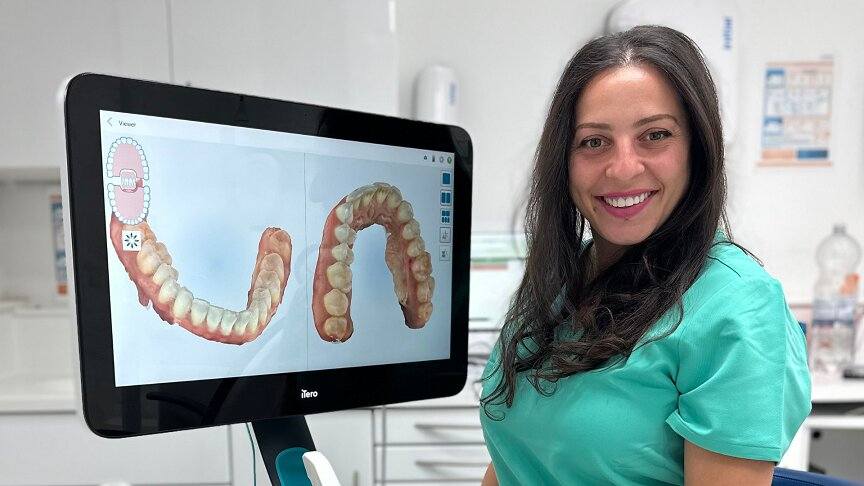
Because cracked-tooth pain is inconsistent, toothache dentists use a combination of targeted tests to locate and confirm the crack.
Bite Test
Dentist asks you to bite on:
- Cotton roll
- Wooden stick.
- Special bite device.
Pain upon pressure or release identifies the affected cusp or fracture line.
Cold Test
Short, sharp cold sensitivity indicates dentine involvement; long-lasting cold pain suggests early pulpitis.
Percussion Test
Tapping tests identify whether infection or root involvement is present.
Transillumination
High-intensity light reveals crack lines blocking light transmission.
Magnification / Loupes
Surface cracks, fine lines and small openings become visible.
Dye Application
Safe dye sticks inside cracks, making them more visible.
X-Rays
Show:
- Bone loss
- Deep decay
- Large fractures
But small vertical cracks may remain invisible.
3D CBCT Scans (When Needed)
Used for diagnosing:
- Vertical root fractures.
- Deep cracks not visible clinically.
- Cases with severe pain but unclear origin
Palpation And Gum Probing
Checks for swelling, infection, or periodontal pockets associated with cracks.
Pain Mapping
Dentists replicate the exact pain triggers you described — chewing, temperature, pressure — to locate the crack accurately.
💡Cracked-tooth diagnosis is detective work — the combination of your pain description and clinical tests forms the most accurate diagnosis.
Treatments For Cracked Tooth Pain
The goal is to stabilise the tooth, remove pain triggers, protect dentine and prevent deeper extension of the crack.
When The Crack Is Small
- Polishing rough edges
- Bonding with composite resin
- Fluoride strengthening
Pain Relief:
- Reduces sensitivity dramatically
- Prevents flexing of enamel around the crack
When The Crack Reaches Dentine
- Onlays
- Inlays
- Full-coverage crowns
Pain Relief:
- Stabilises the tooth structure
- Stops crack movement
- Eliminates pressure-triggered pain
When Pulp Is Inflamed
- Root canal treatment
- Followed by a crown
Pain Relief:
- Removes inflamed nerve
- Eliminates hot/cold pain entirely.
- Stops throbbing and pulsating discomfort.
When Crack Reaches The Root
- Extraction
- Replacement options: implant, bridge, denture
Pain Relief:
- Immediate relief of deep-root and jaw pain.
- Prevents progression to abscess or swelling
💡The earlier the cracked tooth is treated, the more conservative the treatment — delaying care often leads to root canal or extraction.
Emergency Pain Relief For Cracked Tooth Pain (Before You See A Dentist)
These measures help manage pain temporarily and provides temporary tooth pain relief — but do not replace treatment.
Pain Relief Options
- Over-the-counter analgesics.
- Clove oil applied carefully to the area.
- Warm saltwater rinses.
- Avoid biting on the affected side.
- Avoid cold drinks if cold-sensitive
- Use dental wax if a tooth edge is sharp
- Avoid sugary foods — they trigger dentine pain
Foods To Avoid
- Hard nuts
- Ice
- Crusty bread.
- Sticky sweets.
- Very hot or cold drinks.
Foods That Are Safe
- Soft foods (eggs, rice, pasta).
- Lukewarm beverages.
- Smooth soups.
- Mashed vegetables
💡Any severe, lingering or night-time pain indicates a dental emergency — book same-day care.
When To See A Dentist Immediately
Seek urgent care if you experience:
- Sharp pain when biting
- Pain when releasing a bite
- Sudden crack noise or chip
- Hot/cold pain that lingers.
- Night pain or throbbing.
- Swelling or gum tenderness.
- A tooth that feels loose.
- Pain spreading to ear, jaw or temple
💡The most urgent symptom is pain when biting and releasing — this is highly predictive of cracked-tooth syndrome.
Why Patients Choose Whites Dental In London For Cracked Tooth Pain Treatment
Central London Locations
Whites Dental offers two convenient, accessible dental clinics for patients experiencing cracked tooth pain:
Whites Dental Marble Arch
52B Kendal Street
London W2 2BP
Whites Dental Waterloo
172 Blackfriars Road
London SE1 8ER
Why Whites Dental Stands Out
- Experienced clinicians skilled in diagnosing complex cracked-tooth pain
- Same-day emergency appointments available
- Advanced diagnostic tools including magnification, transillumination and digital imaging
- Full range of restorative treatments — composite bonding, crowns, onlays, root canals
- Comfortable, modern clinics in central London.
- Focus on relieving pain quickly and preserving natural tooth structure.
- Clear explanations and tailored treatment plans for toothache treatment with our dentist.
Patient Benefits
- Faster pain relief.
- High chance of saving the tooth.
- Reduced risk of infection or spread.
- Transparent pricing and treatment options
- Convenient locations for busy professionals
💡Early assessment at Whites Dental can dramatically improve outcomes — cracked-tooth pain becomes more difficult to treat the longer it’s left. Repair a cracked tooth as quickly as you can.
Final Thoughts: Don’t Ignore Cracked Tooth Pain
Cracked tooth pain rarely improves on its own. The discomfort may be subtle at first — a sharp twinge here, a cold sting there — but these early signs are the tooth’s warning signals. If ignored, cracks deepen, pain becomes constant, infection risks rise and the tooth becomes harder to save.
Pay attention to:
- Biting pain.
- Pain on pressure release.
- Temperature sensitivity
- Random sharp jolts
- A tooth that “just feels different”
These symptoms often mean the crack is progressing. Early diagnosis from a skilled dentist prevents complications and preserves the tooth. For patients in London, Whites Dental (Marble Arch W2 and Waterloo SE1) provides professional cracked-tooth assessment, precise diagnosis, fast relief and high-quality treatment options tailored to each case.
💡Cracked tooth pain is your body’s early alert system — listen to it, act quickly and protect your long-term oral health.