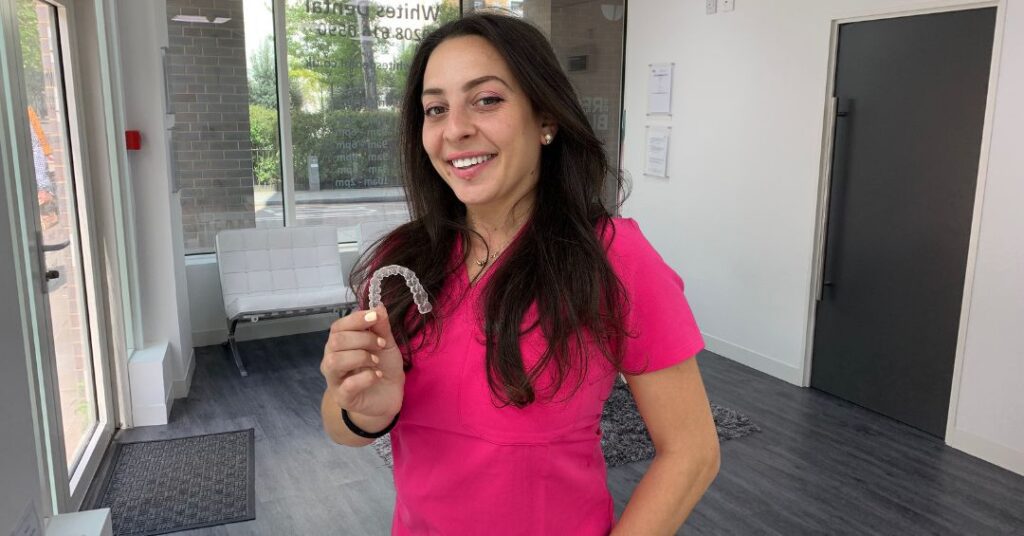


Yes – orthodontic treatment can absolutely be done later in life.
A lot of adults assume there is a point where braces or aligners stop being realistic, or that if treatment did not happen earlier, it is no longer worth considering. That is one of the biggest misunderstandings around orthodontics. In reality, many adults start treatment years after they first thought about it, often because their priorities changed, their teeth shifted, or they simply reached a point where they wanted proper answers.
That is why age alone is not the deciding factor.
What matters more is the current condition of the teeth and bite, what the treatment is trying to improve, and whether the result is likely to be worthwhile in that specific case.
In this guide, we explain whether orthodontic treatment can be done later in life, what orthodontists assess in adult patients, and why many people still explore treatment much later than they expected.
Quick Answer: Yes, orthodontic treatment can often be done later in life. Many adults have braces or aligners to improve crowding, spacing, bite problems, or teeth that have shifted over time. If you are considering orthodontist care, the key question is usually suitability rather than age alone.
🔑 Key Takeaways
- Orthodontic treatment can often be done later in life
- Adults are not automatically too old for braces or aligners
- Suitability depends more on the teeth, bite, oral health, and treatment goals than on age alone
- Many adults seek treatment for crowding, spacing, shifted teeth, or bite problems
- A proper consultation helps show whether treatment may still be realistic and worthwhile
- The best treatment depends on the case being assessed, not simply on age

🧭 Jump To:
Can Orthodontic Treatment Be Done Later In Life?
Yes, often it can.
Adults can still be suitable for orthodontic treatment later in life, depending on the condition of the teeth, the bite, and what treatment is trying to achieve. There is no rule that orthodontics only makes sense during the teenage years.
Many adults explore treatment later because:
- They never had braces before
- Their teeth have shifted over time
- They have a bite problem they now want assessed
- They feel more ready to prioritise treatment now
The key point is that later treatment is not unusual. It is simply a different stage of life.
The Real Question Is Usually About Suitability
Patients often ask whether treatment can still be done later in life.
What they usually mean is:
- Is it still realistic for me?
- Would treatment still be worth it?
- Am I too late to do something about this?
That is exactly what an orthodontic consultation is there to help answer.
Why Do Adults Consider Orthodontic Treatment Later On?
There are plenty of reasons adults decide to look into treatment later rather than earlier.
Common ones include:
- They always wanted treatment but delayed it
- They did not have the opportunity when younger
- Their teeth have shifted over time
- Their smile now bothers them more than it used to
- They want a proper answer rather than continuing to guess
This is one reason later-life orthodontic treatment is so common. The question often becomes more relevant with time, not less.
If you are exploring orthodontist in London treatment as an adult, the consultation helps turn that uncertainty into something clearer.
Life Timing Often Matters More Than Ideal Timing
A lot of adults do not delay treatment because they are unaware of it.
They delay because:
- It was not the right priority earlier
- They assumed it was too late
- They were not ready to commit at the time
- The concern only became more obvious later
That makes later treatment a practical decision, not a strange one.
What Does An Orthodontist Look At In An Older Patient?
An orthodontist assesses an older patient based on the current teeth, bite, and treatment goals – not just on age.
They may look at:
- Tooth position
- Crowding or spacing
- Bite relationship
- Whether teeth have shifted over time
- General oral health
- What kind of result is realistic
This is why two adults of similar age may not have the same treatment options. The case itself is what matters most.
The Assessment Is About The Present, Not The Assumption
The orthodontist is not simply asking:
- How old are you?
They are really asking:
- What is happening with the teeth now?
- What is happening with the bite now?
- Could treatment still help?
- What kind of result would be realistic?
That is why a proper consultation matters so much.
Does Age Automatically Rule Out Braces Or Aligners?
No.
Age alone does not automatically rule out braces or aligners. What matters more is whether the case is suitable for orthodontic treatment and whether the goals are realistic.
That means the issue is usually not:
- You have reached a certain age, so treatment is impossible
It is more about:
- Whether the teeth and gums are in a suitable condition
- Whether the bite can be improved meaningfully
- Whether treatment is worthwhile in that case
This Is Why A Proper Assessment Comes First
Patients sometimes try to answer the age question for themselves.
But what they really need to know is:
- Am I suitable?
That cannot be answered properly by age alone or by looking in the mirror.
What Problems Might Still Be Treated Later In Life?
Adults may still seek orthodontic treatment later in life for a wide range of issues.
These include:
- Crowding
- Spacing or gaps
- Teeth that have shifted over time
- Overbite
- Underbite
- Deep bite
- Crossbite
- General bite imbalance
That means later-life orthodontics is not only about appearance. It is often about bite and alignment too.
| Orthodontic Concern | Why Adults May Revisit It Later | Why Assessment Helps |
|---|---|---|
| Crowding | Teeth may become more uneven over time | Shows whether alignment can still be improved and how |
| Spacing | Gaps may become more noticeable or reopen | Clarifies whether treatment may help close or manage space |
| Shifted teeth | Previous alignment may have changed over the years | Shows what has changed and whether correction may be worthwhile |
| Bite problems | The bite may feel uneven or more noticeable with time | Helps show whether treatment should focus on bite as well as appearance |
Small Concerns Can Still Be Worth Assessing
Patients do not need a dramatic orthodontic issue before treatment becomes worth discussing.
Sometimes the starting point is simply:
- I do not like how this looks now
- My teeth have shifted
- My bite feels different
That is usually enough reason to get proper advice.
What Treatment Options Might Be Available?
If an adult is suitable for treatment later in life, the exact options depend on the case.
That may include:
- Clear aligners
- Metal braces
- Ceramic braces
- Damon braces
The orthodontist recommends treatment based on:
- What needs correcting
- Whether the bite is involved
- How much control the movement needs
- What result is realistic
At Whites Dental, adults exploring orthodontic treatment London options can use the consultation to understand whether treatment may still be appropriate and what kind of approach may suit them best.
The Best Option Depends On The Problem, Not The Age
Patients often focus first on whether they would prefer aligners or fixed braces.
But the orthodontist first needs to understand:
- What orthodontic problem is actually being treated?
Once that is clear, the most suitable options can be explained properly.
Is A Consultation Still Worthwhile Even If You Are Unsure?
Yes.
Many adults delay because they do not know whether treatment is still realistic and do not want to waste time asking. But that is exactly what the consultation is for. It helps turn a vague question into a specific answer.
Adults thinking about later-life treatment often also want to understand whether there is an upper age limit for orthodontic treatment, whether adults can see an orthodontist for the first time, and who is suitable for orthodontic treatment.
You Do Not Need To Decide Before You Ask
You do not need to know before booking:
- Whether you definitely want treatment
- Whether the issue is serious enough
- Whether braces or aligners would be best
The first step is simply understanding the case properly.
FAQs: Can Orthodontic Treatment Be Done Later In Life?
Adults often wonder whether they have left it too late to do something about their teeth or bite. These are some of the most common questions.
Can Orthodontic Treatment Be Done Later In Life?
Yes. Many adults have orthodontic treatment later in life for crowding, spacing, bite concerns, or teeth that have shifted over time.
Am I Too Old For Braces Or Aligners?
Not automatically. Suitability depends more on the teeth, bite, oral health, and treatment goals than on age alone.
Why Do Adults Only Start Orthodontic Treatment Later?
Common reasons include delayed priorities, shifted teeth, bite concerns becoming more obvious, or finally feeling ready to explore treatment.
What Does An Orthodontist Check In An Older Patient?
They assess tooth position, bite relationship, crowding, spacing, oral health, and whether treatment is likely to be realistic and worthwhile.
Can Small Problems Still Be Worth Treating Later In Life?
Yes. Even smaller concerns such as mild crowding, spacing, or shifted teeth can be worth assessing if they affect confidence or raise questions about treatment.
What Treatments Might Still Be Available Later In Life?
Depending on the case, options may include clear aligners, metal braces, ceramic braces, or Damon braces.
Does Later-Life Orthodontic Treatment Only Focus On Appearance?
No. It may also involve bite correction, alignment planning, and improving how the upper and lower teeth meet.
Should The Orthodontist Explain Clearly Whether Treatment Is Still Worthwhile?
Yes. A good orthodontist should explain what can be improved, what is realistic, and whether treatment may still be appropriate in your case.
Looking For An Orthodontist In London Later In Life?
If you are wondering whether braces or aligners could still be an option, the best next step is a proper orthodontic assessment rather than relying on age assumptions.
At Whites Dental, adults can explore orthodontist in London treatment options including Invisalign, metal braces, ceramic braces, and Damon braces.
Whether the concern is crowding, spacing, shifted teeth, or a bite problem that has become more noticeable over time, an orthodontic consultation can help show whether treatment may still be realistic and worthwhile.
- ✅ Specialist-led orthodontic assessments
- ✅ Adult suitability clearly explained
- ✅ Invisalign and fixed brace options
- ✅ Central London clinic locations