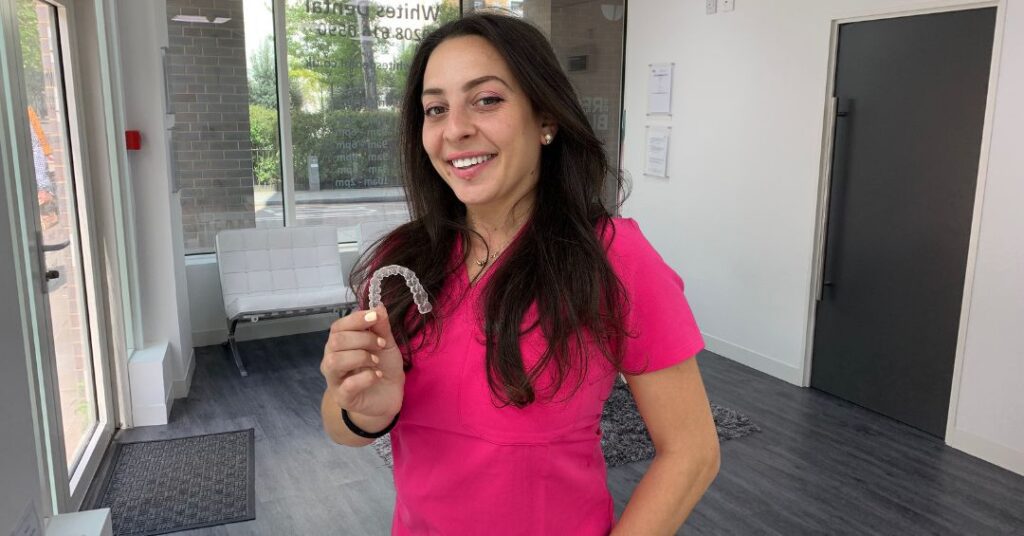


A deep bite can be easy to overlook until someone points it out properly.
Many patients know their front teeth overlap a lot, but they are not always sure whether that is simply how their smile looks or whether it counts as an orthodontic issue. That grey area is exactly why deep bites often go unaddressed for years. The bite may not seem severe enough to worry about, yet it can still play an important role in how the teeth meet and how treatment needs to be planned.
This is where an orthodontic assessment becomes valuable.
An orthodontist is trained to look beyond whether teeth appear generally straight and assess how the upper and lower teeth work together as a bite. In many cases, a deep bite can be improved through orthodontic treatment designed to create a more balanced relationship between the teeth, not just a neater appearance from the front.
In this guide, we explain what a deep bite is, how an orthodontist assesses it, and what treatment may help improve it.
🔑 Key Takeaways
- An orthodontist can often help improve a deep bite
- A deep bite means the upper front teeth overlap the lower front teeth too much
- Deep bite correction is often about bite balance, not just cosmetic straightening
- Some deep bites are obvious, while others are picked up properly during orthodontic assessment
- Adults as well as younger patients may seek orthodontic treatment for a deep bite
- The best treatment depends on the severity of the bite and the wider alignment of the teeth

What Is A Deep Bite?
A deep bite is a type of bite problem where the upper front teeth overlap the lower front teeth more than they ideally should.
In other words, when the mouth closes, the top front teeth cover too much of the lower front teeth. For some patients this is visually obvious. For others, it is something the orthodontist identifies more clearly during assessment.
A deep bite can exist:
- On its own
- Alongside crowding
- Alongside bite imbalance
- As part of a wider orthodontic issue
Why A Deep Bite Is Not Just About Appearance
Patients often think of bite issues in cosmetic terms first.
That is understandable.
But a deep bite is not only about how the teeth look in a photo. It is also about how the upper and lower teeth meet, how forces are distributed, and whether the bite sits in a balanced relationship overall. This is why deep bite correction is a core orthodontic question rather than just a cosmetic one.
Can An Orthodontist Improve A Deep Bite?
Yes, often they can.
This is one of the bite problems orthodontists commonly assess and treat. The goal is not simply to make the front teeth look straighter. It is to improve the relationship between the upper and lower teeth in a way that supports a more balanced final result.
An orthodontist may help by:
- Reducing excessive overlap
- Improving the way the front teeth meet
- Balancing the bite more evenly
- Planning movement around both function and appearance
If you are exploring orthodontist in London treatment, a deep bite is exactly the sort of issue that should be properly assessed rather than guessed at.
Why Orthodontists Are The Right Professionals To Assess A Deep Bite
Orthodontists focus on more than whether teeth appear straight from the front.
They assess:
- Tooth position
- Bite relationship
- How the arches work together
- What movement is needed for a stable result
That is why a deep bite sits so naturally within orthodontic care.
Can A Deep Bite Be Mild Or Severe?
Yes.
Not every deep bite looks the same. Some are relatively mild and may only become clear during a consultation. Others are more obvious and form a major part of the treatment plan from the beginning.
A deep bite may vary in:
- How much the top teeth overlap the lower teeth
- Whether the issue is mainly dental or part of a wider structural pattern
- Whether other alignment problems are present too
- How much bite correction is needed
Why The Severity Changes The Treatment Plan
The orthodontist needs to understand not just whether a deep bite is present, but how significant it is.
That affects:
- How treatment is planned
- Which system may be suitable
- How long correction may take
- What kind of end result is realistic
What Does A Deep Bite Feel Like To A Patient?
Not every patient would describe their problem as a deep bite straight away.
They may instead say:
- My top teeth cover too much of the bottom teeth
- My bite feels heavy at the front
- My teeth do not seem to meet properly
- I can see very little of my lower teeth when I bite
That is one reason orthodontic diagnosis matters. Patients are often very good at noticing that something feels off, even if they do not yet know the clinical term for it.
This links closely to broader bite assessment questions covered in Can An Orthodontist Help With Bite Problems? and How Orthodontists Diagnose Bite Problems.
How Does An Orthodontist Assess A Deep Bite?
An orthodontist assesses a deep bite by looking at how the upper and lower teeth meet when the mouth closes.
That assessment may include:
- Clinical examination
- Looking at the amount of overlap between the front teeth
- Assessing how the arches relate to each other
- Checking for crowding, spacing, or other bite issues
- Using scans, photographs, or X-rays where needed
A proper diagnosis is about the whole bite, not just one visible feature.
Why Diagnosis Comes Before Deep Bite Treatment
Before recommending treatment, the orthodontist needs to understand:
- How deep the bite is
- Whether it is mild, moderate, or more significant
- Whether other orthodontic issues are linked to it
- How the bite influences the choice of treatment
This sits alongside the wider consultation process explained in What Happens At An Orthodontist Consultation? and What Does An Orthodontist Check At Your First Appointment?.
What Treatments Might Help A Deep Bite?
The exact treatment depends on the case, but orthodontists may use different systems to help improve a deep bite over time.
That may include:
- Clear aligners
- Metal braces
- Ceramic braces
- Damon braces
At Whites Dental, patients considering orthodontic treatment London options can be assessed to see which system may best suit the amount of bite correction needed as well as the overall alignment goals.
| Treatment Type | How It May Help | Why Orthodontic Planning Matters |
|---|---|---|
| Clear aligners | May help improve tooth position and bite depending on the case | Suitability depends on how much control the deep bite needs |
| Metal braces | May offer strong control for deeper bite correction | Used where more planned tooth movement is needed |
| Ceramic braces | May provide a more discreet fixed option | The orthodontist still bases choice on bite needs, not just looks |
| Damon braces | May be suitable in some orthodontic bite correction cases | Treatment choice depends on the full diagnosis |
Why One Deep Bite Treatment Option Does Not Suit Everyone
Patients sometimes ask which system is best before the deep bite has been assessed properly.
The truth is that treatment choice depends on:
- How severe the deep bite is
- Whether crowding or spacing is also present
- Whether the bite issue is straightforward or more complex
- How much control is needed during treatment
Can Braces Fix A Deep Bite?
Yes, braces are commonly used to help improve deep bite problems. Fixed braces can give the orthodontist strong control over tooth movement, which may be useful where the bite needs more than minor adjustment.
Deep bite correction with braces may involve improving how the front teeth overlap, how the back teeth meet, and how the bite works as a whole. The exact approach depends on whether the deep bite is mild, moderate, or more complex.
For some patients, metal braces may be suitable. For others, ceramic braces may offer a more discreet fixed option while still allowing planned bite correction.
Can Clear Aligners Help A Deep Bite?
Clear aligners may help with some deep bite cases, but suitability depends on the amount of correction needed and how the teeth need to move.
Aligners can be appealing for adults because they are removable and discreet. However, not every deep bite is best treated with aligners alone. Some cases may need fixed braces or a more controlled treatment plan.
An orthodontist should explain whether aligners are realistic for your case or whether braces would offer better control.
Why Deep Bite Correction Matters
Because deep bite correction is usually about more than aesthetics alone.
Depending on the case, improving a deep bite may help with:
- A more balanced bite relationship
- Better overall alignment
- A more stable end result after treatment
- Better harmony between the upper and lower arches
This is why orthodontists do not usually separate straightening from bite correction. In many cases, the two are closely connected.
Why Cosmetic Concerns And Bite Concerns Often Overlap
A patient may start by saying they do not like how their teeth look.
That is completely normal.
But once the deep bite is assessed properly, the orthodontist may find that treatment is also about:
- How the teeth fit together
- How the bite functions overall
- How stable the alignment is likely to be after treatment
Can Adults See A Private Orthodontist London Patients Trust For A Deep Bite?
Yes, absolutely.
Deep bite treatment is not only for children or teenagers. Adults can also seek orthodontic care for excessive overlap, bite imbalance, and related alignment issues. In fact, many adults only begin exploring treatment once they understand that a deep bite is a genuine orthodontic issue rather than just a cosmetic detail.
Adults often want to know:
- Whether treatment can still help later in life
- Whether discreet options may be available
- Whether the bite issue is worth correcting
- Whether treatment will focus on both appearance and function
If you are looking for a private orthodontist London patients may consider for bite correction, the first step is a proper assessment rather than trying to judge the deep bite by appearance alone.
Why Adults Often Delay Deep Bite Assessment
Adults sometimes postpone treatment because:
- They think bite problems are mainly treated in children
- They assume the issue is too minor to matter
- They are not sure what a deep bite actually means
- They have adapted to the way their bite feels over time
Can Adults Have Deep Bite Correction?
Yes. Adults can have orthodontic treatment for a deep bite, provided the teeth, gums, bite, and overall case are suitable for treatment.
Adult deep bite correction may involve braces, clear aligners, or another planned orthodontic route depending on the severity of the bite and whether other issues such as crowding, spacing, or relapse are also present.
Many adults start by asking whether their deep bite is “worth correcting”. A consultation can help show whether the concern is mainly cosmetic, functional, or both.
FAQs: Can An Orthodontist Improve A Deep Bite?
Patients often know orthodontists can straighten teeth, but they are not always sure whether a deep bite is something that can be corrected as part of treatment. These are some of the most common questions.
Can An Orthodontist Improve A Deep Bite?
Yes. Orthodontists commonly assess and treat deep bites by planning how the upper and lower teeth should meet more evenly.
What Is A Deep Bite?
A deep bite is when the upper front teeth overlap the lower front teeth more than they ideally should.
Is A Deep Bite Only A Cosmetic Problem?
No. A deep bite may affect appearance, but it is also a bite relationship issue that orthodontists assess as part of overall treatment planning.
How Does An Orthodontist Check For A Deep Bite?
They assess how the front teeth overlap, how the arches meet, and whether scans, photos, or X-rays are needed to understand the full picture.
Can Braces Or Aligners Help A Deep Bite?
Depending on the case, yes. Orthodontists may use braces or aligners to help improve a deep bite and overall alignment.
Can Adults Have Orthodontic Treatment For A Deep Bite?
Yes. Adults can also seek orthodontic treatment for deep bite correction depending on the case and treatment goals.
Why Does Deep Bite Treatment Need Proper Planning?
Because the bite has to be assessed as a whole. Treatment is not just about moving one or two front teeth but about improving the wider bite relationship.
Can Braces Fix A Deep Bite?
Yes. Braces are commonly used to help improve deep bite problems, especially where controlled tooth movement and bite correction are needed.
Can Clear Aligners Fix A Deep Bite?
Clear aligners may help with some deep bite cases, but suitability depends on the severity of the bite and how much movement is needed.
Does A Mild Deep Bite Need Treatment?
Not always. A mild deep bite may simply need monitoring, while other cases may benefit from treatment if the bite affects function, alignment, or long-term stability.
How Do Orthodontists Treat Deep Bite Problems?
Orthodontists treat deep bite problems by assessing the overlap, bite relationship, tooth position, and wider case before planning braces, aligners, or another suitable treatment route.
Should The Orthodontist Explain My Deep Bite Clearly?
Yes. A good orthodontist should explain what the deep bite is, why it matters, and how it affects the treatment plan.
Looking For An Orthodontist In London For Deep Bite Treatment?
If your top teeth overlap the lower teeth too much, your bite feels heavy at the front, or you have been told you may have a deep bite, the best next step is a proper orthodontic assessment.
At Whites Dental, patients can explore orthodontist in London treatment options for adults, teenagers, and children, including Invisalign, metal braces, ceramic braces, and Damon braces.
Whether the issue is visible overlap, a wider bite concern, or a deep bite you do not fully understand yet, an orthodontic consultation can help show what is going on and whether treatment may help.
- ✅ Specialist-led orthodontic assessments
- ✅ Invisalign and fixed brace options
- ✅ Adult and child suitability
- ✅ Central London clinic locations
Author

Dr Deepa Chopra
Principal Dentist & Clinic Founder
GDC registration number: 124489
Membership of the Faculty of Dental Surgery from the Royal College of Surgeons of Edinburgh
Membership of the British Dental Association
Restorative Dentistry from Tipton
Align Invisalign profile
LinkedIn profile
Areas of Expertise: 20+ Years Dentistry Experience. General Dentistry, Cosmetic Dentistry, Restorative Dentistry, Invisalign, Composite Bonding, Veneers, Root Canals, Crowns, Dentures, Gum Disease, Hygienist Services, Emergency Dental Services & Teeth Whitening.