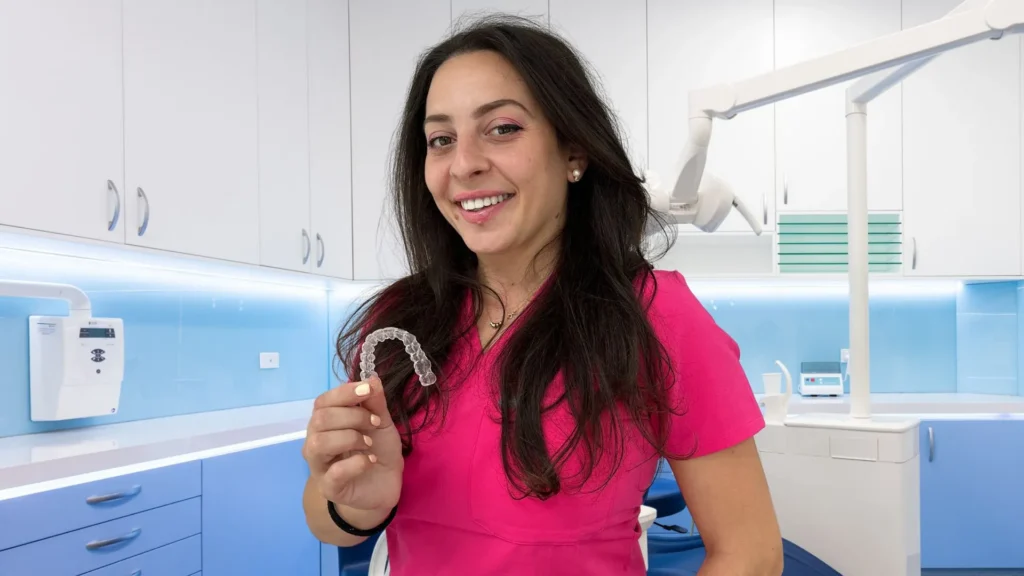


It’s easy to think of Invisalign as “just straightening teeth”. But your teeth don’t exist in isolation.
They guide how your bite closes, how your jaw sits at rest, and how forces travel through the jaw joint when you chew. So when teeth start moving – even gradually – it’s normal to wonder whether your jaw will feel different too.
Will Invisalign affect my jaw?
It can.
Most of the time, any jaw-related changes during Invisalign are temporary and linked to bite adjustment. Some patients notice mild jaw fatigue, a slightly different bite feel, or occasional clicking that comes and goes as the bite settles. The key is knowing what’s normal, what’s a warning sign, and what to do if you’re experiencing jaw pain or symptoms that feel persistent.
This guide explains how Invisalign can affect the jaw, why it happens, and when it’s worth getting checked.
Quick Answer: Invisalign can affect how your jaw feels because tooth movement can change the way your bite meets. Many patients notice mild jaw fatigue, a “different bite” sensation, or temporary clicking as the bite adapts. Significant or worsening jaw pain isn’t something to ignore – if symptoms persist, your Invisalign provider should review fit, tracking, and bite changes.
🔑 Key Takeaways
- Invisalign can affect the jaw because your bite changes as teeth move
- Mild jaw fatigue, a “new bite” feeling, or occasional clicking can be normal early on
- Jaw pain that worsens, persists, or limits chewing should be assessed
- Grinding/clenching can make jaw symptoms more noticeable during treatment
- Good planning and monitoring reduces the chance of jaw discomfort becoming a long-term issue

🧭 Jump to:
Why Invisalign Can Affect Your Jaw
Your jaw joint and muscles are used to a certain bite relationship. When Invisalign treatment starts moving teeth, the “meeting point” between upper and lower teeth can shift. Even small bite changes can temporarily alter:
- How your teeth contact when you bite down
- How your jaw muscles work during chewing
- How your jaw sits at rest
That’s why some patients feel jaw tightness early on – not because Invisalign is “moving the jaw”, but because it’s changing how the bite guides the jaw.
What’s Normal (And Usually Temporary)
Many jaw-related sensations settle as your mouth adapts. It’s common to feel more aware of your bite during the first few aligners, and again when you switch to a new tray that changes the bite contact slightly.
Normal, short-term experiences with Invisalign can include
- A “different bite” feeling (your teeth touch in a new way)
- Mild jaw fatigue after chewing, especially with firmer foods
- Muscle tightness in the cheeks/temples (often linked to clenching)
- Temporary tenderness around the jaw joint
Some people describe this as “Invisalign fatigue” — usually meaning the jaw muscles feel tired from a new bite, new tray pressure, or extra clenching. This should ease as the aligner settles.
These are more likely during the first 48–72 hours of a new Invisalign aligner, when teeth are adjusting. If your trays feel tighter at certain points, this is normal too: Do Invisalign trays get tighter over time?.
A quick “normal vs not normal” table
| Symptom | Often normal | Worth checking |
|---|---|---|
| Jaw feels a bit tired | First few days of a new tray | Lasts beyond a week or worsens |
| Bite feels different | As teeth move and contacts shift | Feels unstable or you can’t bite comfortably |
| Occasional clicking | Comes and goes without pain | Clicking with pain or locking |
| Jaw pain | Mild and short-lived | Sharp, persistent, or limits eating |
Jaw Pain With Invisalign: What It Could Mean
Jaw pain isn’t always directly “caused by Invisalign”, but Invisalign can bring existing issues to the surface.
Possible contributors include:
- Bite changes creating new pressure points
- Clenching in response to tightness
- Tracking issues where the aligner is not seating properly
- Underlying jaw joint sensitivity that was present before treatment
If an aligner isn’t seated properly on one tooth, the bite can feel uneven, which can place strain on jaw muscles. If you suspect tracking issues, this guide explains the common causes: What causes Invisalign to stop tracking?.
Signs jaw pain needs a review
- Pain that increases rather than settles after a few days
- Pain that feels sharp or causes you to avoid chewing on one side
- Jaw locking (difficulty opening/closing)
- Headaches that appear alongside jaw tightness
- Bite feels unstable or you can’t find a comfortable “resting bite”
If any of these are happening, it’s worth contacting your provider sooner rather than trying to push through.
Jaw pain on one side can happen if the bite feels uneven, one side is being used more when chewing, or the jaw muscles are reacting to a new contact point. If it settles quickly, it may simply be part of the adjustment period. If it persists, worsens, or comes with clicking or locking, it should be assessed.
How To Relieve Jaw Pain From Invisalign
Mild jaw discomfort during Invisalign often improves as the bite adapts, but a few simple habits can make the adjustment easier.
- Eat softer foods for the first day or two after changing aligners
- Avoid chewing gum or very chewy foods if your jaw feels tired
- Keep your aligners in consistently so trays settle properly
- Try to notice clenching during the day and relax your jaw when you catch yourself doing it
- Use standard pain relief only if suitable for you and follow packaging or pharmacist advice
If jaw pain is sharp, one-sided, worsening, or stopping you from chewing comfortably, it should be reviewed rather than managed at home.
Jaw Clicking During Invisalign
Jaw clicking can be alarming, but it’s not always a sign of damage.
Some people have clicking long before Invisalign and only start noticing it more once treatment begins. Others develop intermittent clicking as the bite changes and then it settles once alignment stabilises.
Clicking is more reassuring when
- It happens occasionally
- There’s no pain
- It doesn’t limit jaw movement
Clicking should be checked when
- It is paired with pain
- It becomes frequent or louder over time
- Your jaw feels like it’s catching or locking
The right response is usually a bite review and aligner fit review, rather than stopping Invisalign altogether.
Teeth Clicking Or Cracking Sounds With Invisalign
Some patients notice small clicking sounds from the aligner or teeth when biting down, removing trays, or seating a new aligner. This can sometimes be caused by the plastic tray flexing, a tight fit around attachments, or air/saliva moving as the aligner seats.
That is different from a tooth cracking. Invisalign should not crack healthy teeth when it is properly planned and monitored. However, if you feel sharp pain, see a visible crack, notice a loose restoration, or one tooth suddenly feels very painful, book a dental review promptly.
Grinding, Clenching And Jaw Symptoms During Invisalign Treatment
Grinding and clenching (especially at night) can amplify jaw symptoms during Invisalign.
Even if you never noticed it before, tight new trays can make some people clench without realising, particularly in the first few days of a new aligner.
Simple things that can help
- Change aligners in the evening so initial tightness happens during sleep
- Stick to the recommended wear time so trays track and settle properly
- Reduce hard chewing for the first day or two of a new tray
- Keep hydrated (dry mouth can increase clenching for some people)
Wear time is also important here. If aligners are left out for long periods, they can feel “tight” again when reinserted, which can increase jaw tension. This explains why wear time matters: Invisalign compliance: what it means and why it matters.
When To Contact Your Invisalign Provider
Most Invisalign jaw concerns improve quickly once the bite adapts.
But you should contact your provider if:
- You have jaw pain that’s persistent or worsening
- You have clicking with pain or locking
- You feel your aligners are not fitting properly
- Your bite feels significantly uneven or uncomfortable
The earlier these things are assessed, the easier they usually are to correct.
FAQs: Will Invisalign Affect My Jaw?
Jaw concerns are common during orthodontic treatment because bite changes can feel unfamiliar at first.
Can Invisalign cause jaw pain?
It can contribute to jaw discomfort in some patients because the bite is changing. Mild, temporary discomfort can be normal, but pain that worsens or persists should be reviewed.
Can Invisalign change jaw position?
Invisalign changes tooth position and bite contact. This can affect how your jaw feels and how it sits at rest, but Invisalign does not usually “move the jawbone” in adults.
Is jaw clicking normal during Invisalign?
Occasional clicking without pain can happen as the bite adapts. Clicking with pain, locking, or reduced jaw movement should be checked.
Can clenching make Invisalign jaw discomfort worse?
Yes. Clenching and grinding can increase jaw muscle tension. Tight new trays can also make people clench more in the first day or two of a new aligner.
How can I relieve jaw pain from Invisalign?
Try softer foods for a day or two, avoid excessive chewing, keep aligners in consistently, and notice whether you are clenching. If the pain is sharp, worsening, one-sided, or affecting eating, book a review.
Is jaw pain on one side normal with Invisalign?
Jaw pain on one side can happen if your bite feels uneven during movement or you are chewing more on one side. It should be checked if it persists, worsens, or comes with clicking, locking or headaches.
Can Invisalign crack your teeth?
Invisalign should not crack healthy teeth when treatment is properly planned and monitored. Clicking sounds are often from tray movement rather than tooth damage. Sudden sharp pain, a visible crack or a loose filling should be checked promptly.
Why do my teeth click with Invisalign?
Teeth or trays may click when an aligner is seating, flexing slightly, or fitting tightly around attachments. If clicking comes with pain, looseness, or a bite that feels unstable, ask your provider to review the fit.
Does Invisalign make your jaw tired?
It can make the jaw feel tired temporarily, especially after a new tray, bite change, or increased clenching. Mild fatigue should settle. Persistent fatigue or pain should be reviewed.
What should I do if my bite feels uneven with Invisalign?
An uneven bite can be normal as teeth move, but if it feels uncomfortable or persistent, it’s worth checking aligner fit and tracking with your provider.
How Whites Dental Can Help With Invisalign In London
If you’re worried about jaw discomfort, bite changes, or whether Invisalign is right for your bite pattern, the safest next step is a proper consultation and scan.
Visit Whites Dental in Waterloo & Marble Arch if you are looking for Invisalign treatment in London. Book a free Invisalign consultation with one of our team.
Explore the key Invisalign pages:
Visit our Central London clinics:
- Waterloo – near Southwark & Blackfriars
- Marble Arch – near Paddington & Edgware Road
- ✅ Experienced Invisalign providers
- ✅ Bite-focused planning and monitoring
- ✅ 0% finance options available
- ✅ Transparent Invisalign costs
If your jaw feels “off” during Invisalign, we can help you understand what’s normal and make sure your plan is progressing safely.
Author

Dr Deepa Chopra
Principal Dentist & Clinic Founder
GDC registration number: 124489
Membership of the Faculty of Dental Surgery from the Royal College of Surgeons of Edinburgh
Membership of the British Dental Association
Restorative Dentistry from Tipton
Align Invisalign profile
LinkedIn profile
Areas of Expertise: 20+ Years Dentistry Experience. General Dentistry, Cosmetic Dentistry, Restorative Dentistry, Invisalign, Composite Bonding, Veneers, Root Canals, Crowns, Dentures, Gum Disease, Hygienist Services, Emergency Dental Services & Teeth Whitening.