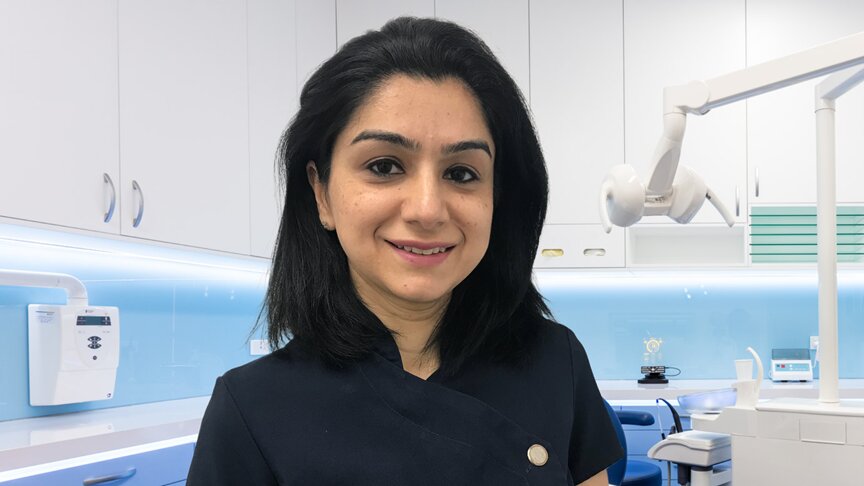


If you feel your front teeth sit further forward than ideal, you may have been told you have protruding teeth. Protruding upper front teeth are sometimes informally called “buck teeth”. Clinically, this is often described as increased overjet, which means the upper front teeth sit too far forward in relation to the lower front teeth.
For many adults, this is not just cosmetic. Prominent front teeth can affect bite balance, lip support, speech clarity and confidence in professional or social settings. The good news is that Invisalign treatment can correct many cases of protruding teeth – when properly planned.
This guide explains what causes protruding teeth, how Invisalign moves them, and whether clear aligners are suitable for adult treatment.
Quick Answer: Invisalign can correct many cases of protruding teeth, buck teeth or increased overjet by gradually moving the front teeth into a better position. Clear aligner treatment may involve attachments, space creation, IPR or elastics, depending on how far the teeth sit forward and whether the issue is dental or skeletal.
🔑 Key Takeaways
- Protruding teeth usually relate to increased overjet
- Invisalign can move front teeth backwards gradually
- Invisalign attachments and elastics may be used
- Treatment time depends on severity and compliance
🧭 Jump to:
What are protruding teeth?
Protruding teeth usually describe upper front teeth that extend further forward than the lower teeth.
Clinically, this is known as increased overjet – meaning the horizontal distance between upper and lower front teeth is greater than ideal.
Overjet vs overbite – what’s the difference?
Many patients confuse these terms:
- Overjet → Horizontal projection of upper teeth
- Overbite → Vertical overlap of upper teeth
Protruding teeth relate primarily to overjet, not deep bite.
You can read more about vertical overlap in our guide to Invisalign for deep bite.
Can Invisalign fix protruding teeth?
Yes – in many adult cases.
Modern Invisalign treatment in London uses digitally planned stages to gradually retract (move backwards) upper front teeth while maintaining bite balance.
Treatment success depends on:
- Severity of overjet
- Jaw alignment
- Bone support
- Patient compliance
In severe skeletal cases, alternative orthodontic options may be discussed.
When is Invisalign less suitable for protruding teeth?
Invisalign may be less suitable if protrusion is mainly caused by jaw position rather than tooth position. This is more common in severe overjet cases, where the upper jaw sits significantly ahead of the lower jaw.
In these situations, fixed braces, elastics, specialist orthodontic planning or jaw surgery may be discussed. This does not mean Invisalign cannot help, but it may not be the most complete option for every case.
How does Invisalign move protruding teeth backwards?
Correcting protrusion involves controlled retraction.
In practical terms, this means Invisalign can push front teeth back gradually when there is enough space and the movement is planned carefully.
This often includes:
- Sequential movement of front teeth
- Space creation through alignment or mild expansion
- Elastics (in some cases) to assist jaw positioning
How Invisalign creates space for retraction
For protruding teeth to move backwards, space must exist within the dental arch.
Space is typically created through:
- Sequential alignment of crowded teeth
- Mild arch expansion
- Interproximal reduction (IPR) – very small enamel adjustments between teeth
This controlled space creation allows front teeth to retract without compromising bite balance.
Why Invisalign attachments are often required
Attachments help aligners grip teeth securely during backward movement.
They allow Invisalign to:
- Apply directional force
- Prevent unwanted tipping
- Improve predictability
Learn more in our guide to how Invisalign attachments work.
Can Invisalign fix one front tooth that sticks out?
Yes, Invisalign can often help when one front tooth sticks out further than the others, especially if the issue is caused by crowding, rotation or uneven alignment.
The treatment plan may involve creating a small amount of space, rotating the tooth, or moving nearby teeth so the protruding tooth can sit more evenly within the smile.
If one tooth sticks out because of jaw position, trauma, gum support or a more complex bite issue, your dentist will need to assess whether clear aligners are suitable or whether another orthodontic option would be more predictable.
How long does Invisalign take for protruding teeth?
Treatment time varies by case severity.
| Overjet Severity | Estimated Time | Plan Type |
|---|---|---|
| Mild | 6–9 months | Lite |
| Moderate | 9–15 months | Comprehensive |
| Severe | 12–24 months | Comprehensive + elastics |
See our full timeline guide: How long does Invisalign take?
Is Invisalign better than braces for protruding teeth?
Both braces and Invisalign can treat overjet.
Invisalign offers:
- Discreet appearance
- Removability
- Digital treatment preview
Braces may be recommended for complex skeletal discrepancies.
Compare options here: Invisalign vs braces.
Is Invisalign suitable for adults with protruding teeth?
Yes. Many adults seek correction for aesthetic confidence or bite improvement.
At Whites Dental, we frequently treat professionals across central London looking for discreet correction without fixed metal braces.
Consistent wear is essential – read our guide on Invisalign compliance to understand why.
Clinician Insight: “Protruding teeth respond very well to Invisalign when planned correctly. Controlled, staged retraction can improve both confidence and bite balance without fixed braces.”
FAQs: Invisalign for Protruding Teeth
Protruding teeth often raise both aesthetic and functional questions. Many adults want to understand whether Invisalign can reliably move teeth backwards, whether elastics will be needed, and how much facial change to expect.
Below are the most common questions we’re asked by patients considering Invisalign for protruding teeth at our Central London clinics.
Can Invisalign fix buck teeth?
Yes. What people often call “buck teeth” typically refers to increased overjet, which Invisalign can correct in many cases.
Can Invisalign push front teeth back?
Yes, Invisalign can move front teeth backwards when there is enough space in the arch and the movement is planned carefully. Space may be created through alignment, mild expansion or IPR. Larger movements may need elastics, attachments or alternative orthodontic planning.
Will elastics be required with Invisalign?
Some moderate to severe overjet cases require elastics to help coordinate upper and lower jaw positioning.
Does correcting protruding teeth change facial profile?
In some cases, reducing excessive protrusion can subtly improve lip support and facial balance.
Is Invisalign treatment painful?
Mild pressure is expected when new aligners are introduced, but discomfort usually settles quickly.
How much does Invisalign cost for protruding teeth?
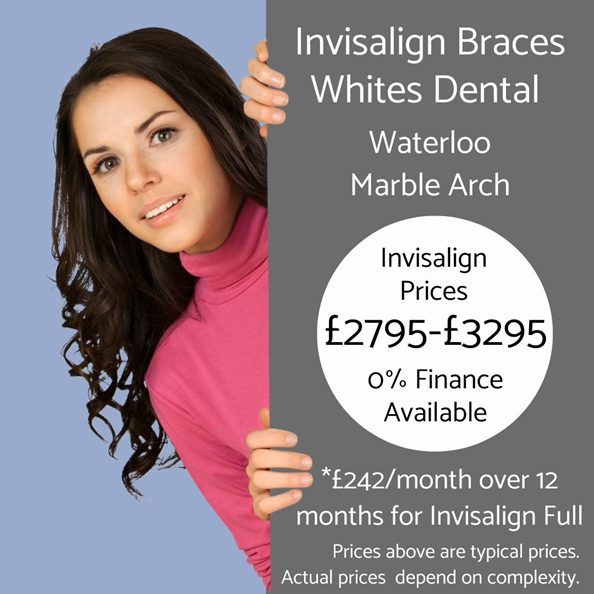
Cost depends on case complexity. See our full Invisalign cost guide.
Can Invisalign reduce a large overjet without removing teeth?
In many mild to moderate cases, yes. Space can often be created through alignment, arch development, or careful staging. In more significant protrusion cases, tooth extraction may be discussed – but this is not required in every situation.
Do protruding teeth mean I need jaw surgery?
Most adult protrusion cases are dental rather than skeletal. Severe skeletal discrepancies may require alternative treatment planning, but many patients can achieve excellent improvement with aligners alone.
Will moving my front teeth backwards affect my speech?
Temporary mild speech adaptation can occur when starting aligners, but as teeth gradually reposition, speech typically feels natural. Significant long-term speech change is uncommon.
Is Invisalign strong enough to move teeth backwards?
Yes. With properly designed attachments and, where needed, elastics, Invisalign can apply controlled horizontal retraction forces effectively.
Does correcting protruding teeth improve bite function?
Reducing excessive overjet can improve bite balance, reduce trauma risk to front teeth, and improve overall occlusal stability.
Are clear aligners effective for buck teeth?
Clear aligners can be effective for mild to moderate buck teeth, especially when the issue is caused by tooth position rather than jaw position. Severe overjet may need fixed braces, elastics or specialist orthodontic input.
Thinking About Invisalign for Protruding Teeth in London?
At Whites Dental, we provide a complete range of Invisalign packages in Central London with in depth treatment planning and honest advice to patients for suitability. We offer Invisalign from our two Invisalign clinics in London –
Visit our Central London clinics:
- Waterloo – near Southwark & Blackfriars
- Marble Arch – near Paddington & Edgware Road
Your consultation includes:
- 3D digital scan and bite analysis
- Clear explanation of movement plan
- Transparent cost discussion
- No pressure guidance
- ✅ Experienced Invisalign providers
- ✅ Thousands of aligner cases completed
- ✅ 0% finance options available
- ✅ Transparent Invisalign treatment costs
If you’d like clarity on whether Invisalign can correct your protruding teeth – we’re here to help.
Author

Dr Deepa Chopra
Principal Dentist & Clinic Founder
GDC registration number: 124489
Membership of the Faculty of Dental Surgery from the Royal College of Surgeons of Edinburgh
Membership of the British Dental Association
Restorative Dentistry from Tipton
Align Invisalign profile
LinkedIn profile
Areas of Expertise: 20+ Years Dentistry Experience. General Dentistry, Cosmetic Dentistry, Restorative Dentistry, Invisalign, Composite Bonding, Veneers, Root Canals, Crowns, Dentures, Gum Disease, Hygienist Services, Emergency Dental Services & Teeth Whitening.