

Key Takeaway
- Porcelain veneers provide a fast, long-lasting cosmetic solution for correcting uneven teeth without braces.
- They improve the alignment appearance of teeth by reshaping, resizing, and re-surfacing the visible tooth structure.
- Veneers can correct chips, minor crowding, gaps, worn edges, uneven lengths, asymmetry and mild rotation.
- The treatment involves dental assessment, minimal enamel preparation, impressions, and final veneer bonding.
- Not suitable for severe misalignment or untreated gum disease.
- High-quality porcelain veneers can last 10–15 years with proper care.
💡 Whites Dental offers specialist porcelain veneer treatment at two Central London locations.
Introduction: Why Porcelain Veneers Are One Of The Best Solutions For Uneven Teeth
Uneven teeth can affect the symmetry, balance and overall appearance of your smile. Even when teeth are healthy, minor discrepancies in shape, length, spacing and surface alignment can create an unbalanced look that impacts confidence — especially in photos or professional settings.
While orthodontics can correct underlying alignment, many patients do not want months of braces or clear aligners. This is where porcelain veneers become a popular cosmetic treatment.
Porcelain veneers are thin, custom-made ceramic shells bonded to the front surfaces of teeth. They provide a new, perfectly shaped and coloured exterior that can dramatically improve the appearance of uneven teeth in as little as two to three appointments.
💡 Unlike composite veneers or other cosmetic options, porcelain veneers offer superior durability, natural translucency, stain resistance, and longevity, making them a leading choice for cosmetic dentists and patients looking for high-end, predictable results.
Understanding Uneven Teeth And Why Porcelain Veneers Are So Effective
Uneven teeth can present in several ways, each of which porcelain veneers can correct when the underlying issue is cosmetic rather than structural.
Common presentations include:
- Teeth with uneven lengths
- Irregular tooth edges.
- Teeth that are smaller than adjacent teeth.
- Worn or chipped teeth
- Mild crowding that does not require orthodontics
- Slightly rotated teeth.
- Gaps or spacing irregularities.
- Teeth that lean inward or outward slightly.
- Teeth with uneven surface texture.
- Discoloured teeth that exaggerate unevenness
Porcelain veneers are designed specifically to mask these issues by providing a new, uniform outer surface. Because they are custom-made, they offer meticulous control over shape, height, width, angle, and colour.
Why Porcelain Veneers Work So Well
Porcelain veneers are effective because they:
- Create the appearance of straighter, more symmetrical teeth without moving the underlying tooth root.
- Allow the dentist to adjust multiple aesthetic factors simultaneously: shape, length, colour, reflection, width, and alignment illusion.
- Are crafted from high-strength ceramic, ensuring a natural-looking result that closely mimics enamel.
- Provide a long-lasting cosmetic solution that maintains stability over years of use
- Work especially well for the “smile zone” — teeth most visible when smiling.
What Porcelain Veneers Are (And What Makes Them Different)

Porcelain veneers are thin ceramic shells, typically 0.5–0.7mm thick, bonded to the front of the teeth using advanced adhesive dentistry. Unlike composite bonding or composite veneers, porcelain veneers are:
- More durable — lasting up to 10–15 years, sometimes longer
- More resistant to staining — thanks to their glass-like ceramic surface
- More natural in appearance — reflecting light like enamel.
- More shape-stable — maintaining their form over time.
💡 Each veneer is hand-crafted by a dental ceramist or digital dental laboratory to achieve a highly tailored appearance. Since porcelain mimics enamel’s translucency, the results are virtually indistinguishable from natural teeth — provided they are created and fitted by an experienced cosmetic dentist.
How Porcelain Veneers Fix Uneven Teeth
Porcelain veneers correct uneven teeth by modifying the visible structure of teeth, rather than moving them. They work by creating a new, perfectly crafted façade on each tooth.
Below are the specific ways veneers correct unevenness.
Fixing Irregular Tooth Shapes
Many people have one or more teeth that differ significantly in shape — whether rounded, angular, pointed, or worn down. Porcelain veneers can be sculpted to create ideal shapes and ensure consistency across your entire smile.
Evening Out Tooth Length
Uneven lengths can make the smile line look jagged. Veneers can lengthen short teeth or slightly shorten long ones to create a harmonious, symmetrical arc.
Correcting Mildly Crooked Teeth
If teeth are slightly rotated or misaligned — but not severely — veneers can make them look straighter by adjusting the outward-facing surface.
Closing Small Gaps
Porcelain veneers are an excellent solution for closing small to medium gaps between teeth. By subtly widening the veneer shape, the space can be filled without orthodontics.
Repairing Chips And Surface Wear
Chipped, worn, or eroded enamel creates uneven edges and surface texture. Veneers resurface the tooth completely, restoring a smooth and symmetrical finish.
Improving Colour Uniformity
Uneven teeth often appear worse when colour varies between teeth. Porcelain veneers allow complete control over shade selection — ensuring uniform colour across your smile.
Creating Symmetry Across The Smile Line
By aligning the visible surfaces, veneers help create a symmetrical smile that balances both sides of the mouth.
When Porcelain Veneers Are A Suitable Treatment For Uneven Teeth
Porcelain veneers are ideal for patients who want a dramatic improvement in smile appearance without orthodontics.
You may be a suitable candidate if you:
- Have mild to moderate unevenness
- Want fast results
- Have healthy gums and adequate enamel
- Are unhappy with tooth colour as well as shape.
- Have minor crowding or gaps.
- Have chips, cracks or worn edges.
- Have irregular tooth sizes.
- Want long-lasting cosmetic results
Porcelain veneers are especially recommended if your uneven teeth are accompanied by:
- Discolouration.
- Old fillings that look mismatched.
- Surface texture differences.
- Asymmetrical gumline issues (which can be corrected alongside veneers)
When Porcelain Veneers Are Not Suitable
Veneers are not appropriate in every case. A thorough dental examination is essential.
Veneers may not be suitable if:
- Misalignment is severe and requires orthodontic correction
- You have active gum disease
- Significant decay is present.
- You have very little enamel.
- Your bite places excessive pressure on front teeth.
- You grind your teeth heavily (bruxism).
- Large fillings weaken the teeth (a crown may be more suitable)
💡 A reputable cosmetic dentist will always advise the most appropriate treatment — sometimes combining veneers with orthodontics, whitening or gum contouring.
The Porcelain Veneer Process Step-By-Step
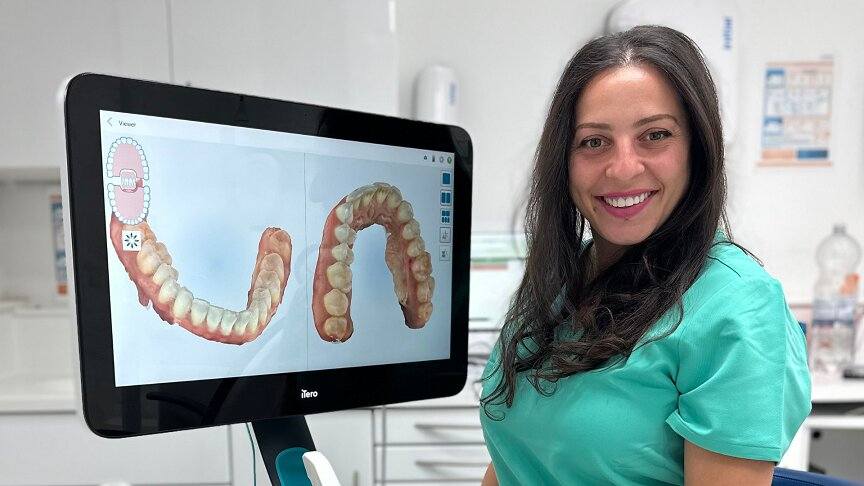
The veneer process is systematic and personalised. Here is how it typically unfolds.
1. Smile Consultation And Assessment
The dentist examines:
- Tooth shape
- Gum health
- Bite
- Enamel thickness.
- Existing restorations.
- Symmetry.
- Aesthetic goals.
Photographs and digital scans may be taken. A custom treatment plan is created.
2. Digital Smile Design (Optional But Recommended)
Many advanced cosmetic dentists use digital smile design to preview your results. You can see what your new smile will look like before treatment begins.
3. Tooth Preparation
A very thin layer of enamel is removed — usually 0.3–0.7mm. This ensures the veneers do not look bulky and bond securely.
4. Impressions Or Digital Scans
Your teeth are scanned or impressions are taken and sent to a dental laboratory. Each porcelain veneer is then handcrafted or digitally engineered.
5. Temporary Veneers
You receive temporary veneers while the final versions are being made. This enables the patient to “test drive” if you like – your new smile, before making it permanent.
6. Veneer Try-In And Bonding
At the fitting appointment:
- Temporaries are removed
- Each veneer is tried individually.
- Colour matching is verified.
- Adjustments are made if needed.
- Veneers are then bonded with dental cement
💡 The result is a natural, durable, beautifully even smile.
Benefits Of Using Porcelain Veneers To Fix Uneven Teeth
Porcelain veneers offer several advantages:
Natural Appearance
Porcelain is translucent and reflective like enamel, creating a lifelike result.
Instant Transformation
Veneers can correct multiple cosmetic issues at once — shape, alignment appearance, colour and texture.
Durability
High-quality porcelain is strong and long-lasting with proper care.
Stain Resistance
Unlike composite materials, porcelain resists staining from food, drink and smoking.
Customisation
Each veneer is unique — crafted to suit your facial profile, smile shape and aesthetic goals.
Minimally Invasive
Only a very tiny amount of tooth enamel is shaved from the tooth as compared to a dental crown.
Long-Term Confidence
Patients often report a significant confidence boost following veneer treatment.
Risks And Limitations To Be Aware Of
While porcelain veneers are safe and predictable, it’s important to understand potential limitations.
Irreversible
Enamel removal means you will always need veneers or another type of restoration.
Susceptible To Damage
Veneers can chip or debond if exposed to heavy forces — e.g. biting hard objects or untreated grinding.
Not Suitable For Everyone
As discussed earlier, some cases require orthodontics first.
Colour Cannot Be Changed Later
Once bonded, veneers cannot be whitened — the chosen shade must be final.
Aftercare For Porcelain Veneers
To maximise longevity:
- Maintain excellent oral hygiene
- Avoid biting very hard foods
- Wear a nightguard if you clench or grind
- Attend regular appointments
- Avoid smoking if possible
- Use non-abrasive toothpaste
💡 Most veneers last 10–15 years, and many last longer with proper maintenance.
Cost Of Porcelain Veneers For Uneven Teeth In London
Costs vary depending on:
- Number of teeth treated.
- Complexity of the case.
- Type of porcelain
- Experience of the cosmetic dentist.
- Additional treatments (whitening, gum contouring, bite adjustments)
💡 In London, porcelain veneers typically range from £850–£1,400 per tooth. Choosing a reputable cosmetic dentist is essential for achieving natural, long-lasting results.
How Whites Dental In London Can Help Fix Uneven Teeth With Porcelain Veneers
Whites Dental offers highly experienced cosmetic dentists offering high-quality porcelain veneer treatments in London.
Why Patients Choose Whites Dental
- Experienced cosmetic dentists.
- Digital smile design and photography.
- High-quality porcelain (Emax and equivalent systems).
- Tooth preparation techniques that preserve maximum enamel
- Precision shade matching.
- Handcrafted, natural-looking veneers
- Transparent pricing
- Convenient Central London locations
- A strong reputation for aesthetic excellence
Whites Dental Locations
Whites Dental Waterloo
172 Blackfriars Road, London, SE1 8ER
Whites Dental Marble Arch (W2)
52B Kendal St, St George’s Fields, London W2 2BP
💡 Whether you want to improve one uneven tooth or transform your full smile, Whites Dental provides a personalised, meticulous approach that ensures natural, balanced, long-lasting results.
Conclusion
Porcelain veneers are one of the most effective, predictable and aesthetic ways to correct uneven teeth — especially when the underlying problem is cosmetic rather than structural. They offer the ability to reshape, resize and visually align teeth with minimal preparation, fast turnaround times, and highly natural-looking results that can last over a decade.
💡 If you’re considering porcelain veneers to fix uneven teeth, a thorough consultation with an experienced cosmetic dentist at Whites Dental can help you understand your suitability, aesthetic options and the expected outcome.