

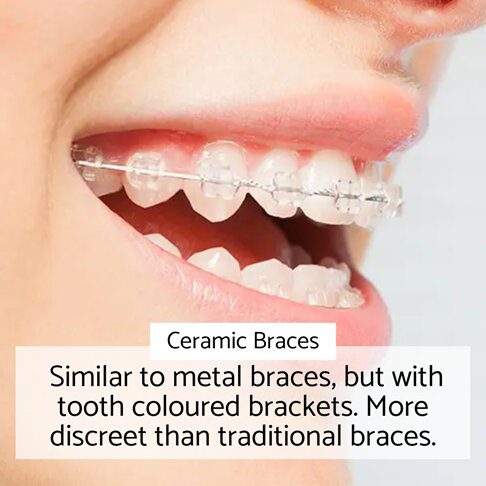
Ceramic braces are popular because they offer the control of fixed braces with a more discreet appearance.
But some patients worry about the material itself. Ceramic brackets can feel strong and smooth, which naturally leads to the question: can they scratch the teeth they bite against?
In most properly planned cases, ceramic braces should not scratch opposing teeth. Your orthodontist will assess how your bite comes together before treatment and monitor tooth contact throughout your appointments.
The main concern is not that ceramic braces are unsafe. It is that certain bite patterns may need extra care, especially if brackets could come into contact with the opposite teeth.
In this guide, we explain whether ceramic braces can scratch opposing teeth, when this risk may be higher, and how orthodontists help protect your teeth during treatment.
Quick Answer: Ceramic braces do not normally scratch opposing teeth during properly planned orthodontic treatment. Your orthodontist will assess your bite, check whether brackets are likely to touch the opposite teeth, and monitor tooth contact as treatment progresses.
🔑 Key Takeaways
- Ceramic brackets do not usually scratch opposing teeth when treatment is properly planned
- Your bite position is the main factor that determines whether extra care is needed
- Deep bites may need closer monitoring during ceramic braces treatment
- Orthodontists can use bite checks, adjustments or bite protection where needed
- You should tell your orthodontist if a bracket seems to hit another tooth when you bite
🧭 Jump to:
Can Ceramic Braces Scratch Opposing Teeth?
Ceramic braces do not normally scratch opposing teeth during properly planned treatment.
Before fitting ceramic fixed braces, your orthodontist will assess how your upper and lower teeth meet. This helps them decide whether ceramic brackets are suitable and whether any extra precautions are needed.
The risk is usually linked to bite contact rather than the ceramic braces themselves.
If your teeth bite directly onto a bracket, your orthodontist may need to adjust the plan or use protective measures.
What Are Opposing Teeth?
Opposing teeth are the teeth that meet each other when you bite together.
For example, your lower teeth may bite against your upper teeth, or in some cases, against brackets attached to the upper teeth.
If a bracket sits in a position where the opposite tooth could hit it repeatedly, your orthodontist will want to manage that carefully.
Why Do Patients Worry About Ceramic Brackets?
Patients often ask this question because ceramic brackets are strong and feel different from metal brackets.
Some people have also read that ceramic is harder than tooth enamel. That can sound worrying, especially if they have a deep bite or if their teeth already feel worn.
In reality, your orthodontist is not simply placing brackets and hoping for the best. The bite should be checked before and during treatment.
| Concern | What It Usually Means |
|---|---|
| Ceramic feels very hard | Your orthodontist checks whether this creates any bite contact issue |
| The lower teeth hit the brackets | Extra protection or adjustment may be needed |
| The bite changes during treatment | Regular reviews help monitor how the teeth meet |
When Could Ceramic Brackets Touch Opposing Teeth?
Ceramic brackets may be more likely to touch opposing teeth if the patient has a deep bite or a bite pattern where the teeth overlap heavily.
This does not automatically mean ceramic braces are unsuitable. It simply means the orthodontist needs to assess the bite carefully.
Situations that may need closer attention include:
- Deep bites
- Heavy overbites
- Lower front teeth contacting upper brackets
- Worn teeth
- Unusual bite relationships
Patients comparing different braces treatment options often ask how ceramic brackets differ from traditional metal braces, especially when bite strength or visibility is a concern.
For a broader comparison between fixed brace types, see: Metal Braces Vs Ceramic Braces.
How Do Orthodontists Help Protect Your Teeth?
Orthodontists reduce risk by planning and monitoring how the teeth come together.
Depending on your bite, this may involve:
- Checking whether ceramic brackets are suitable
- Using bite protection where needed
- Choosing bracket positions carefully
- Monitoring tooth contact during review appointments
- Adjusting the treatment plan if the bite changes
The aim is to move the teeth safely while avoiding unnecessary contact between brackets and opposing teeth.
Can Ceramic Braces Damage Enamel?
Ceramic braces should not normally damage enamel when treatment is properly planned and monitored.
Most concerns about enamel damage relate to either repeated unwanted contact with a bracket or poor cleaning around the braces.
That is why bite assessment and oral hygiene are both important during treatment.
What About Removing Ceramic Braces?
Ceramic brackets are removed by the orthodontic team at the end of treatment.
This should be done carefully using the correct technique. Patients should not try to loosen or remove brackets themselves.
When Should You Contact Your Orthodontist?
You should contact your orthodontist if something feels unusual when you bite together.
This may include:
- A tooth repeatedly hitting a bracket
- A sharp or uncomfortable biting point
- A bracket feeling unusually high when biting
- New discomfort that does not settle
- Visible wear or chipping concerns
It is better to ask early than wait and worry. Small adjustments can often make treatment more comfortable.
Are Ceramic Braces Still Safe?
Yes, ceramic braces are a safe and widely used orthodontic option when they are suitable for the patient’s bite.
They are popular with adults and teenagers who want fixed brace control but prefer a less noticeable appearance than metal brackets.
If your main concern is appearance rather than bite contact, you may also find this useful: Ceramic Braces Aesthetic Guide: How Visible Are They In Real Life?
The key is proper assessment. Braces with ceramic brackets should be recommended when they make sense for your teeth, bite and treatment goals.
Who May Need Extra Assessment Before Choosing Ceramic Braces?
Some patients may need a closer bite assessment before choosing ceramic braces.
This may include patients with:
- A deep bite
- Heavily worn teeth
- Previous enamel concerns
- Lower teeth that contact the upper front teeth strongly
This does not mean these patients cannot have ceramic braces. It simply means the orthodontist should assess suitability carefully.
FAQs: Ceramic Braces And Opposing Teeth
Patients often worry that ceramic brackets may be harder than their natural teeth or more likely to cause damage during treatment. These are some of the most common questions about ceramic braces and opposing teeth.
Can Ceramic Braces Scratch Opposing Teeth?
Ceramic braces do not normally scratch opposing teeth when treatment is properly planned. Your orthodontist will check whether your bite could bring teeth into contact with the brackets.
Are Ceramic Brackets Harder Than Teeth?
Ceramic brackets are strong and durable, but the important factor is whether they come into repeated contact with opposing teeth. Your orthodontist will assess this before fitting them.
Can Ceramic Braces Damage Enamel?
They should not normally damage enamel during properly planned treatment. Enamel concerns are more likely if there is repeated unwanted contact or poor oral hygiene.
Are Ceramic Braces Safe For Deep Bites?
They may be suitable for some deep bite cases, but your orthodontist will need to check whether the lower teeth could contact the upper brackets.
What Should I Do If My Tooth Hits A Ceramic Bracket?
Contact your orthodontist. They can check the bite and decide whether an adjustment or protective measure is needed.
Are Ceramic Braces Still Worth It?
For many patients, yes. Ceramic braces offer fixed brace control with a more discreet appearance, provided they are suitable for the bite.
Are Ceramic Braces More Risky Than Metal Braces?
Not necessarily. Suitability depends on your bite, teeth and treatment plan. Your orthodontist can explain whether ceramic or metal braces are more suitable for your case.
Considering Ceramic Braces In London?
If you are interested in ceramic braces but worried about whether they could affect your bite or opposing teeth, a specialist orthodontic assessment can help you understand what is suitable.
At Whites Dental, patients can explore ceramic braces London treatment with clear guidance on suitability, aesthetics, bite assessment and treatment planning.
- ✅ Ceramic braces for adults and teenagers
- ✅ Discreet fixed brace treatment
- ✅ Bite and suitability assessment
- ✅ Central London orthodontic appointments
Author

Dr Deepa Chopra
Principal Dentist & Clinic Founder
GDC registration number: 124489
Membership of the Faculty of Dental Surgery from the Royal College of Surgeons of Edinburgh
Membership of the British Dental Association
Restorative Dentistry from Tipton
Align Invisalign profile
LinkedIn profile
Areas of Expertise: 20+ Years Dentistry Experience. General Dentistry, Cosmetic Dentistry, Restorative Dentistry, Invisalign, Composite Bonding, Veneers, Root Canals, Crowns, Dentures, Gum Disease, Hygienist Services, Emergency Dental Services & Teeth Whitening.