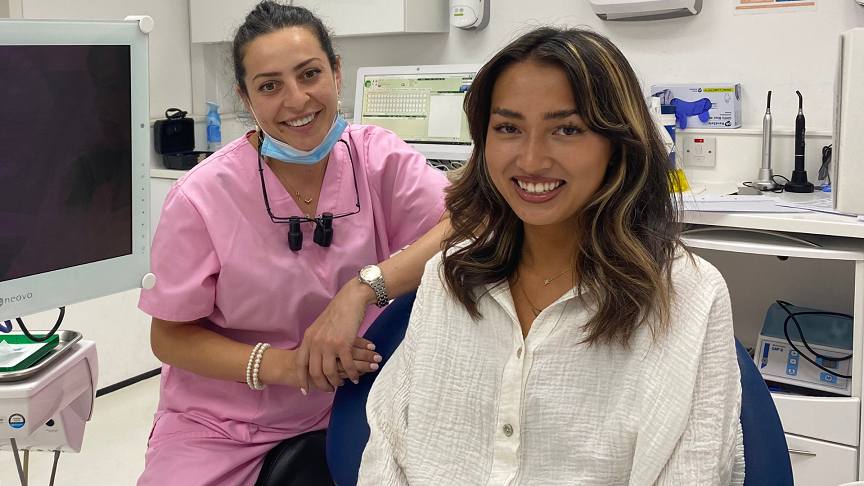


Metal braces are still one of the most widely used orthodontic treatments for a reason.
Even with the rise of Invisalign, clear aligners and more discreet brace options, traditional metal brackets remain a reliable choice for many patients. They are strong, precise, and suitable for a wide range of tooth movement and bite correction needs.
For some patients, metal braces are not just a “basic” option. They may be the most practical or clinically suitable option.
That is especially true when teeth need more controlled movement, when the bite needs detailed correction, or when a patient wants a fixed brace system that does not rely on remembering to wear removable aligners for 20–22 hours per day.
In this guide, we explain whether metal braces are good, when orthodontists still recommend traditional brackets, and why they remain an important option for adults and teenagers considering braces in London.
Quick Answer: Yes, metal braces are still a good orthodontic option. They are strong, reliable, and effective for many types of tooth movement, including crowding, gaps, rotations and bite correction. Orthodontists may still recommend traditional metal brackets when precision, durability, or complex movement is needed.
🔑 Key Takeaways
- Metal braces remain one of the most reliable orthodontic treatments available
- They are often recommended for precise tooth movement and more complex cases
- Because they are fixed to the teeth, they do not depend on patient wear-time in the same way as removable aligners
- Metal brackets are usually strong, durable, and suitable for many bite and alignment problems
- They may be more visible than ceramic braces or Invisalign, but they can be very effective
- The best brace type depends on your teeth, bite, lifestyle, budget and treatment goals
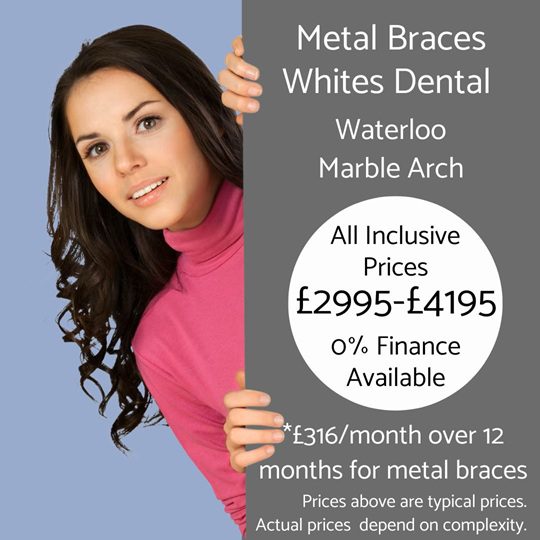
🧭 Jump to:
Are Metal Braces Good?
Yes, metal braces are good for many orthodontic cases.
They remain one of the most dependable ways to straighten teeth because they are fixed, controlled, and suitable for a wide range of tooth movements.
Metal braces use brackets attached to the teeth, connected by a wire. Over time, the wire and brackets guide the teeth into better positions.
They can help with:
- Crowded teeth
- Gaps between teeth
- Rotated teeth
- Overbites
- Underbites
- Crossbites
- Teeth that need more controlled movement
For many patients, especially those with more noticeable alignment or bite problems, metal braces in London can be a highly practical option.
Why Do Some Patients Still Choose Metal Braces?
Patients may choose metal braces because they are:
- Reliable
- Durable
- Often more affordable than discreet options
- Suitable for many complex cases
- Fixed in place, so they cannot be forgotten or left out
The main trade-off is visibility. Metal braces are more noticeable than ceramic braces or Invisalign, but for many patients, effectiveness matters more than appearance.
Why Do Orthodontists Still Recommend Metal Braces?
Orthodontists still recommend metal braces because they give strong control over tooth movement.
That control can be especially important when teeth need to move in more complex ways.
Traditional brackets allow the orthodontist to adjust wires, apply precise forces, use elastics, and manage bite changes throughout treatment.
Metal Braces Are Not Outdated
It is easy to assume metal braces are old-fashioned because aligners and ceramic braces are now so popular.
But metal braces are not outdated. They are still widely used because they work well.
Modern metal braces are usually smaller and more comfortable than older versions, and they remain a strong treatment choice for both teenagers and adults.
Where Metal Braces Can Be Especially Useful
Metal braces may be recommended when:
- Teeth are severely crowded
- Several teeth need rotating
- The bite needs correcting
- Tooth roots need careful control
- The patient may struggle with removable aligner wear-time
- The case is less predictable with removable aligners alone
This does not mean metal braces are always better. It means they remain extremely useful in the right cases.
When Are Metal Braces Better Than Other Options?
Metal braces may be better when the orthodontic case needs stronger fixed control.
That can include more complex crowding, bite correction, rotations, or treatment where removable aligners may not be the most reliable choice.
| Situation | Why Metal Braces May Help |
|---|---|
| Complex crowding | Fixed brackets can provide strong, controlled tooth movement |
| Bite correction | Elastics and wire adjustments can help guide the bite over time |
| Rotated teeth | Brackets can help control teeth that need turning into position |
| Poor aligner compliance | Because metal braces are fixed, they do not depend on remembering to wear trays |
| Budget-conscious treatment | Metal braces are often one of the more cost-effective private brace options |
For patients comparing different types of braces in London, this is one of the main reasons metal braces remain part of the conversation.
Are Metal Braces Better For Complex Cases?
Metal braces can be better for some complex cases, especially where the teeth or bite need more precise control.
They may be useful when the orthodontist needs to move teeth in several directions, use elastics, manage the bite, or make detailed adjustments throughout treatment.
What Counts As A More Complex Orthodontic Case?
A case may be more complex if there is:
- Severe crowding
- Significant spacing
- Deep bite
- Crossbite
- Open bite
- Underbite
- Teeth that are heavily rotated or tilted
That does not automatically mean Invisalign or ceramic braces are unsuitable. It simply means the treatment needs to be planned carefully.
A specialist orthodontic assessment is the best way to understand which option is most appropriate.
Are Metal Braces More Reliable Than Invisalign?
Metal braces are not always “better” than Invisalign, but they can be more reliable in cases where patient compliance is a concern.
With Invisalign, patients usually need to wear aligners for around 20–22 hours per day. If the aligners are not worn enough, the teeth may not track as planned.
Metal braces are fixed to the teeth, so they are working continuously.
Why Fixed Treatment Can Help Some Patients
Fixed braces may be useful for patients who:
- Do not want to manage removable trays
- Are worried about forgetting aligners
- Prefer a treatment that stays in place
- Need more controlled movement than aligners may provide alone
For many patients, Invisalign is still an excellent option. But for some cases, traditional fixed brackets may be the more predictable route.
Metal Braces Vs Other Orthodontic Options
The right treatment depends on the patient, not just the brace type.
Metal braces, ceramic braces and Invisalign all have strengths. The best option depends on your teeth, bite, lifestyle and priorities.
| Treatment Option | Main Strength | Main Trade-Off |
|---|---|---|
| Metal Braces | Strong, fixed and suitable for many complex cases | More visible than discreet options |
| Ceramic Braces | Fixed brace control with a more discreet appearance | May be more fragile or more costly than metal braces |
| Invisalign | Removable, discreet and lifestyle-friendly | Requires excellent wear-time and may not suit every case |
If appearance is your main concern, you may also want to compare ceramic braces or Invisalign treatment.
If strength, reliability and cost are more important, metal braces may still be one of the best options to discuss.
Who Are Metal Braces Good For?
Metal braces can be good for adults, teenagers and patients with a wide range of orthodontic needs.
They may be especially useful for patients who want reliable fixed treatment and are less concerned about the braces being visible.
Metal Braces May Suit Patients Who Want
- A strong fixed brace option
- Treatment for crowding, gaps or bite problems
- A more cost-effective private orthodontic option
- A system that does not rely on removable aligners
- A treatment option with a long track record
Many adults still choose metal braces, particularly when they are focused on the end result rather than how visible the braces are during treatment.
Are Metal Braces Good For Adults?
Yes, metal braces can be a very good option for adults.
There is no rule that metal braces are only for teenagers. Adult patients may choose them because they are effective, durable and suitable for more involved tooth movement.
Why Adults May Still Choose Traditional Brackets
Adults may choose metal braces because:
- They want a reliable fixed treatment
- They have more complex crowding or bite issues
- They are not worried about visible braces
- They want a treatment option that may be more affordable than discreet alternatives
- They want orthodontic control rather than purely cosmetic improvement
At Whites Dental, adult patients can explore metal braces London treatment as part of a wider orthodontic assessment.
What Are The Downsides Of Metal Braces?
The main downside of metal braces is that they are more visible than other options.
They can also make cleaning more involved, and patients need to be careful with hard, sticky or crunchy foods that may damage brackets or wires.
Common Trade-Offs With Metal Braces
- They are more noticeable than ceramic braces or Invisalign
- They can feel uncomfortable after fitting or adjustments
- Food can catch around brackets and wires
- Some foods need to be avoided during treatment
- Good oral hygiene is very important
These downsides are usually manageable with good advice, careful cleaning and regular orthodontic reviews.
For food guidance, this related guide may help: What Foods Should You Avoid With Braces?
Are Metal Braces Worth It?
Metal braces can be worth it if you want a reliable way to straighten teeth and improve your bite.
They may not be the most discreet choice, but they remain one of the most effective and widely used orthodontic systems.
When Metal Braces May Feel Worthwhile
Metal braces may feel worthwhile if:
- You want a strong fixed treatment option
- Your case needs more controlled tooth movement
- You are not confident you would wear aligners enough
- You want a practical option for complex teeth or bite correction
- You are comfortable with a more visible brace during treatment
The real question is not whether metal braces are good in general. It is whether they are good for your specific teeth, bite and treatment goals.
How Do You Know If Metal Braces Are Right For You?
The best way to know whether metal braces are right for you is to have an orthodontic consultation.
An orthodontist can assess:
- Your tooth alignment
- Your bite
- Your gum health
- Your treatment goals
- Your lifestyle and preferences
- Whether fixed braces or aligners are more suitable
A good consultation should not simply push one treatment. It should explain your options clearly, including the strengths and limitations of each route.
FAQs: Are Metal Braces Good?
Patients often want to know whether metal braces are still worth considering, especially now that clear aligners and ceramic braces are so popular. These are some of the most common questions.
Are Metal Braces Good?
Yes. Metal braces are still a good orthodontic option for many patients because they are strong, reliable and suitable for a wide range of tooth and bite problems.
Why Do Orthodontists Still Recommend Metal Braces?
Orthodontists still recommend metal braces because they provide strong control over tooth movement and can be useful for complex cases, bite correction and patients who may not suit removable aligners.
Are Metal Braces Better Than Invisalign?
Metal braces are not always better than Invisalign, but they may be more suitable for certain complex cases or for patients who would struggle to wear removable aligners for the required number of hours each day.
Are Metal Braces Good For Adults?
Yes. Adults can have metal braces, and they may be a good choice if the case needs reliable fixed treatment or more detailed tooth movement.
Are Metal Braces Painful?
Metal braces can feel sore after they are fitted or adjusted, but this usually settles. The discomfort is normally related to pressure from tooth movement rather than sharp pain.
Do Metal Braces Work Faster?
Not always. Treatment speed depends on the case, not just the brace type. Metal braces can be efficient, but the timeline depends on crowding, bite correction, tooth movement and patient factors.
Are Metal Braces Stronger Than Ceramic Braces?
Metal brackets are usually very durable. Ceramic braces can also work well, but ceramic brackets may be more delicate in some situations.
Can Metal Braces Fix Bite Problems?
Yes, metal braces can often help with bite correction, including overbites, underbites, crossbites and deep bites, depending on the case.
Are Metal Braces Cheaper Than Invisalign?
Metal braces are often one of the more cost-effective private orthodontic options, although exact costs depend on the clinic, case complexity and treatment length.
Are Metal Braces Worth It?
Metal braces can be worth it if you want a reliable fixed treatment option and are comfortable with a more visible brace during treatment.
How Do I Know If Metal Braces Are Right For Me?
You need an orthodontic consultation. Your orthodontist can assess your teeth, bite and goals before explaining whether metal braces, ceramic braces, Invisalign or another option is most suitable.
Considering Metal Braces In London?
If you are wondering whether traditional brackets are still a good choice, the answer depends on your teeth, bite and treatment goals.
At Whites Dental, patients can explore metal braces in London as part of a wider orthodontic assessment, with options also including ceramic braces, Invisalign and other fixed brace systems.
Whether your priority is strength, reliability, affordability, or treating a more complex orthodontic concern, a specialist consultation can help you understand whether metal braces are the right route for you.
- ✅ Metal braces for adults and teenagers
- ✅ Fixed brace treatment for crowding, gaps and bite correction
- ✅ Specialist orthodontic assessments in Central London
- ✅ Clear comparison with ceramic braces and Invisalign
Author

Dr Deepa Chopra
Principal Dentist & Clinic Founder
GDC registration number: 124489
Membership of the Faculty of Dental Surgery from the Royal College of Surgeons of Edinburgh
Membership of the British Dental Association
Restorative Dentistry from Tipton
Align Invisalign profile
LinkedIn profile
Areas of Expertise: 20+ Years Dentistry Experience. General Dentistry, Cosmetic Dentistry, Restorative Dentistry, Invisalign, Composite Bonding, Veneers, Root Canals, Crowns, Dentures, Gum Disease, Hygienist Services, Emergency Dental Services & Teeth Whitening.