


Composite bonding has become one of the most popular cosmetic treatments in London – but not all results look the same.
Well-executed bonding should sit comfortably within the natural shape of the tooth. Poorly shaped bonding can look thick, flat, overly wide, or slightly overcontoured.
“Why does some composite bonding look bulky?”
The answer usually comes down to technique, proportion, and planning – not the material itself.
In some cases, patients describe bulky bonding as making the teeth look “bigger” than before. This usually relates to contouring and thickness rather than the composite material itself.
When composite is carefully layered and contoured, it should look natural and refined. When it’s overbuilt or poorly shaped, the result can appear heavy or artificial.
🔑 Key Takeaways:
- Composite bonding should enhance natural tooth shape – not overpower it.
- Bulky results are usually caused by overbuilding or poor contouring.
- Tooth proportion, edge thickness, and contouring all influence whether bonding looks natural or overbuilt.
- Careful layering and polishing prevent heavy-looking restorations.
💡 Quick Answer: Composite bonding can look bulky or feel thick when too much material is added, edges are overbuilt, or the final contours are not refined enough. Skilled dentists avoid this by adding composite gradually, shaping the tooth anatomy carefully, and checking how the bonding looks from different angles before polishing.
🧭 Jump to:
Why Composite Bonding Can Look Bulky
Composite is a versatile material. It can be sculpted extremely thin – or built up heavily.
Bulky appearance usually happens when:
- Too much material is added to the front surface
- Edges are thickened instead of tapered
- Tooth width is increased without balancing proportions
- Contours are left flat rather than anatomical
Even small excess thickness can dramatically change how light reflects off the tooth, making it appear wider or heavier than intended.
Common Bonding Shaping Mistakes That Create a Heavy Look
Bulky composite bonding rarely happens by accident. It’s usually the result of specific technical decisions made during shaping and finishing. Understanding where things go wrong helps explain why some results look refined – and others look heavy.
Overbuilding the Front Surface
Instead of selectively adding composite where needed, some approaches apply material across the entire visible surface. This increases overall tooth thickness and reduces natural curvature.
Ignoring Natural Tooth Anatomy
Natural teeth have subtle line angles, ridges, and gentle transitions. Flat composite surfaces lack these details, which makes teeth look blocky.
Incorrect Width-to-Length Ratio
If teeth are lengthened without carefully controlling width, they can appear square or oversized.
Insufficient Final Refinement
Composite teeth bonding requires multiple refinement stages. Skipping detailed contouring and polishing can leave edges looking heavy rather than crisp.
How Dentists Keep Composite Bonding Looking Natural
High-quality composite bonding relies on restraint as much as technique.
- Layering composite gradually rather than overbuilding
- Maintaining natural line angles and curvature
- Repeatedly stepping back to assess symmetry
- Using fine burs and polishing systems to refine thickness
Planning also matters. Understanding smile proportions before starting helps prevent excessive addition later.
| Refinement Step | Why It Prevents Bulkiness |
|---|---|
| Layer-by-layer placement | Prevents excessive thickness developing in one area. |
| Line angle definition | Controls perceived tooth width. |
| Edge tapering | Maintains a natural transition from enamel to restoration. |
| Final polishing sequence | Refines texture and prevents a flat, artificial finish. |
If your main concern is how bonding feels in the mouth, our guide on whether composite bonding feels bulky at first covers that side in more detail. For appearance concerns, our guide on why composite bonding sometimes looks artificial explains how proportion, shade and contouring affect the final result.
You can also read our guide on why composite bonding sometimes looks artificial to understand how proportion and contouring influence overall appearance.
Does Composite Bonding Make Teeth Look Bigger?
Composite bonding can make teeth look slightly bigger if material is added to the front surface, edges, or corners without carefully controlling the final shape.
This does not mean bonding should automatically make teeth look large. In well-planned cases, composite can improve symmetry, close small gaps, repair chips, or refine edges without making the smile look heavy.
The risk of a bigger or thicker appearance is higher when:
- Composite is added across the whole front surface unnecessarily
- The biting edges are made too thick
- Width is increased without balancing tooth length
- The final polish leaves the surface too flat
If your teeth are already naturally large, wide, or prominent, the dentist may need to be especially conservative with how much composite is added.
How Light Reflection Reveals Poor Contouring
One of the biggest reasons bulky dental bonding stands out is how it reflects light.
Natural teeth are not flat. They have subtle curves and defined line angles that control how light travels across the surface.
When composite is left too smooth or overly flat:
- Light spreads evenly across the entire surface
- The tooth appears wider than it really is
- Edges look thick instead of crisp
Well-contoured bonding creates controlled light transitions. This makes teeth look slimmer, more natural, and better integrated with neighbouring teeth.
This level of refinement is part of what differentiates aesthetic composite bonding from basic cosmetic repair.
Can Bulky Composite Bonding Be Corrected?
In many cases, yes.
Because bonding is additive and conservative, it can often be reshaped rather than fully replaced.
- Excess material can be carefully reduced
- Edges can be refined
- Contours can be rebalanced
We explain the adjustment process in more detail in our guide to reshaping composite bonding after treatment.
FAQ: Bulky-Looking Composite Bonding
Patients often notice bulky bonding when comparing before-and-after photos online – or when considering correcting work done elsewhere. Below are some of the most common questions about why bonding can look thick and whether it can be improved.
Is bulky bonding always a sign of poor work?
Not necessarily. Sometimes teeth were heavily worn or misaligned beforehand. However, obvious thickness or blocky edges usually indicate contouring issues.
Can bulky composite bonding damage my teeth?
The concern is usually aesthetic rather than structural. However, excessive thickness can sometimes affect bite balance if not properly refined.
Does higher cost mean better contouring?
Cost alone does not determine quality, but detailed shaping requires time and clinical precision. Rushed treatments are more likely to appear heavy.
Can bonding be thinned without replacing it?
Yes. In many cases, minor reshaping can significantly improve appearance without removing the entire restoration.
Why does bulky composite bonding look wider in photos?
Camera lighting exaggerates flat surfaces. If bonding lacks natural contour, flash photography can make teeth appear broader than they are in person.
Can bulky bonding affect speech?
In severe cases where edges are overbuilt, minor speech adjustments may be noticeable. Proper refinement prevents this.
Is bulky bonding more likely to stain?
Excess thickness or poor polishing can make composite bonding more prone to surface staining over time.
Does bulky bonding feel different?
Overbuilt edges may feel heavier or more noticeable to the tongue. Well-shaped bonding should feel seamless once you adapt.
Does composite bonding make your teeth look bigger?
It can if too much material is added or the width-to-length balance is not planned carefully. Well-shaped bonding should improve the tooth shape without making the smile look noticeably bulky or oversized.
Considering Composite Bonding in London?
At Whites Dental, our cosmetic dentists in Central London focus on proportion, contour and refinement to ensure composite bonding treatment looks natural – not bulky.
Your composite bonding consultation in London includes:
- Assessment of tooth proportions
- Discussion of realistic aesthetic goals
- Careful smile planning
- Transparent cost explanation
📍 Visit our clinics:
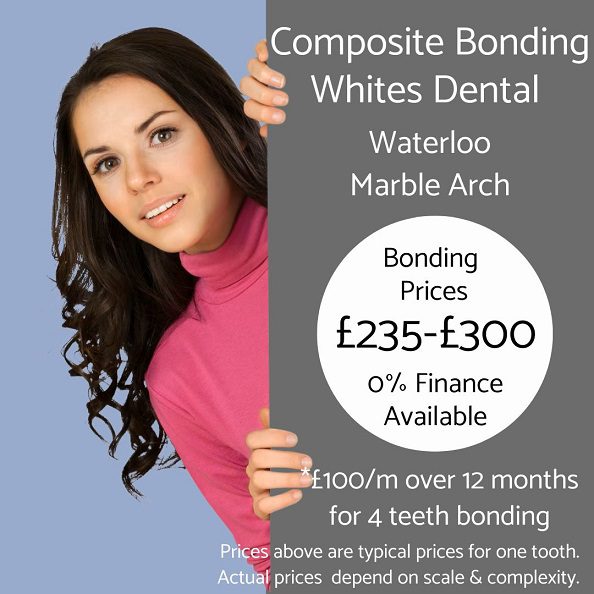
- Waterloo – near South Bank & Blackfriars
- Marble Arch – close to Paddington & Edgware Road
📅 Book your free consultation or explore our composite bonding cost guide.
Author

Dr Deepa Chopra
Principal Dentist & Clinic Founder
GDC registration number: 124489
Membership of the Faculty of Dental Surgery from the Royal College of Surgeons of Edinburgh
Membership of the British Dental Association
Restorative Dentistry from Tipton
Align Invisalign profile
LinkedIn profile
Areas of Expertise: 20+ Years Dentistry Experience. General Dentistry, Cosmetic Dentistry, Restorative Dentistry, Invisalign, Composite Bonding, Veneers, Root Canals, Crowns, Dentures, Gum Disease, Hygienist Services, Emergency Dental Services & Teeth Whitening.