


Key Takeaway
- Many UK dental insurance policies offer partial cover for periodontal (gum) treatment, but the extent of cover depends on the insurer, the plan tier and whether treatment is routine, specialist or surgical.
- Preventive care (check-ups and hygiene) is usually covered; deep cleaning (scaling & root planing) is often partially covered on mid/high plans; surgery and grafting are frequently restricted to higher tiers or excluded.
- Leading insurers such as Bupa, Simplyhealth, AXA, Cigna, WPA and Aviva have varying policies — some cover specialist care, others require referrals or pre-authorisation and have waiting periods and annual limits.
- To maximise your cover: check plan limits, understand waiting periods, request pre-authorisation for specialist procedures, and obtain itemised invoices suitable for claims
💡 Our specialist periodontists for gum treatment at Whites Dental Waterloo (SE1) and Whites Dental Marble Arch (W2) assist patients with clear treatment plans and insurance-friendly invoicing.
Understanding Periodontal Disease And Why Insurance Matters
Periodontal disease (gum disease) ranges from mild gingivitis to advanced periodontitis that damages bone and connective tissue. Insurance matters because periodontal care can involve a sequence of costly treatments: consultations, deep cleanings, repeated maintenance visits and sometimes surgical procedures such as flap surgery, bone grafting or gum grafts. Early intervention is less expensive, and many insurers encourage preventive care by covering exams and hygienist visits.
- Periodontal gum disease progression increases treatment complexity and cost of periodontal treatment
- Insurance helps patients access earlier care and reduces out-of-pocket risk.
- Coverage varies by what insurers define as preventive, restorative or major treatment.
How Insurers Categorise Dental Treatments

Most insurers group dental services into categories that determine cover levels. Understanding these categories helps predict whether a claim will be approved.
- Preventive Care: check-ups, X-rays, hygiene visits — commonly covered.
- Restorative Care: fillings, root canals, basic periodontal treatment — often partially covered.
- Major Care: surgical procedures, implants, complex periodontal surgery — frequently limited or excluded on lower-tier plans.
- Emergency Care: pain relief, temporary treatment — usually covered quickly.
Typical Periodontal Treatments And Likely Insurance Outcomes
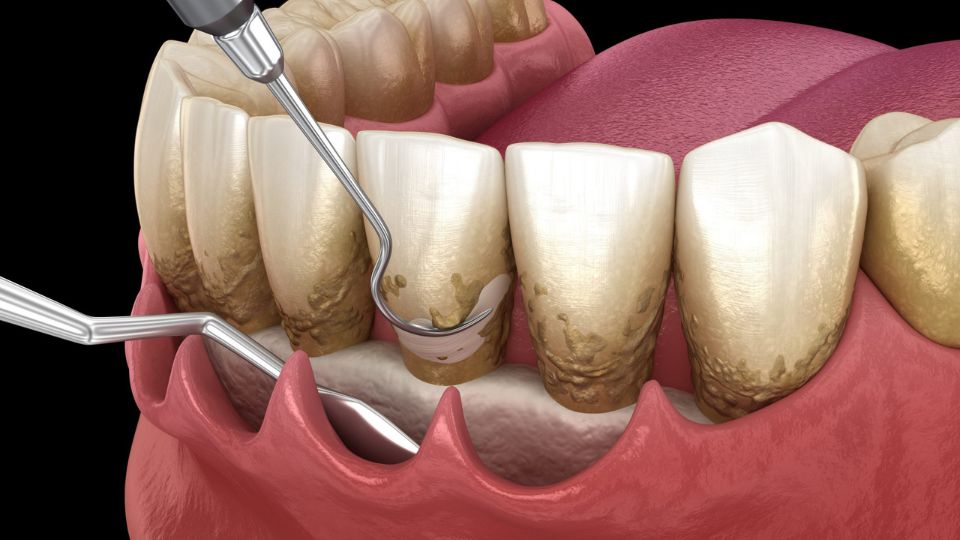
Below is a practical summary of common periodontal treatments and the typical insurance response in the UK market.
- Periodontal Assessment and Diagnosis
- Usually covered as part of regular dental exams.
- Important to document for claims.
- Scaling and Polishing (Routine Hygiene)
- Frequently covered fully or partially.
- Often included in preventive allowances.
- Scaling and Root Planing (Deep Cleaning)
- Mid-tier and higher policies commonly offer partial cover.
- Some insurers treat this as restorative care.
- Periodontal Maintenance (Post-Treatment Cleanings)
- Often covered after active treatment; frequency limits may apply.
- Local Antibiotic Therapy
- May be covered selectively; check formulary/exclusions.
- Laser-Assisted Periodontal Therapy
- Coverage varies; some policies classify as specialist or adjunctive and may exclude.
- Flap Surgery, Bone Grafts, Gum Grafts, Regenerative Procedures
- Typically considered major treatment; cover depends on plan tier and pre-authorisation.
- Implant Placement (If Tooth Loss Occurs)
- Often excluded or limited under standard dental policies; sometimes available under higher-level packages.
The Most Common UK Insurers And How They Typically Cover Periodontal Care
This section summarises typical cover approaches for major UK insurers. Always check the exact policy wording and confirm benefits with the insurer — policies vary by plan and employer-sponsored packages.
Bupa
- Bupa usually separates plans by tiers.
- Basic plans: limited periodontal cover (routine hygiene).
- Mid plans: partial cover for scaling and root planing; maintenance visits often included.
- Higher plans: better cover for specialist periodontal treatment and some surgical procedures, subject to pre-authorisation and waiting periods.
- Waiting Periods: Typically 2–6 months for restorative or major procedures.
Simplyhealth (Denplan-style Plans)
- Strong emphasis on prevention; hygienist visits widely covered.
- Some plans (Denplan Care/Essentials) include partial cover for deep cleaning.
- Complex surgical procedures may require supplemental cover or be excluded.
- Often favourable for ongoing maintenance and lower-cost procedures.
AXA Health
- AXA plans vary (employee packages common).
- Deep cleaning is often covered as part of restorative care; surgical treatments may require pre-authorisation.
- Specialist referrals often accepted but may be subject to limits.
Cigna
- Cigna corporate plans often include excellent periodontal benefits at higher tiers.
- Deep cleaning, maintenance and some surgeries can be covered depending on employer package.
- Pre-authorisation often required for surgical options.
WPA (Western Provident Association)
- Flexible, often reimburses quickly.
- Deep cleaning and specialist consults usually covered on mid-tier plans.
- Surgical cover depends on the plan; WPA is often praised for clear claims processes.
Aviva
- Aviva’s dental products range from basic to advanced.
- Preventive care commonly included; major periodontal surgery typically restricted to higher tiers.
- Annual limits and waiting periods apply.
How Waiting Periods, Annual Limits And Pre-Authorisation Affect Periodontal Claims
Insurance cover is rarely unconditional. Three contract features commonly affect periodontal claims.
- Waiting Periods
- New policies commonly enforce waiting periods (e.g., 3–12 months) before you can claim for restorative or major work.
- Annual Limits
- Many policies cap annual payout (e.g., £500–£1,500). Major periodontal surgery can quickly exceed these limits.
- Pre-Authorisation Requirements
- For surgical or expensive procedures, insurers often require pre-authorisation with a full treatment plan and cost estimate. Approval prior to periodontal treatment improves claim success.
Cost Examples And Typical Periodontal Treatment Claim Scenarios
Below are sample scenarios to illustrate typical costs and how insurance may respond. These are representative figures; actual costs and cover depend on clinic, complexity and insurer.
- Simple case: Gingivitis — hygiene visits covered by basic plan → low out-of-pocket.
- Moderate case: Deep cleaning (scaling & root planing, two visits) — policy covers 50% up to annual limit → partial patient payment required.
- Severe case: Flap surgery + bone graft in two quadrants — higher-tier plan may cover some, but out-of-pocket likely due to annual limits.
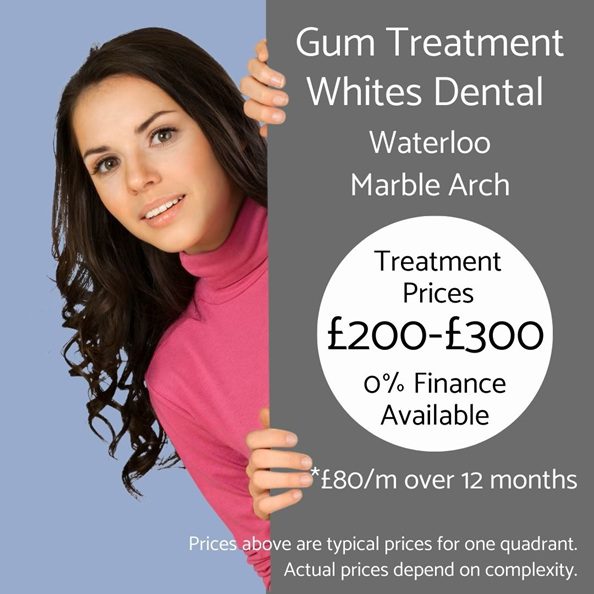
Advanced gum disease cannot be reversed. And neither can the damage it does to your teeth, gum and bone. The longer you delay treatment, the harder and more expensive it gets to treat. Gum disease has the potential to detach gums from teeth and also loosen your teeth – have it treated in it’s early stages.
How Whites Dental In London Supports Insurance Claims For Periodontal Treatments
At Whites Dental Waterloo (SE1) and Whites Dental Marble Arch (W2) we routinely provide documentation and invoicing to support claims:
- Itemised invoices that match insurer requirements.
- Pre-treatment cost estimates for pre-authorisation requests.
- Direct billing where supported by insurer (dependent on provider)
- Patient guidance on policy terms, waiting periods and likely gaps.
- We advise patients to obtain pre-authorisation where possible before undergoing costly surgery.
- Care with specialist periodontists in London for gum disease treatment.
Practical Steps To Maximise Your Insurance Coverage For Periodontal Care
Follow these steps to improve the chances of a successful claim and reduce unexpected costs.
- Check your policy wording for periodontal exclusions, limits, waiting periods
- Use pre-authorisation for major procedures — submit the treatment plan in advance.
- Keep detailed invoices and clinician notes to support claims.
- Ask your practice for itemised ICD codes or NEC descriptions if required by insurer.
- If uninsured or underinsured, ask Whites Dental about payment plans and staged treatment options.
Common Reasons Insurers Deny Periodontal Claims
Understanding denial reasons helps you avoid them.
- Treatment considered cosmetic or elective.
- Pre-existing disease prior to policy start date (often excluded)
- Failure to obtain pre-authorisation for major procedures.
- Claim exceeds annual benefit limit.
- Insufficient documentation or incorrect billing codes.
- Experimental procedures or unlisted therapies (varies by insurer).
How To Present A Successful Periodontal Claim: Documentation Checklist
To fast-track claims, present clear documentation:
- Detailed referral letter or specialist report.
- Itemised invoice with procedure codes and descriptions.
- Pre-treatment radiographs and clinical notes.
- Cost estimate for planned procedures (for pre-authorisation)
- History of routine care (evidence of attempts at conservative therapy).
Special Considerations: Employer Schemes And Corporate Plans

Corporate schemes often offer superior dental benefits:
- Employer-sponsored plans may have higher annual limits and broader periodontal cover.
- Some corporate packages include direct billing or streamlined pre-authorisation.
- If your employer offers dental benefits, contact HR for plan specifics before treatment
International / Expatriate Policies And Travel Insurance
If you have international insurance (expat or travel), coverage rules differ:
- Expat plans from providers like Cigna often have strong periodontal benefits
- Travel insurance usually covers emergency dental care, not ongoing periodontal therapy.
- Confirm local provider networks and pre-authorisation rules immediately upon moving.
Case Study Examples (Representative) For Periodontal Treatment Cases
Case A: Early Periodontitis
- Treatment: Scaling & root planing (two sessions), hygiene maintenance.
- Cost: £600.
- Insurance: Mid-tier plan covered 70% up to £1,000 annual limit.
- Result: Patient paid the excess; disease stabilised with maintenance.
Case B: Advanced Periodontitis With Bone Loss
- Treatment: Flap surgery + bone grafting for two quadrants.
- Cost: £3,800.
- Insurance: Higher-tier plan approved 50% after pre-authorisation; annual limit used up.
- Result: Patient arranged staged surgery and payment plan for balance.
When Private Periodontal Treatment Makes Financial Sense
- Quick access: avoids NHS waiting lists, which can prolong disease progression.
- Specialist-led care: better outcomes for bone regeneration and implant preservation.
- Long-term savings: early specialist intervention can avoid complex restorative costs later (implants, bridges, full dentures).
💡 Book a periodontal assessment with one of our specialists at Whites Dental in London.
FAQ — Dental Insurance For Periodontal Treatment
Will Bupa cover gum surgery?
A: Some Bupa higher-tier plans cover periodontal surgery, subject to pre-authorisation and waiting periods.
Does NHS cover perio maintenance?
A: Basic maintenance may be available under NHS, but specialist maintenance is often private.
How long do insurers take to reimburse?
A: Ranges from 48 hours (some insurers) to several weeks depending on documentation and complexity.
Does dental insurance cover periodontal treatment?
Many dental insurance plans provide some level of cover for periodontal treatment, including consultations, non-surgical gum therapy, and periodontal maintenance. The amount covered varies between providers and policies, so it is important to check your specific benefits and exclusions.
Will I need a referral for my insurance to cover periodontal treatment?
Some insurance providers require a referral from a general dentist before specialist periodontal treatment can be claimed, while others allow direct access to a periodontist. Your insurer can confirm the requirements of your policy.
Are there limits on how much periodontal treatment my insurance will pay for?
Most dental insurance plans have annual benefit limits, percentage-based reimbursements, or restrictions on certain procedures. Once these insurance limits are hit, any further cost for treatment typically needs to be paid for by the patient themselves.
Is periodontal maintenance covered after active treatment?
Many insurance policies recognise periodontal maintenance as an essential part of ongoing care and may provide coverage for regular maintenance visits. However, the frequency and level of reimbursement can vary between plans.
What if my insurance does not cover the full cost of treatment?
If your insurance only covers part of the treatment cost, many practices offer flexible payment options or dental finance plans to help spread the remaining balance into manageable monthly payments.
Related Articles
- Why Is Periodontal Treatment So Expensive?
- Is It Worth Having Periodontal Treatment?
- Dental Finance For Periodontal Disease Treatment
Author

Dr Deepa Chopra
Principal Dentist & Clinic Founder
GDC registration number: 124489
Membership of the Faculty of Dental Surgery from the Royal College of Surgeons of Edinburgh
Membership of the British Dental Association
Restorative Dentistry from Tipton
Align Invisalign profile
LinkedIn profile
Areas of Expertise: 20+ Years Dentistry Experience. General Dentistry, Cosmetic Dentistry, Restorative Dentistry, Invisalign, Composite Bonding, Veneers, Root Canals, Crowns, Dentures, Gum Disease, Hygienist Services, Emergency Dental Services & Teeth Whitening.