

Key Takeaway
Gum grafting is a periodontal surgical procedure used to treat gum recession by placing additional gum tissue over exposed tooth roots. It helps protect vulnerable teeth, reduce sensitivity, improve gum coverage and prevent further recession where possible. The most suitable option is dependent on how much tissue loss you have experienced, the thickness of your gums and also your overall periodontal health. Patients should have any active gum disease treated before surgery and maintain regular periodontal appointments afterwards.
Choosing an experienced dental professional and following a personalised aftercare plan are important for achieving predictable results. A specialist periodontal treatment clinic can assess gum recession and recommend whether gum graft surgery is appropriate.
What Is Gum Grafting And Why Do You Need It?
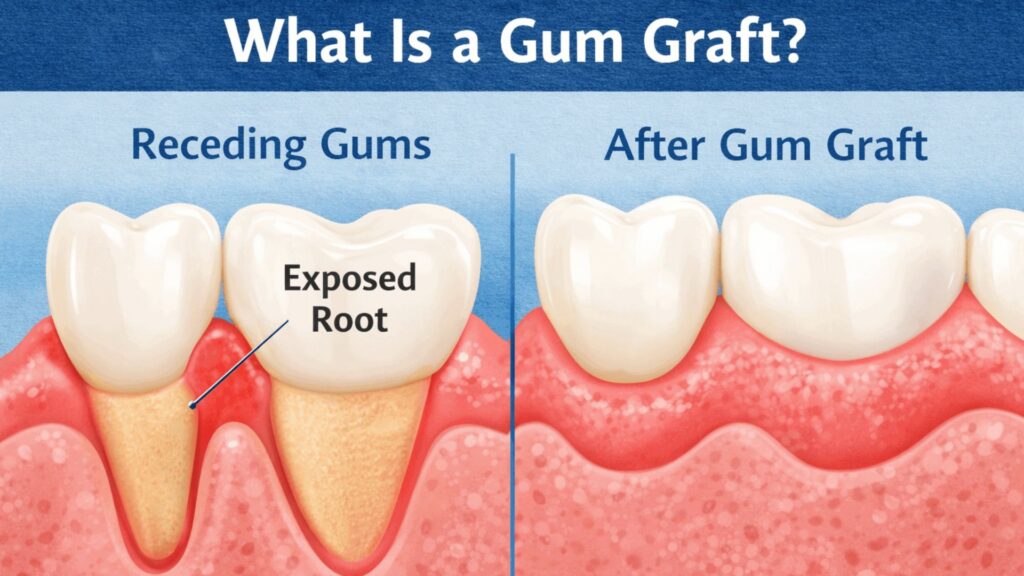
Gum graft surgery is a procedure that involves removing healthy gum tissue from other area of your mouth or using suitable donor tissue in order to cover the exposed roots of your teeth. It is primarily recommended when gum recession has left the roots vulnerable to sensitivity, damage and further tissue loss.
How Gum Recession Affects Your Teeth
When gum tissue moves away from the teeth, the underlying root surface becomes exposed. Unlike enamel, root surfaces are not protected by the same hard outer layer, making them more susceptible to sensitivity, root decay and physical wear.
Common reasons for considering gum graft surgery include:
- Progressive gum recession exposing increasing amounts of tooth root.
- Tooth sensitivity triggered by cold drinks, hot food or brushing.
- Thin gum tissue that provides insufficient protection around the teeth.
- Uneven gum margins affecting the appearance of the smile.
💡 Key tip: Gum recession should be assessed early. Gum graft surgery can restore tissue coverage, but addressing the cause of recession is equally important.
Who Is Suitable For Gum Graft Surgery?
Not everyone with receding gums requires surgery. The decision whether you are a suitable candidate is dependent on the level of gum recession you have, the health of gum tissue in the surrounding areas and whether your gum disease is under control.
Factors That Determine Suitability
A clinical examination helps establish whether gum graft surgery is likely to provide lasting benefits. Your dentist will assess gum thickness, recession depth, root exposure and the stability of the supporting tissues.
Suitable candidates commonly include patients who:
- Have noticeable gum recession with exposed tooth roots.
- Experience persistent root sensitivity despite appropriate desensitising treatment.
- Have thin gums and have a high chance of further recession.
- Have stable periodontal health following any necessary periodontal treatment.
Active gum infection should be managed before gum graft surgery is undertaken. Patients with untreated periodontitis may need initial periodontal treatment to reduce inflammation and establish healthier conditions for healing.
💡 Controlling existing gum disease before surgery improves the conditions needed for successful tissue healing.
What Are The Different Types Of Gum Graft Surgeries?
The technique used depends on the extent of recession, the thickness of existing gum tissue and the amount of root coverage required.
Connective Tissue, Free Gingival And Donor Grafts
There are three commonly used approaches to gum graft surgery:
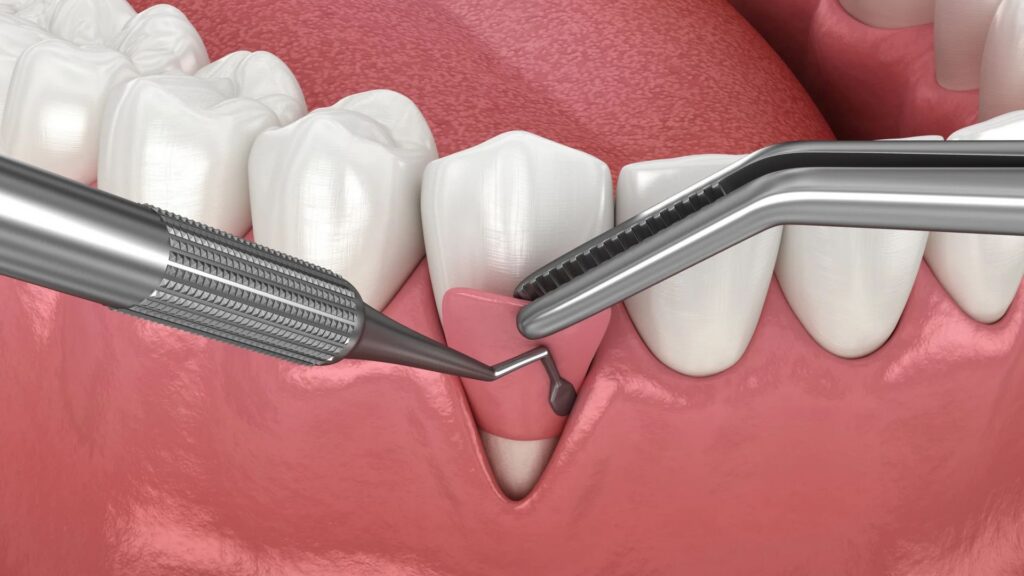
- Connective tissue graft: Tissue is taken from beneath the surface of the palate and positioned over the exposed root. This is commonly used to achieve root coverage and increase gum thickness.
- Free gingival graft: A small piece of tissue is taken from the surface of your mouth and then attached to the affected area of your gum. It is particularly useful when additional gum thickness is needed.
- Donor tissue graft: Processed donor tissue is used instead of harvesting tissue from the patient’s palate, potentially reducing discomfort at the donor site.
Your dentist will recommend the most appropriate gum graft surgery technique based on the clinical findings and treatment objectives.
💡 Key tip: Connective tissue grafts are frequently selected when the main objective is covering exposed tooth roots and increasing gum thickness.
What Happens During The Gum Grafting Procedure?
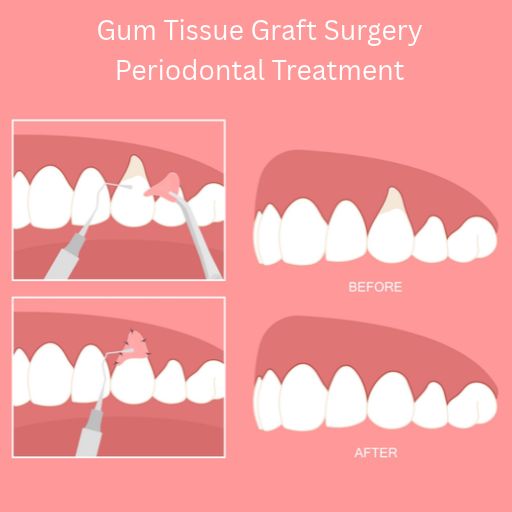
Gum graft surgery is normally performed under local anaesthetic, meaning the treatment area is numbed before the procedure begins. The exposed root surface is prepared, and the graft tissue is carefully positioned and secured using fine sutures.
The Main Stages Of Treatment
The procedure generally involves:
- Preparing the treatment area: The affected teeth and surrounding gum tissue are cleaned and prepared.
- Collecting graft tissue: Where required, a small amount of tissue is taken from the palate.
- Positioning the graft: The tissue is placed over or alongside the recession area, depending on the technique.
- Securing the tissue: Fine stitches hold the graft in position while it integrates with the surrounding gum.
The duration depends on the number of teeth being treated and the complexity of the recession. Gum graft surgery is generally completed in one appointment, although more extensive cases may require staged treatment.
💡 Avoid disturbing the graft or brushing directly over the surgical site during the initial healing period.
Recovery And Results After Gum Graft Surgery
Initial healing usually takes one to two weeks, although complete tissue maturation can take several weeks or longer. Some tenderness, swelling and temporary discomfort are expected, particularly if tissue has been taken from the palate.
What To Expect During Healing
Following gum graft surgery, patients should follow their dentist’s aftercare instructions carefully.
Important recovery recommendations include:
- Eat soft foods and avoid chewing directly on the surgical area.
- Avoid smoking and vaping, as these can interfere with healing.
- Do not brush or floss directly over the graft until advised.
- Attend follow-up appointments to monitor tissue healing and graft stability.
The amount of root coverage achieved varies according to the original recession, graft technique and individual healing response. Gum graft surgery can provide significant improvements, but complete root coverage cannot be guaranteed in every case.
Frequently Asked Questions
Is Gum Graft Surgery Painful?
Local anaesthetic prevents pain during the procedure. Some discomfort, swelling and tenderness can occur afterwards, particularly around the donor site.
How Long Does Gum Graft Surgery Take To Heal?
Initial healing generally takes one to two weeks. Complete integration and maturation of the graft can take several weeks or longer.
Does Gum Graft Surgery Stop Further Gum Recession?
It can improve the thickness of your gums and protect the exposed roots of your teeth, thus reducing risk of further gum recession. However, the underlying causes, including aggressive brushing and periodontal disease, must also be addressed.
Can Gum Graft Surgery Fail?
Yes. A graft may not integrate successfully because of infection, trauma, smoking or inadequate healing. Following aftercare instructions and maintaining good periodontal health help improve the chances of success.
Is Gum Graft Surgery Worth Having?
For patients with significant recession, sensitivity or vulnerable exposed roots, gum graft surgery can provide important protective and aesthetic benefits. Its suitability should be established through an individual periodontal assessment.
Related Articles
Author

Dr Deepa Chopra
Principal Dentist & Clinic Founder
GDC registration number: 124489
Membership of the Faculty of Dental Surgery from the Royal College of Surgeons of Edinburgh
Membership of the British Dental Association
Restorative Dentistry from Tipton
Align Invisalign profile
LinkedIn profile
Areas of Expertise: 20+ Years Dentistry Experience. General Dentistry, Cosmetic Dentistry, Restorative Dentistry, Invisalign, Composite Bonding, Veneers, Root Canals, Crowns, Dentures, Gum Disease, Hygienist Services, Emergency Dental Services & Teeth Whitening.