


Fixed Metal Braces Case Study | Marble Arch
This fixed metal braces case shows how an increased overjet can be improved with carefully planned orthodontic treatment.
The patient came to Whites Dental wanting to improve the way their upper and lower front teeth met together. Before treatment, the upper front teeth appeared to sit noticeably ahead of the lower teeth, creating an increased overjet and a less balanced bite relationship.
Treatment was planned and carried out by Dr Ravinder Varaich at our Whites Dental Marble Arch clinic using fixed metal braces. Over 17 months, the teeth were gradually guided into a more balanced position, with review appointments taking place approximately every six weeks.
Patient Concern
Increased overjet
Treatment Used
Fixed metal braces
Why This Option
Controlled bite correction and tooth alignment
Treatment Time
17 months
Reviews
Approximately every 6 weeks
Clinic
Whites Dental Marble Arch
Clinician
Dr Ravinder Varaich
Aftercare
Retainers provided after treatment
Journey summary: Dr Ravinder recommended fixed metal braces to improve the increased overjet, guide the upper and lower teeth into a better relationship and support controlled bite correction. Treatment was completed over 17 months with reviews approximately every six weeks, followed by retainers to help preserve the result.
Treatment Used
Fixed metal braces were used to improve the increased overjet, align the front teeth and create a more balanced relationship between the upper and lower teeth over 17 months.
Why metal braces? Metal braces gave Dr Ravinder strong control over the planned tooth movements. This was important for improving the bite relationship, reducing the overjet and guiding the teeth into a more balanced final position.
🧭 Jump To:
Initial Concern: Increased Overjet
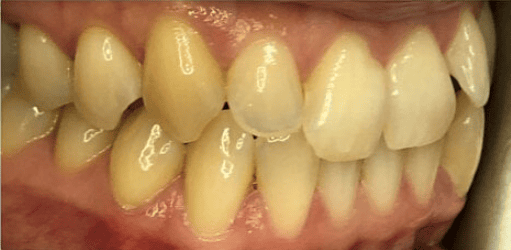
In this case, the before image shows an increased overjet. This means the upper front teeth appeared to sit noticeably ahead of the lower front teeth when viewed from the side.
An increased overjet is not only a cosmetic concern. The clinician also needs to assess how the upper and lower teeth meet, whether the bite is balanced and what type of tooth movement is needed to improve the relationship between the arches.
The main concerns visible before treatment included:
- Upper front teeth sitting ahead of the lower teeth
- Increased overjet from the side view
- Less balanced bite relationship
- Mild unevenness around the visible side teeth
- Reduced harmony between the upper and lower front teeth
Although the overjet is visible in the photograph, cases like this still need a full orthodontic assessment. The clinician needs to understand the bite, the planned tooth movements and how the final result can be maintained after treatment.
What We Could See Before Treatment
- Upper front teeth positioned ahead of the lower teeth
- Visible increased overjet from the side view
- A less balanced relationship between the upper and lower teeth
- Mild unevenness around the visible side teeth
- A bite relationship that needed controlled orthodontic movement
Treatment Process At Our Marble Arch Clinic
This treatment was carried out at Whites Dental Marble Arch. The patient first attended a consultation with Dr Ravinder Varaich, where the overjet, bite relationship, tooth alignment and smile goals were assessed.
The findings and treatment options were discussed with the patient, including why fixed braces treatment was recommended, how metal braces would be used to guide tooth movement and what the review process would involve during treatment.
The treatment journey included:
- Consultation and assessment: The patient’s overjet, bite relationship and smile concerns were assessed at Whites Dental Marble Arch.
- Treatment planning: Dr Ravinder planned the tooth movements needed to improve the relationship between the upper and lower front teeth.
- Treatment discussion: The fixed metal brace plan was discussed with the patient, including expected stages, review appointments and the importance of retainers after treatment.
- Brace fitting: Fixed metal braces were fitted to begin gradually moving the teeth into improved alignment.
- Regular reviews: The patient returned approximately every six weeks for progress checks and brace adjustments.
- Bite improvement: The braces were adjusted over time to guide the upper and lower teeth into a more balanced relationship.
- Treatment completion: After 17 months, the planned tooth movements had been completed and the braces were removed.
- Retention: Retainers were provided to help preserve the final alignment and reduce the risk of teeth gradually moving back.
Why Metal Braces Were Chosen
Metal braces are often recommended when teeth need controlled, planned movement. Because the brace is fixed to the teeth throughout treatment, it allows the clinician to guide tooth movement carefully over time.
For this type of case, fixed metal braces can help by:
- Improving the relationship between the upper and lower front teeth
- Reducing the appearance of an increased overjet
- Guiding uneven tooth positions into better alignment
- Supporting controlled bite correction
- Helping create a more balanced smile profile
In this case, metal braces were chosen because they gave Dr Ravinder strong control over the planned tooth movements. This was important for improving the overjet, guiding the visible teeth into better alignment and supporting a more balanced bite relationship.
Treatment Goals
The main aim in this case was to improve the increased overjet and create a more balanced relationship between the upper and lower teeth.
The treatment goals included:
- Improving the increased overjet
- Guiding the upper and lower teeth into a better relationship
- Improving tooth position through the visible side teeth
- Creating a more balanced bite relationship
- Supporting a stable result after treatment with retainers
Good fixed braces treatment is not only about making teeth look straighter from the front. It also involves planning how the teeth meet from the side, how the bite changes during treatment and how the final result can be maintained after braces are removed.
Outcome: Improved Overjet And A More Balanced Bite
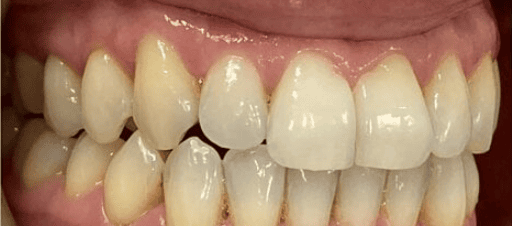
The after image shows a clear improvement in the relationship between the upper and lower teeth. The upper front teeth appear to sit in a more balanced position, the overjet has been reduced and the overall bite relationship looks more even.
Before And After: What Changed?
| Before treatment | After treatment |
| Increased overjet | Improved overjet |
| Upper teeth sitting ahead of lower teeth | More balanced upper and lower tooth relationship |
| Less balanced bite from the side | More even side bite relationship |
| Less harmonious smile profile | Cleaner and more balanced orthodontic result |
Visible improvements include:
- Improved overjet
- A more balanced relationship between the upper and lower teeth
- Better visible side tooth alignment
- A cleaner side profile bite relationship
- A more stable-looking orthodontic result
This is the type of result many patients are hoping for when they begin orthodontic treatment: teeth that meet more evenly, feel better aligned and are easier to maintain with the right aftercare.
Could Metal Braces Help Similar Overjet Concerns?
Metal braces may be suitable if your upper front teeth sit noticeably ahead of your lower teeth, or if you have visible bite alignment concerns that need controlled tooth movement.
They can be especially useful for patients who:
- Have an increased overjet
- Feel their upper and lower teeth do not meet comfortably
- Have visible bite alignment concerns
- Need controlled tooth movement
- Prefer a fixed treatment that does not need to be removed during the day
- Have been advised that fixed braces may be more suitable than removable aligners
The best treatment depends on your teeth, bite and smile goals. A braces assessment can help confirm whether metal braces, ceramic braces or another orthodontic option may be suitable for your case.
Before And After Comparison
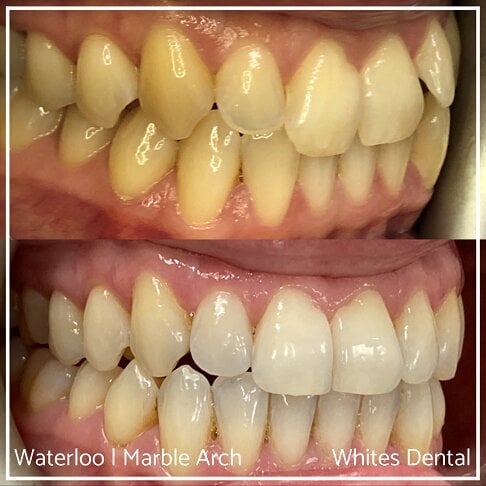
For patients who want to see the full change together, the original before and after comparison below shows the starting position and final result in one image.
Please note: Every orthodontic case is different. Treatment suitability, treatment time and final results depend on your teeth, bite, oral health and the type of movement required. A braces assessment is needed before advice can be given for your own case.
Considering Metal Braces In London?
If your upper teeth sit forward, or you have concerns about your bite alignment, a braces assessment can help show what treatment may be suitable.
Whites Dental provides metal braces treatment and fixed braces treatment from our private dental clinic in Marble Arch and Paddington W2. Our braces in London team can assess your teeth, explain your options and help you understand what may be possible.
- ✅ Metal braces for overjet and bite alignment concerns
- ✅ Fixed brace treatment carried out at Marble Arch in Central London
- ✅ Regular review appointments during treatment
- ✅ Retainers provided to help preserve results after treatment
FAQs
Can metal braces improve an increased overjet?
Yes, metal braces can often be used to improve an increased overjet by gradually guiding the upper and lower teeth into a more balanced relationship. Suitability depends on the starting bite, tooth position and type of movement required.
What is an overjet?
An overjet is the horizontal distance between the upper front teeth and lower front teeth. When the upper front teeth sit noticeably ahead of the lower teeth, this may be described as an increased overjet.
Can fixed braces help if my upper teeth stick out?
Fixed braces may help if the upper front teeth sit forward, depending on the cause of the overjet and the type of tooth movement required. A braces assessment is needed to understand the bite, tooth position and most suitable treatment options.
How long did this metal braces treatment take?
This fixed metal braces treatment was completed over 17 months, with review appointments taking place approximately every six weeks during the treatment journey.
How often are metal braces reviewed?
Metal braces are usually reviewed regularly during treatment. In this case, the patient attended review appointments approximately every six weeks so Dr Ravinder could check progress and make adjustments.
Do you need retainers after metal braces?
Yes. Retainers are an important part of orthodontic aftercare. After the braces are removed, retainers help preserve the final tooth position and reduce the risk of teeth gradually moving back.
Why were metal braces chosen for this case?
Metal braces were chosen because they gave Dr Ravinder strong control over the planned tooth movements. This was important for improving the overjet and guiding the upper and lower teeth into a more balanced position.
Was this treatment carried out at Marble Arch?
Yes, this fixed metal braces case was treated by Dr Ravinder Varaich at Whites Dental Marble Arch in Central London.
Author

Dr Deepa Chopra
Principal Dentist & Clinic Founder
GDC registration number: 124489
Membership of the Faculty of Dental Surgery from the Royal College of Surgeons of Edinburgh
Membership of the British Dental Association
Restorative Dentistry from Tipton
Align Invisalign profile
LinkedIn profile
Areas of Expertise: 20+ Years Dentistry Experience. General Dentistry, Cosmetic Dentistry, Restorative Dentistry, Invisalign, Composite Bonding, Veneers, Root Canals, Crowns, Dentures, Gum Disease, Hygienist Services, Emergency Dental Services & Teeth Whitening.