

Choosing veneers is not only about improving the colour or straightness of your teeth; it’s also about enhancing the harmony of your entire face. The shape, length, width, and contour of your veneers play a powerful role in how your facial features appear. When veneers are designed to complement your natural face shape, the result is a more balanced, natural-looking, and aesthetically pleasing smile. When they are not matched correctly, veneers can look too big, too square, too round, or simply out of place.
Matching veneers to your face shape involves a combination of dental artistry, smile design, aesthetic knowledge, and digital planning. Dentists consider the symmetry of your features, your jawline, the proportions of your lips and even details such as expression lines. Whether you choose porcelain veneers, composite veneers, Lumineers or minimal-prep veneers, the design must be tailored specifically to your unique facial structure.
💡 At Whites Dental, our veneers dentists are some of the most experienced in London. Book a consultation with us.
Key Takeaway
The most natural-looking veneers are designed by matching their shape, size and proportions to your individual face shape.
- Face shapes such as oval, round, square, heart, and diamond each benefit from specific veneer designs.
- Tooth length, width, and contour influence facial balance and symmetry.
- Porcelain, composite and minimal-prep veneers all allow custom shaping for different face types.
- Digital smile design helps simulate results before treatment begins.
- Choosing a skilled cosmetic dentist ensures veneers enhance both your smile and overall facial appearance.
Why Face Shape Matters When Designing Veneers
Your face shape is one of the most important elements in achieving a harmonious, natural-looking smile. Veneers should blend seamlessly with your overall appearance, meaning they need to be shaped in a way that enhances your face rather than overpowering it. A mismatch can draw attention for the wrong reasons, making teeth appear artificial or out of proportion.
Dentists assess several facial characteristics when planning your veneer design. They look at your jawline, cheekbone structure, proportions between facial thirds, and how your lips frame your smile. These considerations influence the ideal tooth shape, length, and width. Understanding the relationship between facial structure and dental aesthetics helps you appreciate how customised veneer design transforms your smile.
- Certain veneer shapes soften strong facial features, creating balance.
- More angular veneer designs can add definition to softer face shapes.
- Proportional veneers help maintain visual symmetry across your face;
- Lip movement during speech and smiling affects how veneers appear.
- The dentist evaluates your face at rest and in motion for accurate planning.
💡 Book a free veneers consultation with our dentist in London.
Understanding Different Face Shapes And Smile Design
Different people have different facial structures, and each category benefits from a unique veneer design approach. Knowing your face shape helps you understand why certain tooth styles suit you better than others.
Face shapes typically fall into one of five main categories: oval, round, square, heart-shaped, and diamond-shaped. Each shape has distinct features, and veneers must complement those features to achieve a natural effect. A dentist determines your face shape during consultation, using measurements and visual assessment to ensure accuracy.
- Oval faces typically suit a wide range of veneer designs.
- Round faces benefit from veneers that create vertical emphasis
- Square faces pair well with softer, rounder tooth edges
- Heart-shaped faces often require balancing the width of the smile.
- Diamond-shaped faces look best with veneers that soften angularity.
Veneers For Oval Face Shapes

Patients with oval face shapes have balanced proportions and gently rounded contours, making them ideal candidates for a variety of veneer styles. Their facial symmetry provides flexibility when designing tooth aesthetics, which is why most veneer shapes complement oval faces well.
Dentists may recommend maintaining the natural oval softness by choosing veneers with balanced proportions, gentle contours, and medium length. Some individuals prefer a bolder, slightly wider smile to add character, while others choose a softer design for a more elegant look. Oval faces respond well to subtle changes, meaning even minor adjustments to veneer shape can make a big difference in the overall smile.
- Oval faces suit rounded, square, or natural tooth shapes
- Medium-length veneers help maintain proportional balance.
- Veneers with soft corners enhance natural symmetry
- More squared designs can add definition if desired.
- Custom veneer contours help highlight cheekbones and lips.
Veneers For Round Face Shapes
Round faces tend to have softer lines, fuller cheeks, and near-equal width and height. Veneers for round faces often incorporate shapes that create the illusion of additional length, helping elongate the face and improve definition. This approach adds a slimming and lengthening effect, giving the smile a more proportional appearance.
Dentists avoid overly rounded veneers for round faces because they can exaggerate the roundness. Instead, longer, slightly more angular veneers are ideal. These designs add contour and shape without looking harsh or artificial. Patients with round faces often see dramatic improvements with the right veneer proportions.
- Longer veneers help elongate facial appearance.
- Slightly square edges add structure and definition
- Slimmer tooth designs reduce the perception of width.
- Angular veneers create a balanced contrast with soft facial curves.
- Natural translucency enhances realism while adding dimension.
Veneers For Square Face Shapes
Square faces feature strong jawlines, defined angles, and broad foreheads. When designing veneers for square face shapes, the goal is usually to soften sharp lines and create a more fluid appearance. Softer veneer contours balance the naturally angular bone structure, helping create a harmonious facial aesthetic.
Rounded or gently tapered veneer shapes work beautifully for square face shapes. Avoiding sharp or extremely square veneer edges prevents the smile from appearing too harsh. Veneers that introduce subtle curvature can soften the overall look and enhance natural balance.
- Rounded veneer shapes help soften angular facial features.
- Slightly tapered teeth add elegance and proportional balance.
- Curved incisal edges complement strong jawlines
- Medium-width veneers prevent the smile from appearing boxy
- Natural shading enhances depth and realism
Veneers For Heart-Shaped Faces
faces that are heart shaped are usually characterised by foreheads that are wider and chins that are typically narrower than usual. Veneers for this face shape aim to balance the lower portion of the face by creating a smile that adds width and proportion. This helps offset the natural tapering of the chin area.
Dentists often design veneers with gentle curvature and moderate width to complement the facial structure. Overly narrow veneers can exaggerate the point of the chin, while overly wide veneers may overwhelm the upper face. Balance is key.
- Moderately wide veneers help balance facial tapering.
- Rounded contours soften the sharper chin point
- Medium-length veneers maintain proportional harmony;
- Avoiding excessive width keeps the smile natural.
- Veneers enhance symmetry with a balanced smile line.
Veneers For Diamond-Shaped Faces
Diamond-shaped faces have prominent cheekbones and a narrower forehead and chin. Veneers designed for diamond-shaped faces focus on softening angular features and adding width to specific areas to create greater facial balance.
A dentist may recommend veneers with more rounded or oval shapes to complement this facial structure. Subtle curvature in the veneers helps reduce emphasis on sharper cheekbone angles. Balanced proportions contribute to a softer and more harmonious appearance.
- Rounded veneer shapes soften prominent cheekbones.
- Medium-width veneers maintain facial proportion.
- Slightly curved edges enhance natural contours.
- Avoiding overly angular veneers prevents harshness.
- Veneers help balance upper and lower facial thirds
How Tooth Length And Width Affect Facial Aesthetics
Matching veneers to face shape involves understanding the role of tooth length and width. These proportions influence how your smile interacts with your facial features. Subtle changes can have a significant visual impact, especially when enhancing symmetry and balance.
Longer teeth create vertical emphasis, while wider teeth increase the horizontal presence of the smile. Dentists carefully evaluate how these proportions align with your face before finalising veneer design. Choosing the ideal measurements creates a smile that blends seamlessly into your natural look.
- Longer veneers suit shorter or rounder face shapes.
- Shorter veneers complement longer or more angular faces.
- Wider veneers can broaden the smile for narrow faces
- Slimmer veneers help balance wider face shapes.
- Proportionally balanced veneers achieve natural aesthetics.
Matching Veneer Shape To Lip Shape
Lips often play a very important part in framing your beautiful smile. Veneers must complement the natural movement, fullness, and curvature of your lips to ensure harmony. The right veneer shape enhances not only your teeth but also the way your lips present them.
Dentists assess how much tooth shows when the lips are at rest and during speech. This determines the ideal contour for your veneers. Matching veneer shape to lip shape maintains natural expression and prevents the smile from appearing forced or unnatural.
- Fuller lips suit slightly longer veneers.
- Thin lips benefit from softer tooth contours;
- Curved veneer edges complement naturally curved lip lines.
- Symmetrical veneer shapes enhance lip balance.
- Proportions ensure smooth transitions during movement.
Choosing Veneer Types For Your Face Shape
Different veneer materials offer different aesthetic possibilities. Selecting the right material helps achieve the most natural results while complementing your face shape. Whether you choose porcelain, composite, or minimal-prep veneers, each has unique characteristics.
Porcelain veneers offer the most natural translucency and durability, making them ideal for detailed smile design. Composite veneers provide versatility and repairability at a lower cost. Minimal-prep veneers such as Lumineers suit patients seeking conservative treatment with ultra-thin aesthetics.
- Porcelain veneers offer natural shine and translucency
- Composite veneers allow quick adjustments and repairs.
- Minimal-prep veneers preserve enamel while achieving aesthetic goals.
- Lumineers suit patients seeking thin, lightweight veneer options.
- Material choice influences how veneers complement facial structure;
How Dentists Use Digital Smile Design For Face Shape Matching
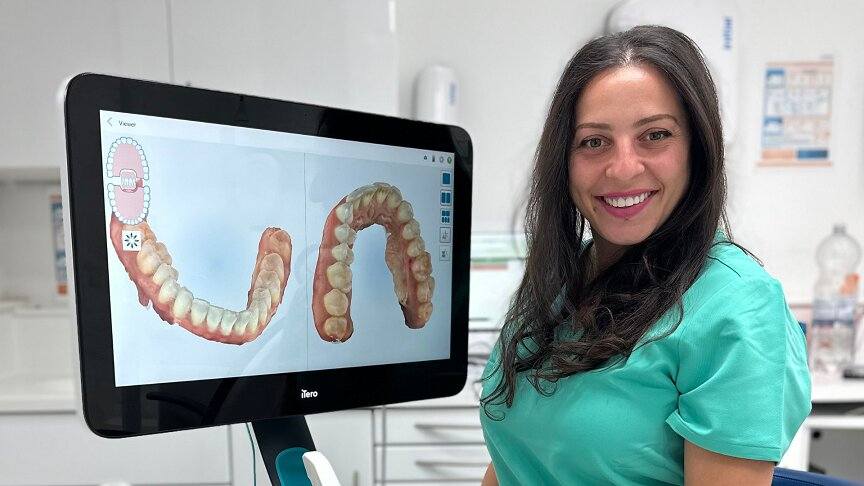
Modern veneer planning often includes Digital Smile Design (DSD). This advanced technology uses photographs, facial scans, and digital simulation to visualise how veneers will appear on your face before treatment begins. The software helps align veneer aesthetics with facial proportions for optimal results.
DSD allows dentists to preview different veneer shapes, lengths, and shades to find the most natural fit for your face. This enhances accuracy, improves communication with the patient, and ensures predictable outcomes. By marrying technology with artistry, dentists achieve results that enhance facial harmony.
- DSD simulates different veneer shapes on your face
- Digital measurements improve precision and symmetry
- Visual previews help patients choose their ideal style.
- 3D planning enhances treatment predictability.
- Facial mapping ensures veneers complement your natural contours.
Common Mistakes To Avoid When Matching Veneers To Face Shape
While veneer design is highly customisable, common mistakes can lead to unnatural results. Avoiding these issues ensures your veneers enhance your face instead of creating imbalance. Some mistakes occur when veneers are chosen based solely on colour or trend rather than individual facial structure.
Patients should work with an experienced cosmetic dentist who understands the principles of facial harmony. Choosing veneers that look great in isolation may not guarantee a natural appearance once placed. Ensuring the design matches your face shape prevents dissatisfaction.
- Choosing veneers that are too long for your face shape
- Selecting overly square veneers that overpower soft facial features.
- Opting for veneers that are too white or opaque.
- Failing to consider lip movement and smile dynamics.
- Ignoring the proportional relationship between teeth and face.
Why Choosing The Right Cosmetic Dentist Matters
Selecting a cosmetic dentist with experience in face-driven veneer design is essential for achieving natural results. The ability to assess facial proportions, lip dynamics and dental alignment requires both technical skill and artistic insight.
Patients should review before-and-after photos, ask about veneer materials, and ensure the dentist uses advanced planning tools. The dentist’s aesthetic vision plays a crucial role in ensuring veneers enhance the entire face, not just the smile.
- Experienced dentists consider facial symmetry and balance.
- Advanced planning leads to natural-looking results
- Skilled dentists customise veneers for each face shape
- Consultations help define patient goals and expectations.
- Aesthetic expertise improves long-term satisfaction.
Veneers At Whites Dental In London
Whites Dental provides advanced cosmetic dentistry tailored to each patient’s facial structure and aesthetic goals. With highly personalised veneer design, the team ensures veneers are matched to your face shape, lip dynamics and smile proportions for natural results.
- Customised veneer designs tailored to your face shape.
- Advanced digital smile design for predictable outcomes
- Full range of veneer types including porcelain, composite, and minimal-prep.
- Experienced cosmetic dentists with strong aesthetic expertise.
- Convenient London locations for consultations and treatment.
Patients can visit either of the two conveniently located veneers clinics in Central London :
Whites Dental Waterloo
172 Blackfriars Road
London SE1 8ER
020 8616 0590
Whites Dental Marble Arch (W2)
52B Kendal Street
St George’s Fields
London W2 2BP
020 3576 2325