

The Quick Answer
Pros: Composite bonding offers a fast, minimally invasive way to improve specific cosmetic issues like chips, gaps, and uneven tooth edges by reshaping teeth with resin in a single visit.
Cons: It is less durable than porcelain alternatives and can stain or wear over time. Understanding composite bonding helps you decide whether its quick cosmetic improvements outweigh its need for ongoing maintenance and care.
Pros Of Composite Bonding

Composite bonding offers a minimally invasive way to improve your smile by repairing chipped teeth, closing small gaps and reshaping uneven edges without usually removing healthy enamel. The treatment is generally completed in a single appointment, costs less than porcelain veneers and allows the dentist to make precise adjustments to the shape and colour of your teeth. Composite resin can also be repaired or modified if needed, making it a flexible option for patients seeking noticeable cosmetic improvements without extensive dental treatment.
| Advantage | How Composite Bonding Benefits You |
|---|---|
| Minimal Tooth Preparation | Composite resin can usually be applied directly to the tooth without removing significant amounts of healthy enamel. This makes bonding a conservative alternative to cosmetic treatments that require more extensive tooth preparation. |
| Corrects Multiple Cosmetic Issues | Bonding can repair chipped corners, close small gaps, reshape uneven teeth and improve the appearance of worn edges. Several minor imperfections can often be addressed during the same appointment. |
| Quick Treatment | Many composite bonding procedures can be completed in one visit, without waiting for restorations to be manufactured in a dental laboratory. This is convenient for patients who want to improve their smile without a lengthy treatment schedule. |
| Natural-Looking Results | The dentist selects colour shade for the resin to match with the colour of your natural teeth and carefully shapes the resin to enhance your smile. When properly finished and polished, the bonding can blend with neighbouring teeth without looking bulky or artificial. |
| More Affordable Cosmetic Treatment | Composite bonding generally costs less than porcelain veneers, making it an accessible option for correcting cosmetic imperfections. The overall price depends on the number of teeth treated and the amount of reshaping required. |
| Repairable Material | If a small section chips or wears away, a dentist can often repair the affected area by adding fresh composite resin. This may avoid replacing the entire restoration when the remaining bonding and underlying tooth are healthy. |
| Customisable Tooth Shape | The resin can be sculpted to adjust tooth length, width, contours and symmetry. This allows the dentist to tailor individual teeth to your facial features and the proportions of your existing smile. |
| Potentially Reversible Approach | When bonding is added without removing natural enamel, the treatment may be reversible in the sense that the resin can potentially be removed while preserving the original tooth structure. Reversibility is not guaranteed, as removal can affect enamel and some cases require tooth reshaping. |
| Immediate Cosmetic Improvement | The dentist shapes, hardens and polishes the resin during treatment, so the change in tooth appearance is usually visible immediately. There is generally no need to wait for a laboratory-made restoration before seeing the result. |
| Suitable For Selected Individual Teeth | Bonding can be performed either on a single tooth or multiple teeth, depending on what you need. This makes it useful for repairing a single chipped incisor as well as making coordinated cosmetic improvements across the front teeth. |
| No Laboratory Fabrication Required | The dentist builds and shapes the composite directly on the tooth rather than relying on a laboratory to produce a separate veneer. This can simplify the treatment process and reduce the number of appointments required. |
| Easy Maintenance | Bonded teeth can generally be cleaned using normal brushing and flossing routines. Regular dental reviews and professional polishing, when appropriate, help maintain the resin’s surface finish and identify wear or staining early. |
Cons Of Composite Bonding
Composite bonding is less durable than porcelain veneers and typically lasts around 5–7 years before repair or replacement may be needed. The resin is more susceptible to staining from coffee, tea, red wine and smoking, and it can chip or wear down under excessive biting pressure or teeth grinding. Bonding also requires periodic maintenance and polishing to preserve its appearance, while extensive damage may mean replacing part or all of the restoration. It is not suitable for every cosmetic concern, particularly where teeth have significant structural damage, severe misalignment or underlying dental problems that need treatment first.
| Disadvantage | What It Means For You |
|---|---|
| Shorter Lifespan | Composite bonding commonly lasts around 5–7 years, although some restorations last longer with appropriate care. You may need repairs, resurfacing or replacement sooner than you would with a well-maintained porcelain veneer. |
| Prone To Chipping | The resin can fracture when exposed to excessive pressure from biting hard foods, nail-biting or teeth grinding. Damage is particularly relevant around front-tooth edges, where the bonded material may bear considerable force. |
| Susceptible To Staining | Composite resin can pick up surface stains from coffee, tea, red wine, tobacco and strongly coloured foods. Frequent exposure may gradually make the bonding look darker or less consistent with your natural teeth. |
| Requires Ongoing Polishing | The resin’s original shine can diminish through everyday wear, leaving the surface looking duller than surrounding enamel. Professional polishing may restore some of its lustre, but deeper staining and deterioration may require additional treatment. |
| Less Resistant To Wear | Repeated chewing and contact between opposing teeth can gradually change the shape and finish of the resin. Patients who grind or clench their teeth may experience faster deterioration and could benefit from a dentist-assessed protective night guard. |
| Cannot Be Whitened Like Natural Teeth | Conventional teeth-whitening treatments do not reliably lighten existing composite resin. If your natural teeth become lighter after whitening, the bonded areas may no longer match and could need replacement to achieve a consistent shade. |
| May Look Less Translucent | Although composite can produce attractive results, matching the depth and light-reflecting qualities of natural enamel can be more challenging in some cases. Porcelain may offer a more lifelike finish for extensive cosmetic changes, depending on the material and treatment plan. |
| Not Suitable For Every Tooth | Large areas of damage, substantial decay, severe misalignment or an unfavourable bite may make bonding unsuitable or less predictable. Your dentist may recommend treating existing dental problems or considering another restoration before proceeding with cosmetic treatment. |
| Repairs May Be Needed | Small chips can often be repaired by adding more resin, but repeated repairs may affect the appearance and contour of the restoration. More extensive damage or changes in colour may eventually make replacement the better option. |
| Results Depend On The Dentist’s Technique | Achieving an even shape, natural proportions and smooth margins requires careful placement and finishing. Poorly contoured bonding can look bulky, feel uneven or create areas where plaque accumulates more easily. |
| Not Always Completely Reversible | Bonding is often conservative, but removing the resin can sometimes affect the underlying enamel, particularly if tooth reshaping was performed initially. It is therefore important to discuss future removal, repairs and replacement before treatment begins. |
| Ongoing Costs Over Time | The initial treatment is generally more affordable than porcelain veneers, but polishing, repairs and eventual replacement can add to the long-term cost. The total expense depends on how many teeth are treated, the condition of the bonding and how well it lasts. |
💡 Key Tip: Bonding is a cosmetic repair solution, not a heavy-duty structural restoration.
When Composite Bonding Is Most Useful
Composite bonding is not designed for every dental issue. It is most effective when the teeth are healthy but have small visible flaws affecting appearance.
It is often used to refine rather than replace natural tooth structure.
Best Use Cases
- A single chipped front tooth after minor trauma
- Small gaps that do not require orthodontics
- Slightly uneven front teeth affecting smile line
- Worn edges from grinding or daily use
- Teeth that look too short compared to neighbours.
This is where cosmetic composite bonding becomes a highly practical cosmetic solution.
💡 Key Tip: If your teeth are structurally healthy, bonding can often correct appearance without complex treatment.
What Composite Bonding Results Look Like In Real Situations
Composite bonding is highly dependent on detail work. The outcome depends on how well the resin is shaped to match surrounding teeth in size, contour, and texture.
When done well, the difference is noticeable but natural rather than obvious.
Typical Outcomes
- Chipped edges appear restored and smooth
- Small gaps between front teeth are visually closed
- Uneven teeth look more aligned in length
- Smile appears more symmetrical overall
- Colour blends closely with natural enamel
This is why dental bonding is often chosen for subtle but high-impact smile improvements.
💡 Key Tip: The goal is not to “replace” teeth but to make imperfections visually disappear.
Is Composite Bonding The Right Choice For Your Situation?
Whether composite bonding is right for you depends on the type of problem you want to fix. It is designed for cosmetic correction, not major dental reconstruction. It works best when expectations match what the treatment can realistically achieve.
It Is A Good Choice If You Want
- A fast cosmetic improvement in one visit
- A non-invasive treatment without drilling
- Correction of small chips or gaps
- A reversible cosmetic option
- A lower-cost alternative to veneers.
If your concerns are mainly visual and limited to front teeth, composite bonding treatment is often a strong match.
💡 Key Tip: The best results come when bonding is used for small, precise improvements rather than full transformations.
Composite Bonding At Whites Dental In London
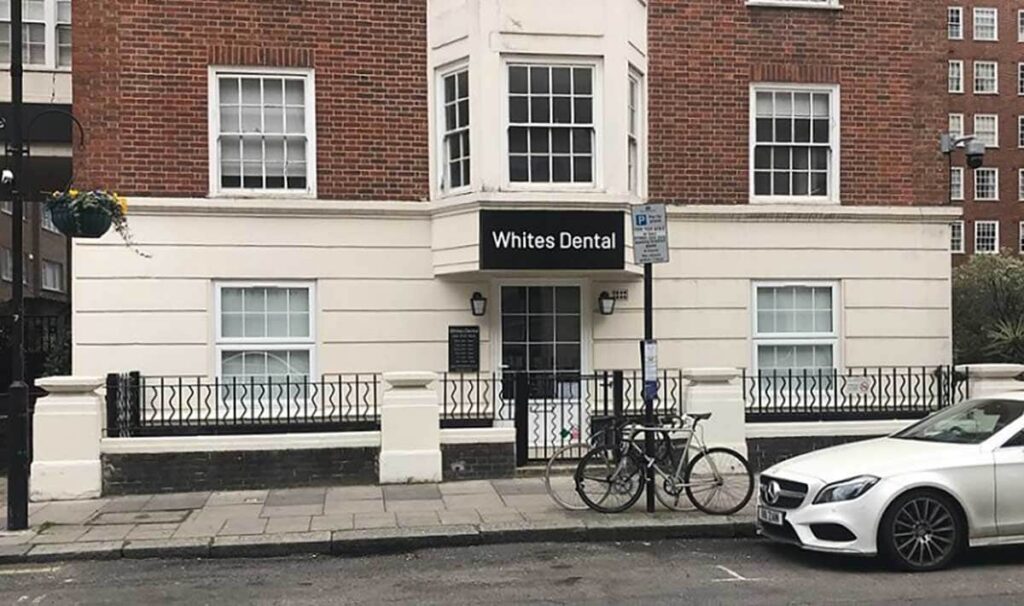
At Whites Dental, composite bonding is used specifically to correct small cosmetic imperfections such as chips, uneven edges, and minor gaps while maintaining a natural tooth appearance. Every case is carefully designed around the patient’s smile shape so that results look balanced rather than “added on.”
With clinics in Waterloo and Marble Arch, patients can access tailored treatment that focuses on subtle refinement rather than over-enhancement. Our approach to composite bonding prioritises precision, natural aesthetics, and long-term smile harmony.
💡 Key Tip: The most successful bonding results are those that cannot be easily noticed—only the improvement can be seen.
Frequently Asked Questions
What Problems Does Composite Bonding Fix Best?
It is best for chips, small gaps, uneven edges, and minor cosmetic imperfections.
How Long Will Composite Bonding Last On My Visible Front Teeth?
It typically lasts several years depending on care, diet, and habits.
Can Composite Bonding Fix Big Dental Problems?
No, it is mainly for minor cosmetic issues rather than major structural damage.
Does Composite Bonding Look Noticeable?
When done well, it blends naturally and is not easily visible.
Will Composite Bonding Change Colour Over Time?
Yes, it can stain gradually without proper care and maintenance.
Is Composite Bonding Worth It?
It depends on your goals—ideal for quick cosmetic fixes, less so for long-term heavy durability.