
How Long Does Composite Bonding Last
Composite bonding usually lasts 4-6 years with good ongoing maintenance and oral health.
How Long Does Composite Bonding Last?


How Long Does Composite Bonding Last?
Composite bonding lasts 4-6 years with good oral hygiene and maintenance
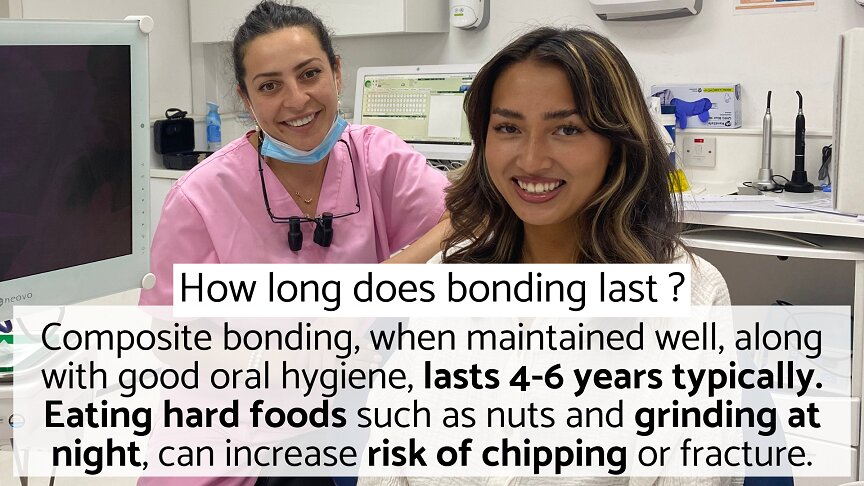
Composite bonding, when maintained well, along with good oral hygiene, lasts 4-6 years typically. We recommend having it re-polished every 6 months so it keeps looking fresh. We also recommend visiting the dentist and hygienist every 6 months to reduce risk of decay and gum issues. Under these circumstances, we have seen cases where composite bonding could last even longer.
In essence, how long your bonding lasts will be largely dependent on you. Correct diagnosis, talented hands and a great relationship with your dentist will help your composites last longer. Composite resin, the material used for composite bonding in London, is not unbreakable and will be subject to wear and tear. If your lifestyle causes you to eat hard food items such as nuts, the risk of chipping and fracture increase. Grinding at night can also increase risk of chipping and cracks.
If you’re interested in what is composite bonding treatment in Central London or want to have composite or dental bonding in London, call our friendly reception team today to book a free video consultation with our cosmetic dentist.
Most Common Issues With Composite Bonding That Patients Face Over Time
Chipping And Cracking
Composite bonding can chip or crack when exposed to excessive biting pressure, teeth grinding or hard foods. Minor damage can often be repaired without replacing the entire restoration.
Bonding Falling Off
Bonding can partially or completely detach if the bond between the resin and tooth weakens. This may happen because of biting forces, moisture contamination during application or inadequate bonding technique.
Discolouration And Staining
Composite resin can absorb stains from coffee, tea, red wine and smoking over time. Unlike natural teeth, composite resin cannot be whitened with conventional whitening. However, professional polishing can improve appearance.
Rough Or Uneven Surfaces
Bonding can develop rough edges or an uneven texture because of wear, damage or inadequate finishing. These areas may feel uncomfortable against the tongue and can accumulate plaque more easily if not properly maintained.
What Causes Composite Bonding To Not Last Long?
Teeth Grinding And Clenching
Grinding or clenching your teeth places excessive pressure on composite resin, increasing the risk of chips, cracks and premature wear. Without protection, such as a dentist-prescribed night guard, repeated pressure can shorten the lifespan of the bonding.
Poor Bite Alignment
An uneven bite can concentrate pressure on bonded teeth, particularly the front teeth, causing the material to chip or break. Composite bonding may be less durable when existing bite problems are not assessed before treatment.
Biting Hard Foods And Objects
Biting fingernails, chewing ice or using your teeth to open packaging can damage the composite surface. Frequently biting hard foods with bonded front teeth can also cause fractures or sections of the material to break away.
Poor Oral Hygiene
Inadequate brushing and interdental cleaning can lead to tooth decay or gum disease around bonded teeth. Decay near the edges of the restoration can compromise the underlying tooth and may require the bonding to be repaired or replaced.
Smoking And Frequent Exposure To Staining Drinks
Smoking and regularly consuming coffee, tea or red wine can stain composite resin, making the bonding look discoloured before it physically fails. Although staining does not necessarily mean the bonding needs replacing, it can reduce its aesthetic lifespan.
Incorrect Application Or Unsuitable Case Selection
Composite bonding may fail prematurely if the tooth surface is not prepared properly, moisture contaminates the bonding process, or the material is not applied and cured correctly. Bonding may also be unsuitable without further assessment when teeth have significant structural damage, active decay or excessive bite forces.
How Can You Make Composite Bonding Last Longer?
Maintain Good Oral Hygiene
Brush twice daily with a soft-bristled toothbrush and fluoride toothpaste, and clean between your teeth every day to prevent decay around the bonded areas. Composite bonding does not protect the underlying tooth from cavities, which can compromise the restoration.
Avoid Biting Hard Objects
Avoid biting fingernails, chewing pens, or using your bonded teeth to open packaging, as these habits can cause the composite to chip or crack. Be particularly careful with hard foods if you have bonding on your front teeth.
Limit Staining Foods And Drinks
Coffee, tea, red wine and smoking can stain composite resin over time, affecting the appearance of your bonding. Rinsing your mouth with water after consuming staining drinks and maintaining regular dental hygiene can help keep the surface looking cleaner.
Attend Regular Dental Check-Ups
Regular dental check-ups allow your dentist to identify early signs of wear, small chips or gaps around the bonding before they become more significant problems. Professional polishing can help restore the surface shine and improve the appearance of composite bonding, extending the time it remains aesthetically pleasing.
How Often Does Composite Bonding Need Replacing?
Average Lifespan Of Composite Bonding
Composite bonding typically lasts around 5–7 years, although well-maintained bonding can last longer depending on the quality of the treatment, bite pressure and daily habits. Replacement is not automatically necessary at the end of this period, as some restorations only require polishing or minor repairs.
Signs That Composite Bonding Needs Replacing
Bonding may need replacement if it develops extensive cracks, repeatedly chips, becomes loose or suffers significant discolouration that cannot be improved through polishing. Your dentist can assess whether repairing the existing composite is sufficient or whether removing and replacing it is the better option.
Can Composite Bonding Be Repaired Instead Of Replaced?
Minor chips, rough edges and localised damage can often be repaired by adding or reshaping composite resin, avoiding the need to replace the entire restoration. Replacement may be necessary when the damage is extensive, the bond has significantly deteriorated or the underlying tooth has developed decay.
How To Extend The Time Between Replacements
Good oral hygiene, regular dental check-ups and avoiding habits such as nail-biting and chewing ice can help composite bonding last longer. If you grind or clench your teeth, your dentist may recommend a night guard to reduce pressure and minimise the risk of premature damage.
Does Composite Bonding Last Longer On Some Teeth Than Others?
Front Teeth Vs Back Teeth
Composite bonding on front teeth can last well because these teeth generally experience less chewing pressure than back teeth. However, front teeth are more vulnerable to chipping if you bite hard foods directly or use them to tear packaging.
Upper Teeth Vs Lower Teeth
Bonding on upper and lower teeth can experience different levels of pressure depending on how your teeth meet when you bite. If the bonded surfaces make excessive contact during chewing or grinding, the increased stress can cause premature wear or fractures.
Incisors Vs Canines
Incisors are used for biting and can chip if excessive force is placed on their edges, particularly when biting hard foods. Canines help guide the movement of the jaw, so bonding on these teeth may experience additional friction and pressure during side-to-side movements.
What Determines How Long Bonding Lasts On Each Tooth?
The position of the tooth matters, but bite alignment, grinding habits, the size of the bonded area and the quality of application also influence longevity. Your dentist can assess these factors before treatment to determine where bonding is most likely to experience wear or damage.
Composite Bonding Lifespan Compared With Porcelain Veneers
How Long Does Each Treatment Last?
Composite bonding typically lasts around 5–7 years, although good maintenance can help it last longer. Porcelain veneers generally last around 10–15 years or more, making them a longer-lasting option for patients seeking a durable cosmetic improvement.
Durability And Resistance To Damage
Composite resin is more prone to chipping, surface wear and staining, meaning it may require more frequent polishing and repairs. Porcelain veneers are more resistant to discolouration and maintain their appearance well over time, although they can still chip or fracture under excessive pressure.
Maintenance And Replacement
Composite bonding can often be repaired by adding or reshaping resin, allowing minor damage to be corrected without replacing the entire restoration. Damaged porcelain veneers may require replacement, and the treatment can involve removing a small amount of natural enamel during the initial preparation.
Which Option Offers Better Long-Term Value?
Composite bonding usually has a lower initial cost and is often suitable for patients seeking a more affordable, minimally invasive cosmetic treatment. Porcelain veneers have a higher upfront cost but may offer a longer lifespan and greater stain resistance, so the right choice depends on your budget, aesthetic goals and long-term expectations.
Comparison Table: Composite Bonding Vs Porcelain Veneers
| Feature | Composite Bonding | Porcelain Veneers |
|---|---|---|
| Lifespan | Typically 5–7 years | Typically 10–15 years or longer |
| Durability | More prone to chipping, cracking and wear | More durable but can chip or fracture |
| Stain Resistance | More susceptible to staining and discolouration | Highly resistant to staining |
| Repairs | Minor damage can often be repaired with composite resin | Damaged veneers may require replacement |
| Tooth Preparation | Usually minimal or no enamel removal | Often requires some enamel removal |
| Initial Cost | Generally lower | Generally higher |
| Maintenance | May require periodic polishing and repairs | Requires regular dental check-ups and good oral hygiene |
Repairing & Replacing Your Composite Bonding
Composite bonding is very unusual in the sense that it is incredibly easy to repair whenever any damage occurs to the composite bonding itself. While damage to the teeth around it is not so easily restored the composite bonding itself and changing it or repairing it wherever issues do arise is a very simple and quick procedure that can have a huge impact on how easy it is to get the full potential out of the procedure as a whole.
Even on top of this aspect, composite bonding is also just as easy to replace. The process can be completely reversed and redone if need to, so even if the composite bonding is completely worn or needs to be removed, it can be readied just as easily.
Done every 5-10 years, this may well mean that you have a fantastic looking smile for years to come, all thanks to one simple and repeatable process.
Frequently Asked Questions
Can Composite Bonding Last 10 Years?
Yes, composite bonding can last 10 years in some cases, particularly when it is well maintained and protected from excessive biting forces. However, repairs, polishing or partial replacement may be needed during this period.
Does Composite Bonding Wear Down Over Time?
Yes, composite resin gradually wears through everyday chewing and biting, potentially changing the shape and smoothness of bonded teeth. Regular dental check-ups can identify wear early and help determine whether polishing, repair or replacement is needed.
How Often Does Composite Bonding Need Polishing?
Composite bonding may benefit from professional polishing during routine dental visits, depending on staining, surface wear and the condition of the material. Polishing can improve shine and remove some surface stains, but it cannot repair significant chips or structural damage.
Does Composite Bonding Fall Off Easily?
Composite bonding should remain securely attached when applied correctly, but it can partially or completely detach under excessive pressure or if the bond fails. Avoiding nail-biting, chewing hard objects and grinding your teeth can reduce the risk.
Can Bonding Be Repaired Easily If It Develops Chips?
Yes, minor chips can often be repaired by adding composite resin to the damaged area without replacing the entire restoration. More extensive damage may require replacement, depending on the condition of the existing bonding and underlying tooth.
Does Composite Bonding Stain As It Gets Older?
Yes, composite resin can gradually stain from coffee, tea, red wine and smoking, making it look darker or less uniform than natural teeth. Professional polishing may improve surface staining, while deeper discolouration may require replacement of the affected composite.
Does Teeth Grinding Make Composite Bonding Wear Out Faster?
Yes, teeth grinding and clenching place repeated pressure on bonded teeth, increasing the risk of chipping, cracking and premature wear. Your dentist may recommend a custom night guard to protect the bonding while you sleep.
Does Composite Bonding Last Longer Than Porcelain Veneers?
Composite bonding typically lasts around 5–7 years, whereas porcelain veneers often last around 10–15 years or longer. Porcelain is generally more resistant to staining and surface wear, while composite bonding is usually easier to repair and less invasive to apply.