

Key Takeaway
- Porcelain veneers are not bad for your teeth when carried out by an experienced cosmetic dentist using proper techniques.
- They require minimal enamel removal, which is irreversible — but safe when done correctly.
- Veneers can benefit by protecting the underlying surface of the tooth and also provide strength to enamel that has been weakened for various reasons.
- Risks arise mainly from poor preparation, over-shaving enamel, incorrect bite design or low-quality materials.
- Veneers cannot cause tooth decay, but teeth beneath them can still decay if oral hygiene is poor.
- Veneers last 10–15+ years with good care and are among the safest cosmetic dental treatments available.
💡 Whites Dental offers safe, minimally invasive porcelain veneer treatment in two Central London locations.
Introduction: Why People Worry About Whether Porcelain Veneers Are Bad For Their Teeth
Porcelain veneers are one of the most popular cosmetic dental treatments available today — widely used by dentists, celebrities and everyday patients to improve their smiles. Yet a common concern arises before treatment:
“Are porcelain veneers bad for your teeth?”
This question usually stems from social media stories showing overly shaved “peg” teeth, or misinformation about veneers being harmful, painful or damaging. Much of this content refers to aggressive preparation or non-porcelain veneer techniques, rather than modern porcelain veneer dentistry.
When done properly, porcelain veneers are safe, minimally invasive and do not damage healthy teeth. In fact, they can strengthen weak enamel, protect damaged surfaces and improve long-term oral function.
This article explores — in depth — the safety of porcelain veneers, what risks exist, when veneers may pose problems and whether veneers are suitable for long-term oral health.
What Porcelain Veneers Are (And Why They Are Different From Other Veneers)
Porcelain veneers are thin ceramic / porcelain material shells custom-made to cover the front surface of teeth. They are typically 0.3mm–0.7mm thick and bonded using strong dental adhesive.
They differ from other treatments in several key ways:
- They use high-strength porcelain that mimics natural enamel.
- They require minimal enamel preparation when planned correctly
- They resist stains far better than composite alternatives.
- They are long-lasting, often remaining intact for more than a decade.
- They maintain colour stability and translucency over time.
Because they are custom-designed, porcelain veneers allow extensive control over tooth shape, colour, light reflection and symmetry — making them a popular choice for uneven, discoloured, chipped or misshaped teeth.
Porcelain veneers are not the same as:
- Composite veneers.
- Composite bonding.
- Crowns.
- Clip-on veneers
- Instagram “Turkey teeth”
💡 The risks associated with those treatments often get incorrectly applied to porcelain veneers. This article focuses strictly on porcelain veneer dentistry.
Are Porcelain Veneers Bad For Your Teeth? The Short Answer
No — porcelain veneers are not bad for your teeth when done properly.
They are safe, predictable and widely used in modern cosmetic dentistry.
However, like any dental procedure, veneers have risks. These risks are mostly related to:
- The dentist’s level of experience
- Preparation technique
- Material quality
- Case selection.
- Patient compliance.
When veneers are poorly planned or overly aggressive, they can cause problems, including sensitivity, gum irritation or increased risk of breakage. When performed correctly, these issues are rare.
Modern veneer dentistry aims to be:
- Minimally invasive.
- Biomimetic (preserving natural tooth structure).
- Functional as well as aesthetic.
- Long-lasting.
💡 Understanding how veneers interact with natural teeth helps evaluate their safety.
The Science Behind Porcelain Veneers And Tooth Safety

Porcelain veneers are bonded to teeth using advanced adhesive dentistry. Prior to bonding, a small amount of enamel is removed to create space and ensure the veneer fits naturally. This enamel preparation is the element most often misunderstood.
Why Enamel Removal Is Necessary
Porcelain veneers require:
- A stable base for bonding
- Enough room to avoid bulkiness
- A long-lasting aesthetic result
If enamel is not adjusted, veneers would sit on top of the tooth and appear unnatural.
How Much Enamel Is Removed?
Modern veneer preparation removes only 0.3–0.7mm of enamel — about the thickness of a fingernail.
This is known as:
- Minimal-prep veneers
- Micro-prep veneers
- Conservative veneer preparation
Removing such a small amount of enamel typically does not weaken the tooth. In fact, bonding a porcelain veneer can strengthen enamel by reinforcing the tooth’s structure.
Why Porcelain Veneers Strengthen Teeth
Bonded porcelain forms a strong, durable outer layer that:
- Protects fragile enamel.
- Reinforces worn edges
- Resists stains and acid erosion
- Distributes biting forces more evenly
💡 Because porcelain is harder than natural enamel, the veneer acts as a protective shield.
When Porcelain Veneers Are Bad For Your Teeth: Understanding The Risks
Although porcelain veneers are safe, certain situations can lead to problems. These situations usually involve improper planning or poor technique.
Over Preparation Of Teeth
This is the most significant risk. If a dentist removes too much enamel, the tooth becomes sensitive and less stable.
Excessive preparation can lead to:
- Root exposure.
- Dentin sensitivity.
- Higher decay risk.
- Weaker tooth structure
- Shorter veneer lifespan
This aggressive style is what many associate with “Turkey teeth” — which is not proper porcelain veneer dentistry.
Poorly Designed Veneers
If veneers are not shaped correctly, they may:
- Catch plaque
- Crowd the gumline.
- Affect bite dynamics
- Lead to gum irritation
This is a planning error, not an inherent veneer problem.
Low Quality Porcelain
Some clinics use cheaper materials or non-specialist labs. This can result in:
- Weak ceramics.
- Poor colour stability
- Faster chipping
High-quality porcelain (e.g., Emax) avoids these issues.
Incorrect Bite Design
Your bite must be assessed before veneers are placed. Poor bite design may cause:
- Veneers to chip.
- Vertical fractures
- Discomfort when chewing
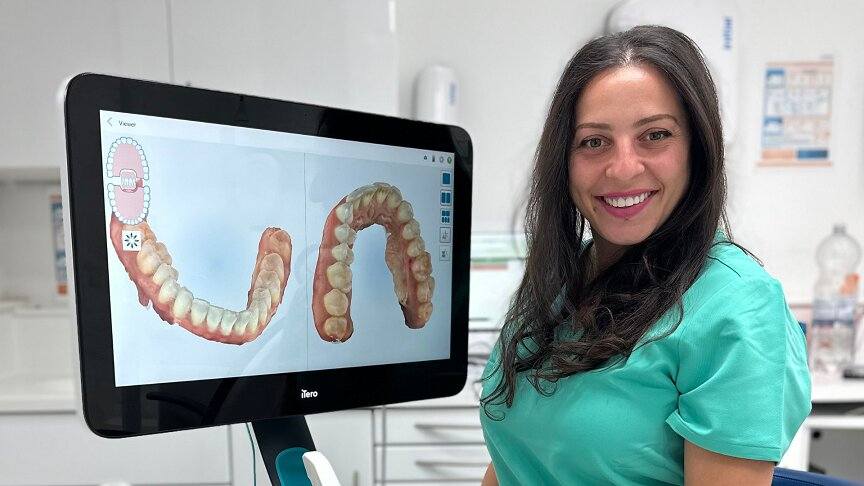
Experienced dentists use digital scans to avoid these problems.
Poor Oral Hygiene
Veneers themselves do not decay, but the underlying tooth can if oral hygiene is neglected. This is not caused by veneers — but by lack of care.
Teeth Grinding (Bruxism)
Untreated grinding can damage veneers over time. Dentists typically recommend a nightguard.
When Porcelain Veneers Are Good For Your Teeth
In many cases, porcelain veneers offer significant oral health benefits.
Strengthening Weak Or Worn Teeth
Worn enamel exposes dentin, causing sensitivity. Veneers act as a protective layer.
Protecting Against Acid Wear
Porcelain resists acid erosion better than natural enamel.
Restoring Structural Support
Chipped or cracked teeth regain strength when covered with bonded porcelain.
Improving Gum Health
Correctly shaped veneers can create smoother contours that are easier to clean.
Enhancing Confidence And Psychological Well-Being
A confident smile improves social expression, mental well-being and self-esteem.
Myths About Porcelain Veneers Being Bad For Your Teeth
Many myths circulate online. Here are the most common ones — debunked.
“Veneers destroy your natural teeth”
False. Minimal enamel removal is safe and biologically acceptable.
“Your teeth will rot underneath”
Teeth only decay if oral hygiene is poor — veneers do not cause decay.
“All veneers require aggressive shaving”
False. Modern veneers are extremely conservative.
“Veneers cause pain”
Correctly done veneers should not be painful.
“Veneers damage the enamel permanently”
Enamel removal is irreversible — but not harmful when done properly.
The Porcelain Veneer Process And How It Protects Your Teeth
Understanding the veneer process helps clarify why the treatment is safe.
Consultation And Smile Assessment
- Bite analysis
- Gum health check
- Enamel thickness assessment
- Digital scans.
- Photos and shade selection
This ensures veneers are appropriate and safe.
Tooth Preparation
Only the front surface is prepared, usually removing less than 1mm of enamel.
Temporary Veneers
Protect the teeth while the final veneers are crafted.
Final Porcelain Veneers
Bonded using adhesive dentistry to create a strong, sealed surface.
Aftercare
Regular check-ups ensure long-term health.
How Long Porcelain Veneers Last (And How Longevity Affects Safety)
Porcelain veneers typically last 10–15 years, and many last well beyond 20 years with proper care.
Longevity depends on:
- Correct preparation.
- High-quality porcelain.
- Excellent bonding.
- Proper bite alignment.
- Good oral hygiene
- Wearing a nightguard when needed
💡 Because porcelain is strong and stable, veneers do not degrade or weaken teeth over time.
Are Porcelain Veneers Reversible?
Porcelain veneers are not reversible because enamel removal is permanent. However, this does not mean veneers are harmful.
Instead, veneers are:
- Replaceable
- Maintainable
- Long-term restorations
💡 This is similar to other dental treatments such as fillings, crowns or bonding.
How To Know If Porcelain Veneers Are Safe For Your Teeth
You are likely a good candidate if you:
- Have good oral health.
- Have enough enamel for bonding.
- Have healthy gums.
- Want to improve shape, colour or symmetry
- Do not have severely misaligned teeth
- Understand that veneers are long-term restorations
💡 A dentist will examine your bite, enamel thickness, dental history and cosmetic goals.
How To Make Porcelain Veneers Last Longer
To maximise lifespan:
- Brush twice daily
- Floss daily.
- Use non-abrasive toothpaste
- Attend regular check-ups.
- Avoid biting hard things (ice, nuts, pens).
- Wear a nightguard if needed.
- Avoid smoking if possible.
💡 With care, veneers remain pristine for many years.
How Whites Dental In London Can Help
Whites Dental specialises in high-quality porcelain veneers in London using advanced techniques that prioritise safety, precision and long-term oral health.
Why Patients Choose Whites Dental
- Experienced cosmetic dentists
- Minimal-prep techniques that protect enamel
- Premium porcelain systems such as Emax
- Digital smile design and photography.
- Hand-crafted veneers for natural aesthetics.
- Comprehensive bite assessment.
- Transparent treatment planning.
- Strong focus on long-term tooth preservation
Whites Dental Waterloo
172 Blackfriars Road
London
SE1 8ER
Whites Dental Marble Arch (W2)
52B Kendal Street
St George’s Fields
London
W2 2BP
💡 Whites Dental offers bespoke veneer treatment designed to enhance your smile while keeping your teeth healthy and structurally protected.
Conclusion
Porcelain veneers are not bad for your teeth when performed correctly. They are safe, minimally invasive and can even improve the strength of natural teeth when bonded properly. The key is choosing an experienced cosmetic dentist who uses conservative techniques, high-quality materials and precise planning.
💡 For those wanting a beautifully enhanced smile with natural and long-lasting results, porcelain veneers remain one of the safest and most effective cosmetic dental options.